Italy; Beyond the Postcards | Top 30 Attractions of Italy from Rome to the 2026 Top List
heliya erfani
2026-02-24
فهرست مطالب
Italy is home to one of the oldest and most brilliant civilizations in human history and offers countless italy attractions where European culture, art, and history have their roots. From the powerful Roman Empire to the Vatican, the residence of the Pope, and from the narrow alleys of Florence to masterpieces created by artists such as Leonardo da Vinci, Michelangelo, and Raphael, everything in this country tells the story of a lasting grandeur. However, Italy’s appeal is not limited to its glorious past. For many, it represents the dream of a complete European journey—not only because of its famous pizza, pasta, and gelato, but also due to the astonishing diversity of its natural and urban landscapes. From the sunny and popular southern coasts in summer to the spectacular northern ski resorts in winter, Italy reveals a different and captivating face in every season.
If you are looking for an exciting, diverse, and relatively affordable destination in Europe, Italy’s attractions are exactly what you should explore. Italy’s sights blend history, art, nature, and vibrant Mediterranean life, captivating every traveler. In the following, you will become familiar with the most important and beautiful places to visit in Italy—destinations that each, on its own, is a compelling reason to travel to this extraordinary country.
In this guide, you will read about Italy’s attractions categorized by city:
Rome is a city where history is not merely told, but lived through its streets, squares, and monuments. The city hosts the largest concentration of historical landmarks, ranging from the magnificent structures of Ancient Rome to buildings that have served as centers of power and civilization for centuries. Every step in Rome is a direct encounter with a living and tangible past. Alongside its historical significance, Rome holds a prominent position in cultural and artistic attractions. The city’s museums, churches, and galleries preserve works by some of the world’s greatest artists.
Art in Rome is not limited to formal spaces; it is also visible in architecture, sculptures, and even in the smallest urban details. Rome also offers remarkable diversity in its urban and natural environments. Vibrant squares, cobblestone streets, historic parks, and the scenic views of the Tiber River create a balanced blend of city life and natural tranquility. For this reason, Rome represents a profound experience of Italian culture, history, and lifestyle.
1) Colosseum of Rome
ColosseumS Architect
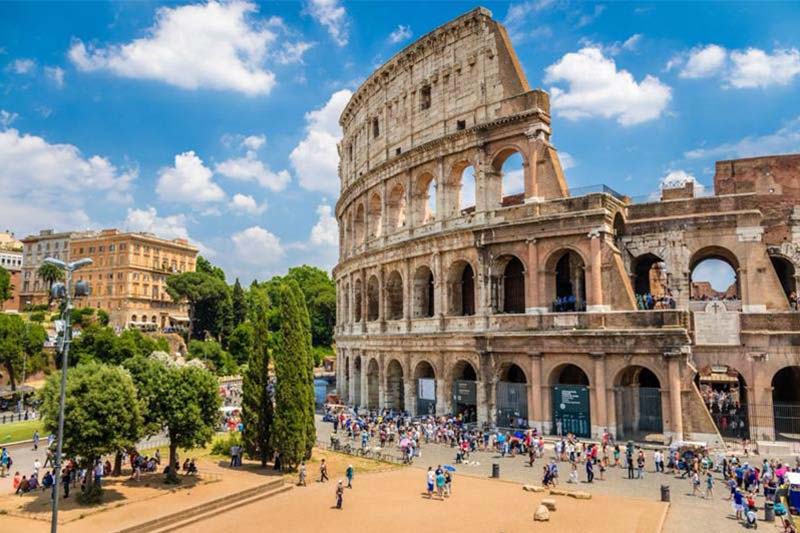
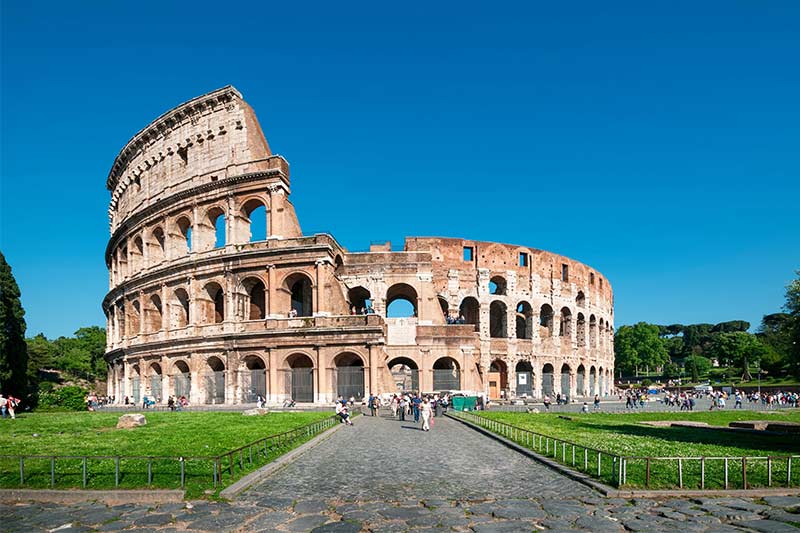
The Colosseum, the largest amphitheater in Rome and one of the most iconic italy attractions, is not only a symbol of the power and grandeur of the Ancient Roman Empire but also one of the world’s most popular filming locations in global cinema. This massive structure is located near the Roman Forum and the city’s historic squares, and at first glance, it vividly showcases the magnificence of Rome’s ancient history.
Construction of the Colosseum began in 79 AD under the order of Emperor Vespasian, on land that was previously part of Nero’s luxurious palace complex, known as the Domus Aurea. The amphitheater hosted gladiator battles, public spectacles, and collective ceremonies, and its large capacity allowed tens of thousands of spectators to attend. Its advanced engineering and unique design were unparalleled for its time, and its architecture still attracts the attention of visitors and experts alike.
In 2016, the Colosseum underwent extensive restoration, and new sections were opened to the public, including the third level, which offers a wide panoramic view of the city of Rome. Additionally, the hypogeum, the underground area of the amphitheater, is now accessible to visitors. This was the space where gladiators, animals, and equipment were prepared before entering the arena, offering a realistic glimpse into the backstage of the battles.
As a filming location, the Colosseum has appeared in numerous scenes in historical films, television series, and even commercial advertisements. The presence of cameras in this setting enhances the authenticity and historical atmosphere of storytelling due to its extraordinary visual effects and distinctive architecture.
Today, the Colosseum is not only a historical monument but also a living symbol of Rome’s history, culture, and identity, and visiting it is considered an essential part of any trip to the Eternal City.
⬅️ Address: Piazza del Colosseo, 1, 00184 Roma RM, Italy Ⓜ️ Year of Construction: 1946 🏠 Architect: Rabirius 📍 Location:Colosseum ☎️ Phone: +390621115843 🌐 Ticket Reservation:colosseo.it/en
2) Roman Forum
roman-forum
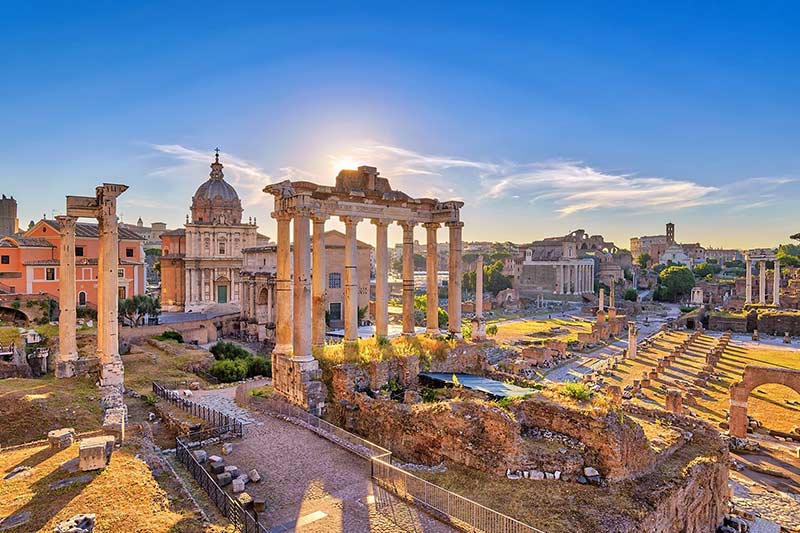
If you enter Rome as a tourist, visiting the Roman Forum is one experience you should not miss. This archaeological site is located right next to the Colosseum, and with just a short walk, you step into a space that was once the center of urban life in Ancient Rome. The stone-paved paths, along with the remains of temples and public buildings, help you form a clear image of the city’s structure and layout two thousand years ago.
During your visit, you will encounter the remains of temples, triumphal arches, and buildings, each of which played a specific role in Rome’s political and social life. This area was once a gathering place for citizens, official ceremonies, courts, and public speeches. Today, these ruins allow visitors to experience history firsthand.
For tourists, the Roman Forum is not just a collection of ruins, but an opportunity to walk along the same paths once used by emperors, senators, and ordinary citizens. From certain elevated points, you can enjoy wide views of the Colosseum and Palatine Hill, making it one of the best photography locations in Rome.
⬅️ Address: 00186 Rome, Metropolitan City of Rome Capital, Italy Ⓜ️ Year of Construction: 8th Century AD 🏠 Architect: Ancient Roman architecture 📍 Location:Roman Forum ☎️ Phone: +390621115843 🌐 Ticket Reservation:https://colosseo.it/en/area/the-roman-forum/
3) Vatican City
vatican-city
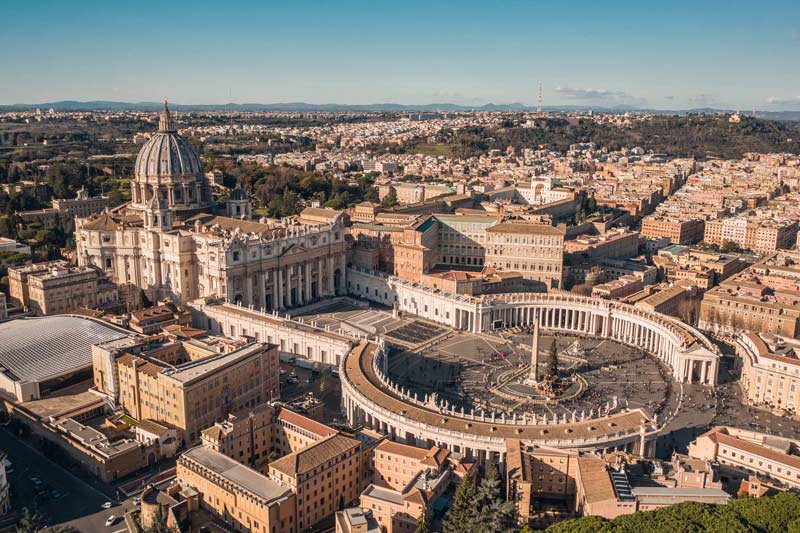
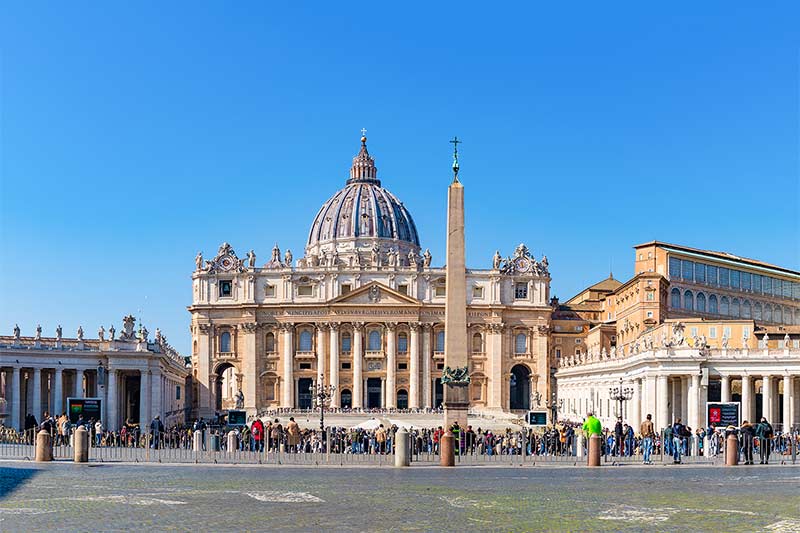
Vatican City, the smallest independent country in the world, is located within the city of Rome and holds extraordinary importance as the residence of the Pope and the central authority of the Catholic Church. This complex is not just a single church or building; it is a vast collection of religious, cultural, and artistic spaces, including St. Peter’s Basilica, St. Peter’s Square, the Vatican Museums, and the Sistine Chapel. St. Peter’s Square, with its magnificent design for religious gatherings, is one of the most famous squares in the world, offering visitors a truly unique and remarkable experience.
The importance of visiting the Vatican during a trip to Italy can be explained through several key reasons. First, it is the spiritual heart of the Catholic world, providing an opportunity to directly experience centuries of religious history and traditions. Second, Renaissance and Baroque masterpieces, such as Michelangelo’s painted ceiling in the Sistine Chapel, are extraordinary works of art that offer an unparalleled experience of global artistic heritage. Third, the architecture and public spaces of the Vatican are captivating for tourists, both in terms of visual beauty and cultural influence. For this reason, visiting the Vatican is not merely a tourist stop but a profound cultural and spiritual experience during a journey to Italy.
⬅️ Address: Vatican Relais Rome, Borgo Angelico, 22, Rome, Italy Ⓜ️ Established: February 11, 1929 🏠 Official Language: Italian 📍 Location: Vatican City 💰 Currency: Euro 🌐 Ticket Reservation:https://www.vaticanrome.it/
4) St. Peter’s Basilica
St.-Peters-Church
This basilica is located within the Vatican tourist complex and is considered the most important and largest church in the world. It is a masterpiece of Renaissance architecture that features works by Michelangelo. Visitors can walk through and explore the interior of the basilica free of charge. The church is also built over the burial site of Saint Peter, one of the apostles of Jesus, which gives it immense religious significance for Christians around the world. It is regularly used as the venue for major religious ceremonies in Italy.
Inside the basilica, there are remarkable works of art, one of the most famous being Michelangelo’s Pietà, a sculpture whose delicacy and precision leave a strong impression even on visitors who are not deeply familiar with art. Another attractive experience for tourists is climbing the dome of the basilica, which offers a panoramic view of Vatican City and Rome.
Free access to the interior of the basilica is available.
5) Trevi Fountain, Rome
Fountains-in-Rome
The Trevi Fountain is one of Rome’s most famous Italy attractions and a symbol of the city’s romantic and artistic identity. The fountain is designed in the Baroque style and stands approximately 26 meters high and nearly 49 meters wide. Its grand statues, including the central statue of Neptune, combined with flowing water and marble structures, create a striking visual spectacle.
The Trevi Fountain is not only a work of art but also an important part of Rome’s history and culture. The fountain usually flows throughout the entire year, allowing visitors to enjoy its beauty at any time. Visiting the fountain is free, and there is no entrance fee for the area. However, it is recommended to visit during less crowded hours or early in the morning for a more pleasant experience and better photography opportunities.
⬅️ Address: Piazza di Trevi, 00187 Roma RM, Italy 📍 Location:Trevi Fountain
Best Places to Visit in Florence
florence-attractions
Florence, a city with a rich historical background, is considered one of the most fascinating tourist destinations in Italy. Located among the green hills of Tuscany, the city captivates visitors with its magnificent architecture, authentic art, and vibrant atmosphere. Florence has a mild to warm climate throughout most of the year, with hot summers and short, cool, and often rainy winters. The best time to visit the city is in late spring and autumn, when the weather is pleasant and exploring the city becomes more enjoyable.
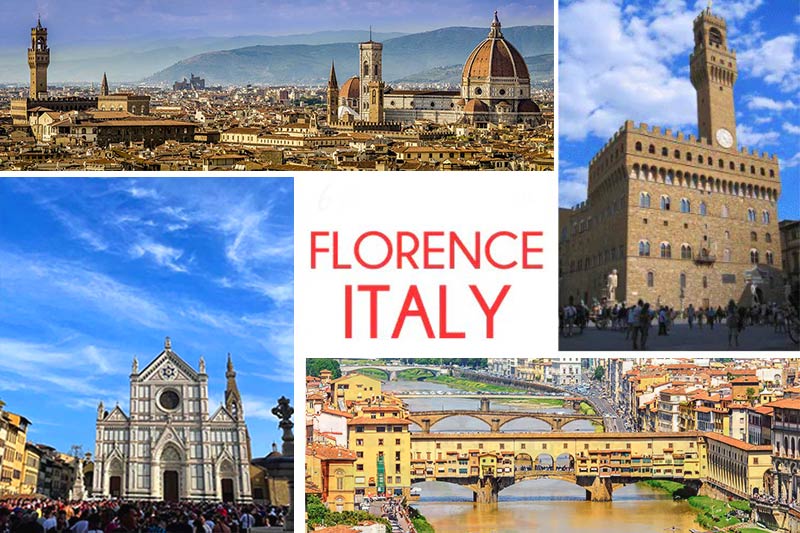
Florence is the birthplace of the Renaissance, and walking through its streets feels like traveling through history. From the famous Piazza della Signoria and Palazzo Vecchio to the remarkable works of artists such as Michelangelo and Benvenuto Cellini, everything in this city reflects the grandeur of Italian art and civilization. With its open-air museums, historic squares, and iconic structures, Florence is considered one of Italy’s most important attractions, offering an unforgettable experience for anyone interested in culture and history.
6) Uffizi Gallery
Uffizi-Gallery
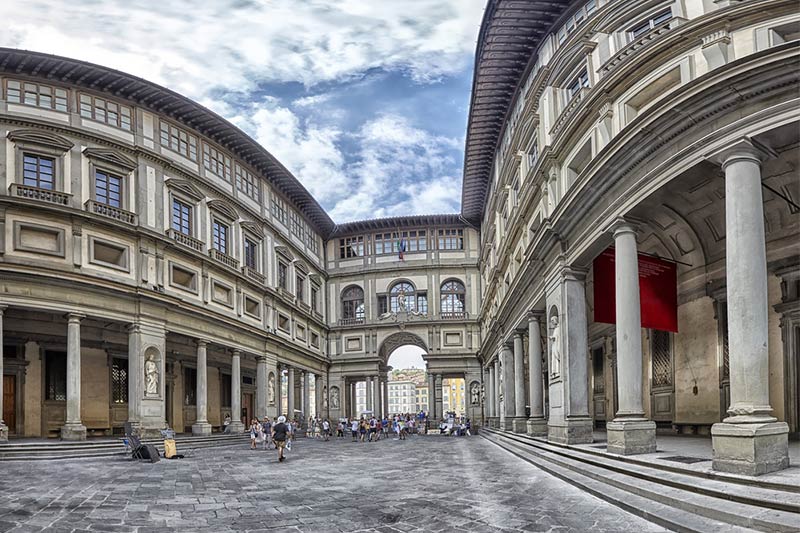
The Uffizi Gallery is one of the most famous and important Italy attractions in Florence. It is located near the Arno River and next to Palazzo Vecchio. This historic building was constructed in 1560 by order of the Grand Duke of Tuscany and designed by the renowned architect Giorgio Vasari. Initially, it served as offices and administrative headquarters. A few years later, the upper floor was dedicated to displaying the valuable art collection of the Medici family, gradually transforming it into one of the richest art museums in the world.
At the Uffizi Gallery, visitors can view masterpieces created by some of the greatest artists in art history, including works by Leonardo da Vinci, Michelangelo, Botticelli, Raphael, and Caravaggio, covering paintings from the 13th to the 18th centuries. The most famous artwork in the gallery is Botticelli’s painting The Birth of Venus, which attracts a large number of visitors.
To visit the Uffizi Gallery, it is recommended to purchase tickets online in advance, as the museum is always crowded and often has long queues. A full visit typically takes between two and three hours. The gallery welcomes visitors daily (except for certain public holidays) and is one of the most essential places to visit when traveling to Florence.
⬅️ Address: Piazzale degli Uffizi, 6, 50122 Firenze FI, Italy ☎️ Phone: +39055294883 🕚 Visiting Hours: 8:00 AM to 6:30 PM 📍 Location:Uffizi Gallery ✔️ Year Completed: 1581
7) Pitti Palace
Pitti-Palace
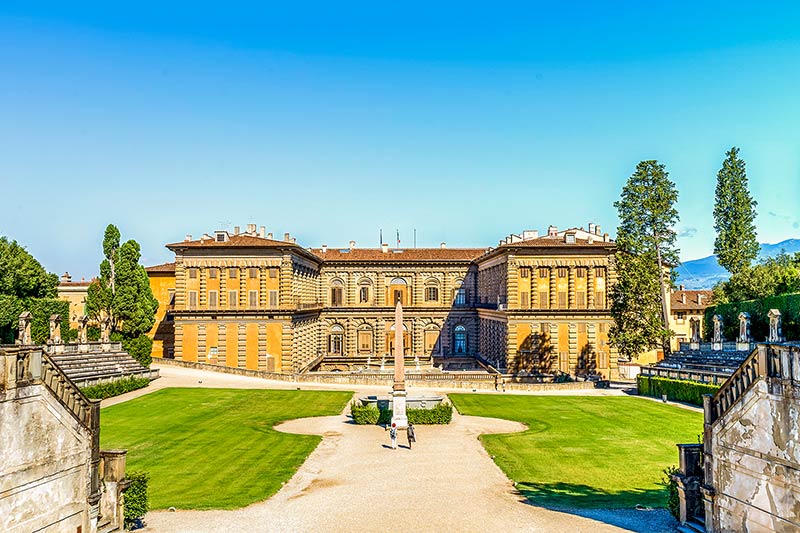
Pitti Palace is one of the largest and most important historical buildings in Florence, Italy, located south of the Arno River. This magnificent palace was constructed and expanded in the 16th century by order of Grand Duke Cosimo I and designed by Bartolomeo Ammannati. It later became the main residence of the powerful Medici family. The palace’s simple yet monumental architecture clearly reflects the grandeur and authority of Florence’s rulers.
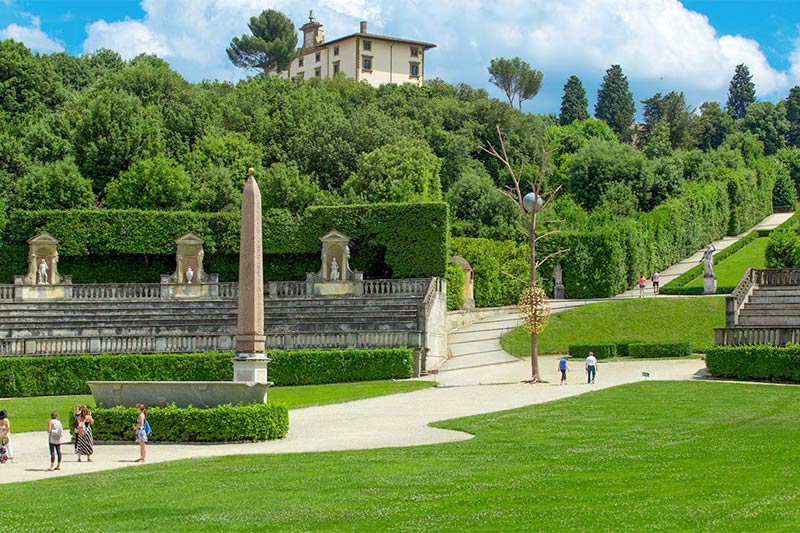
Behind Pitti Palace lie the famous Boboli Gardens, vast and spectacular gardens decorated with fountains, artistic statues, and an open-air amphitheater. In the past, this space hosted operas, celebrations, and court concerts of the Medici family. Today, the Boboli Gardens are considered one of the most beautiful historic gardens in Italy, and walking through them offers a peaceful and memorable experience.
Today, Pitti Palace houses several museums, including the Palatine Gallery, which features valuable works of art, the Museum of Costume and Fashion, and sections related to court life. It is recommended to allow several hours to visit the palace and the Boboli Gardens. Purchasing a combined ticket for both the palace and gardens is a convenient option for tourists, and visiting them is one of the highlights of a trip to Florence.
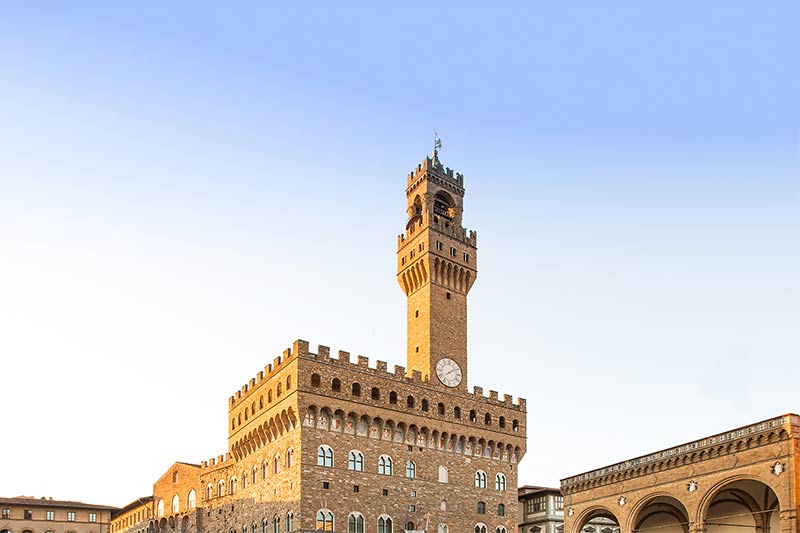
Palazzo Vecchio is one of the most important and iconic historical buildings in Florence, located in Piazza della Signoria, and it currently functions as the city hall. The palace was built in 1299 and served as the main center of government and local power in the city. Its simple and fortified design strongly represents the grandeur and authority of Renaissance Florence.
Both the interior and exterior of Palazzo Vecchio are decorated with numerous works of art. In the open-air Loggia dei Lanzi, famous sculptures such as Perseus with the Head of Medusa by Benvenuto Cellini are displayed. The palace also once housed Michelangelo’s original statue of David, which is now displayed in the Accademia Gallery.
Visiting Palazzo Vecchio is highly attractive for tourists. Visitors can explore the exterior and Piazza della Signoria free of charge or purchase a ticket to enter the interior sections of the palace to see the grand halls, artistic masterpieces, and its watchtower. Climbing to the top of the palace offers a panoramic view of Florence’s historic center. This palace is one of the must-see attractions in Florence for those interested in history, art, and Renaissance architecture.
⬅️Address: P.za della Signoria, 50122 Firenze FI, Italy ☎️ Phone: +390552768325 🕚Visiting Hours: 8:00 AM – 7:00 PM 📍Location: Palazzo Vecchio ✔️Historical Origin: 1299
9) Piazza San Lorenzo
Piazza San Lorenzo is one of the well-known and lively squares among Florence’s italy attractions, located near the historic San Lorenzo Church. This church is considered a prominent example of Renaissance architecture and has a close connection with the Medici family. The square itself is simple yet vibrant, reflecting the everyday life and atmosphere of the people of Florence.
Around Piazza San Lorenzo, several local markets are set up, which are very appealing to tourists. These markets are especially famous for their leather products, where you can find a wide variety of handmade Florentine bags, belts, shoes, and suitcases. In addition, the shops and restaurants around the square provide a great opportunity to buy souvenirs and try local Italian cuisine.
Visiting Piazza San Lorenzo is free, and it usually gets busier throughout the day. The best time to explore the markets is from morning to afternoon. If you enjoy shopping, city strolling, and experiencing the local atmosphere of Florence, Piazza San Lorenzo will be one of the best choices for your travel itinerary.
⬅️Address: san lorenzo florence 🕚Visiting Hours: No specific hours, any time of the day or night 📍Location: Piazza San Lorenzo
10) Boboli Gardens
Boboli-Gardens
The Boboli Gardens are among the most beautiful and famous historic gardens in Florence, Italy, located behind the Pitti Palace and south of the Arno River. These gardens were established in the 16th century, during the rise of the Medici family, and served as the royal gardens for the rulers of Florence.
The Boboli Gardens are built on a large hill, where visitors can enjoy a stunning combination of greenery, impressive fountains, artistic statues, and paved pathways. One of the highlights of the complex is its open-air amphitheater, which in the past hosted operas and court festivities of the Medici family. Walking through these gardens not only offers visual delight but also provides beautiful views of the city of Florence.
To visit the Boboli Gardens, tickets are required, usually sold separately or as part of a combined ticket with the Pitti Palace. Visiting the gardens is especially enjoyable in spring and summer, and it’s recommended to allocate a few hours for a proper visit. For those interested in nature, history, and photography, the Boboli Gardens are one of the top attractions in Florence.
⬅️Address: 50125 Florence, Metropolitan City of Florence, Italy
🌐Website address:uffizi.it/giardino-boboli
🕚Visiting Hours: 8 am to 12 pm
✔️Building : 1766
11) Museom Archeologico Nazionale
Museom Archeologico Nazionale
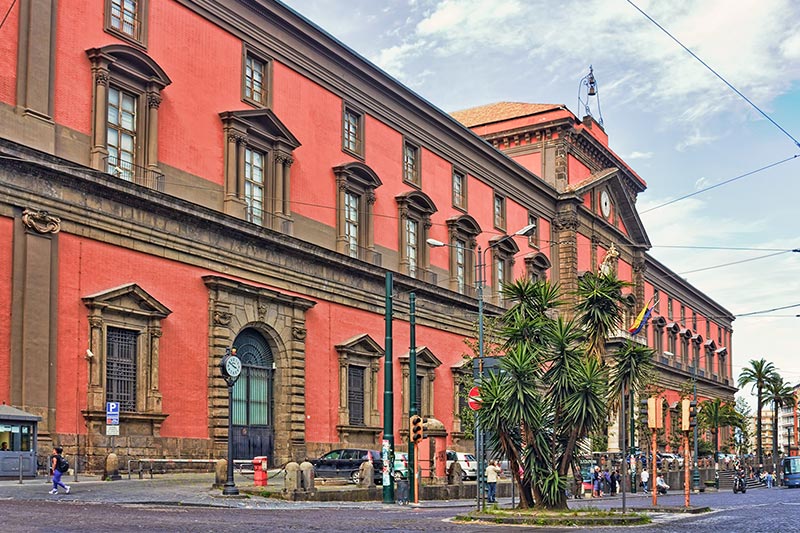
The National Archaeological Museum of Florence (Museo Archeologico Nazionale) is a historic museum located near the center of Florence. It offers history enthusiasts a great opportunity to explore ancient civilizations that existed before the Renaissance.
At the National Archaeological Museum, you can see valuable artifacts from ancient Rome. The museum’s collections include ancient statues, decorative pottery, coins, jewelry, and historical objects that reflect the lifestyles and beliefs of people from thousands of years ago. A notable section of the museum is dedicated to the Etruscans, who played an important role in Italy’s history.
Visiting this museum usually doesn’t take much time, and it is highly educational for those interested in ancient history. Compared to Florence’s more famous museums, the National Archaeological Museum is quieter, allowing for a more peaceful visit. Entry tickets are required, and the best times to visit are early in the day or during less crowded periods. This museum can serve as an excellent complement to your itinerary of Florence’s cultural attractions.
⬅️Address: Museom Archeologico Nazionale
☎️Tel: +39055294883
🕚Visiting Hours: 8am to 2pm
✔️Website:storieurbane.it
12) Ponte Vecchio
Ponte-Vecchio
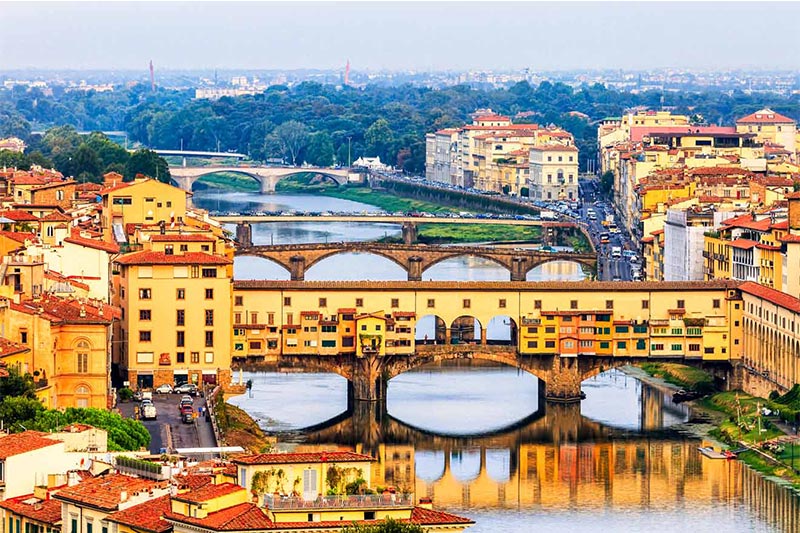
Ponte Vecchio is one of the most famous landmarks of Florence, Italy, and one of the oldest bridges in the city, spanning the Arno River. This historic bridge is not just a passageway; thanks to the shops built on it, it has a unique and distinctive atmosphere.
Since the 16th century, the butcher shops that originally operated on the bridge were closed by order of Grand Duke Ferdinand I and replaced with goldsmiths, jewelers, and silversmiths. Since then, Ponte Vecchio has become a center for handmade Florentine jewelry. Many of the shops are built projecting outward from the edges of the bridge, creating a very striking and unique visual effect.
Above the shops, there is a covered corridor called the “Vasari Corridor,” constructed in the 16th century to connect the Pitti Palace with the Uffizi Gallery. Visiting Ponte Vecchio is free and possible at any time of day, but the best times are early morning or at sunset, when the light and atmosphere are perfect for photography. If you enjoy shopping for souvenirs, admiring historic architecture, and strolling through the romantic streets of Florence, Ponte Vecchio is one of the city’s most captivating attractions.
⬅️Address: Ponte Vecchio, 50125 Firenze FI, Italy
🏠Architect: Taddeo Gaddi, Neri di Fioravante
🕚Visiting Hours: Daily
✔️Bridge length: 95 meters
13) Caffe Gilli
Caffe Gilli
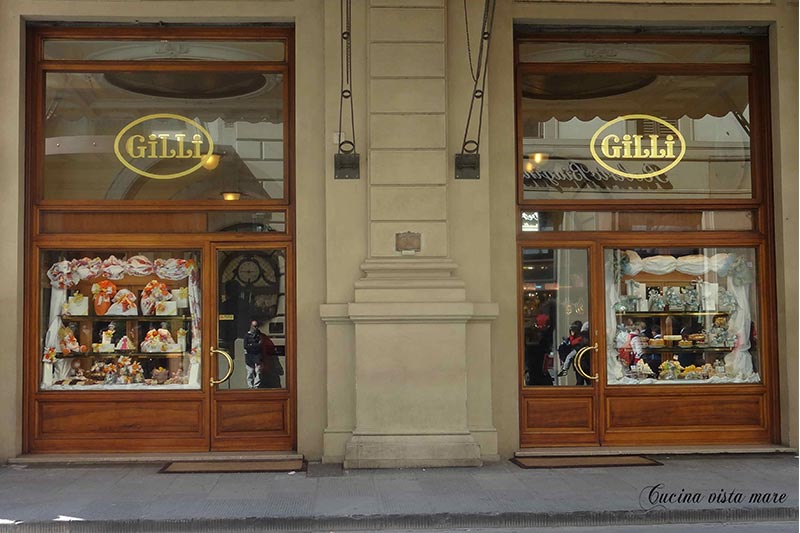
Caffe Gilli is not just an ordinary café; it is a living part of the history of Florence and even the world. If you would like to become familiar with some of the oldest cafes in the world and enjoy coffee in an authentic setting, this café will undoubtedly appeal to you. Located in the heart of Florence near Piazza della Repubblica, Caffe Gilli has hosted artists, writers, and aristocrats since the eighteenth century.
The cafe’s interior, with its classic architecture, large mirrors, antique chandeliers, and luxurious décor, conveys a sense of returning to Europe’s golden age. The quality of the coffee at Caffe Gilli is exceptionally high, and its espressos, cappuccinos, and specialty coffees are prepared with remarkable precision and skill. In addition to coffee, the café is renowned for its famous Italian desserts, handmade pastries, and luxurious chocolates.
Sitting at Caffe Gilli is not merely about drinking coffee; it is considered a cultural and recreational experience. It is one of the best places to relax after exploring Florence, observe the city’s daily life, and experience history up close. If you are interested in unique, nostalgic, and high-quality places and wish to taste coffee in one of the world’s oldest cafes, “Caffe Gilli” is an ideal choice during your trip to Florence.
This café is temporarily closed.
⬅️ Address: Via Roma, 1r, 50123 Firenze FI, Italy ☎️ Phone: +39 055 213896 🕚 Visiting hours: 8:00 AM to 12:00 AM
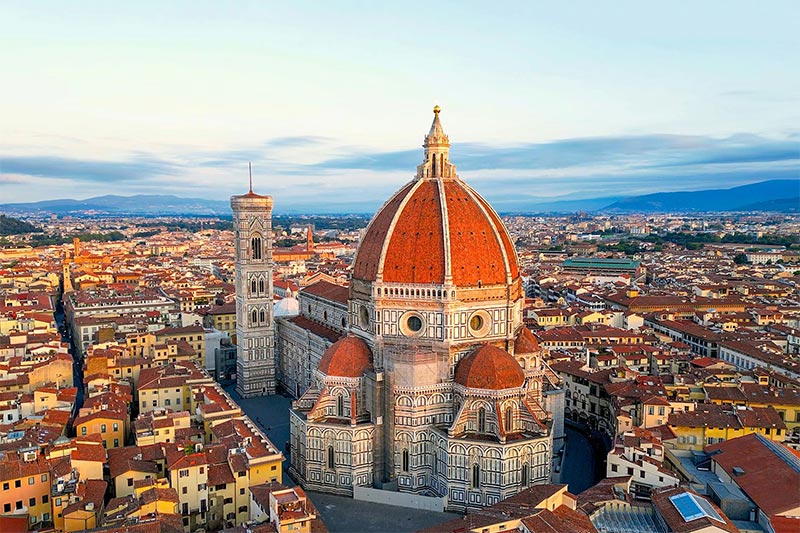
14) Cathedral of Santa Maria del Fiore
Santa Maria del Fiore
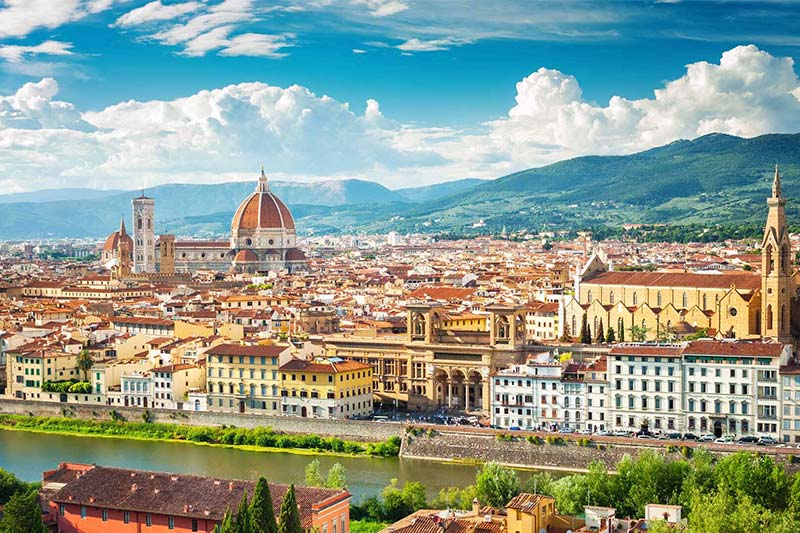
The Cathedral of Santa Maria del Fiore, known as the “Florence Duomo,” is the most important symbol of the city of Florence and the most prominent element of this historic city. Construction of this magnificent church began in the late thirteenth century, and over more than a century, many renowned architects and artists contributed to its creation. The exterior facade, made of colorful marble stones and delicate details, presents an exceptionally striking appearance.
The most famous part of the structure is its massive octagonal dome, built by Filippo Brunelleschi in the fifteenth century—a masterpiece of engineering that is still considered one of the largest brick domes in the world. The cathedral’s bell tower, designed by Giotto, is another of the complex’s most remarkable features and offers visitors a beautiful view of the city of Florence.
Visiting the interior of Santa Maria del Fiore is free, but tickets are required to climb the dome, the bell tower, or to visit the baptistery located opposite the cathedral. Climbing to the top of the dome involves ascending many steps, but the panoramic view of Florence is well worth the effort. If you are interested in history, architecture, and Italy’s enduring symbols, visiting the Florence Duomo will be an essential and unforgettable part of your trip. Exploring this historic monument will be one of the most valuable highlights of your cultural and sightseeing journey.
⬅️ Address: Piazza del Duomo, 50122 Firenze FI, Italy 🏠 Architects: Filippo Brunelleschi, Arnolfo di Cambio, Emilio De Fabris, Francesco Talenti ☎️ Phone: +39 055 2302885 ✔️ Year of completion: 1436
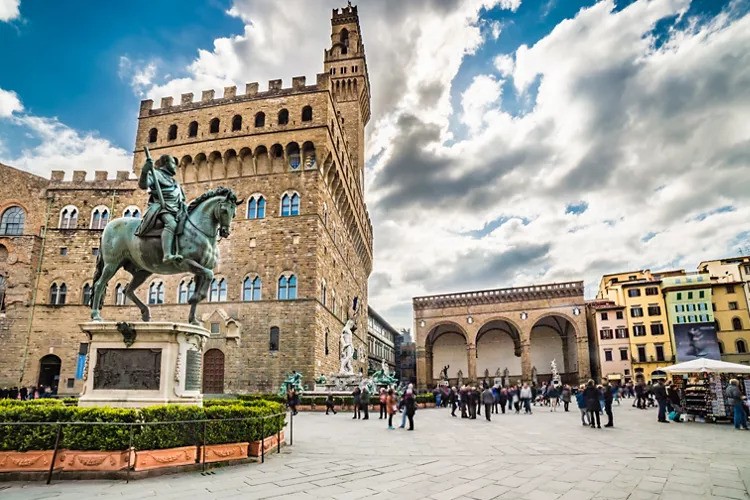
15) Piazza della Signoria
Piazza della Signoria
Piazza della Signoria is one of the most important and historic squares in Florence, Italy—a place that served for centuries as the political and social heart of the city, where many of Florence’s decisive events, especially during the Medici era, took place. In the past, this square was a stage for displays of power, governmental decision-making, and even public punishments, playing a crucial role in the city’s political history.
On the main side of the square stands Palazzo Vecchio, which once served as the seat of the Florentine Republic’s government and later as the center of ducal power; today it functions as the city hall. Piazza della Signoria is also famous for its remarkable statues, including a replica of Michelangelo’s David and the statue of Perseus with the Head of Medusa in the elegant Loggia dei Lanzi. The square is essentially an open-air museum where art and history are displayed simultaneously.
Visiting Piazza della Signoria is completely free, and it can be explored at any time of day or night. The best time to visit is in the evening and at night, when the illumination of the buildings and statues creates a particularly captivating atmosphere. If you want to become closely acquainted with the true history of Florence, the power of the Medici family, and the masterpieces of the Renaissance, Piazza della Signoria will be one of the city’s most essential and unmissable attractions.
⬅️ Address: P.za della Signoria, 50122 Firenze FI, Italy 📍 Location:Piazza della Signoria
Best Places to Visit in Venice
venice-italia
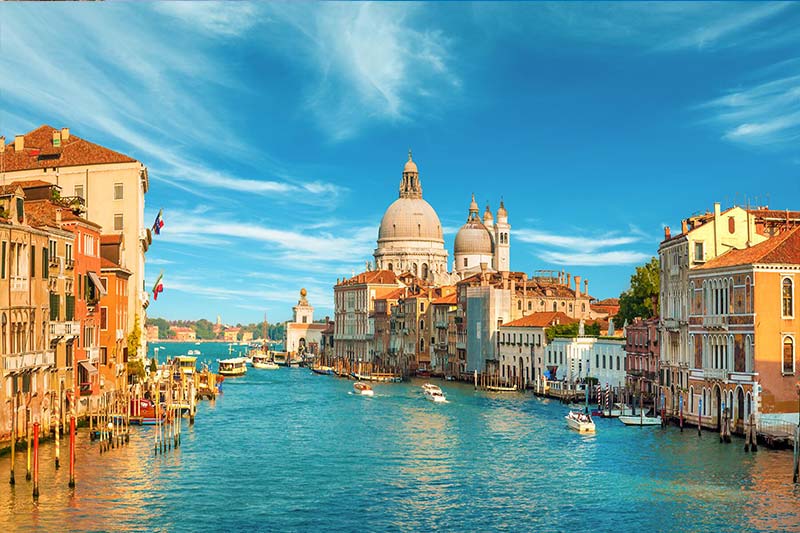
Venice is not just a city; it is an experience. A city that, instead of long, traffic-filled streets, has canals—where instead of car horns, you hear the sound of water and boats. This legendary Italian city, with its magnificent architecture, centuries-old history, and romantic atmosphere, is one of the world’s most distinctive travel destinations. If you are planning a trip to Venice, you are essentially stepping into a living postcard—a place where every corner holds a historical story and every step feels like a picture frame. From the Grand Canal and the famous Piazza San Marco to lavish palaces, artistic neighborhoods, and gondola rides on the water, Venice is full of attractions that are truly a must-see. To help you have a complete trip and not miss the most important symbols of this remarkable city, we have prepared a list of its top attractions.
16) Canal Grande
Grand Canal
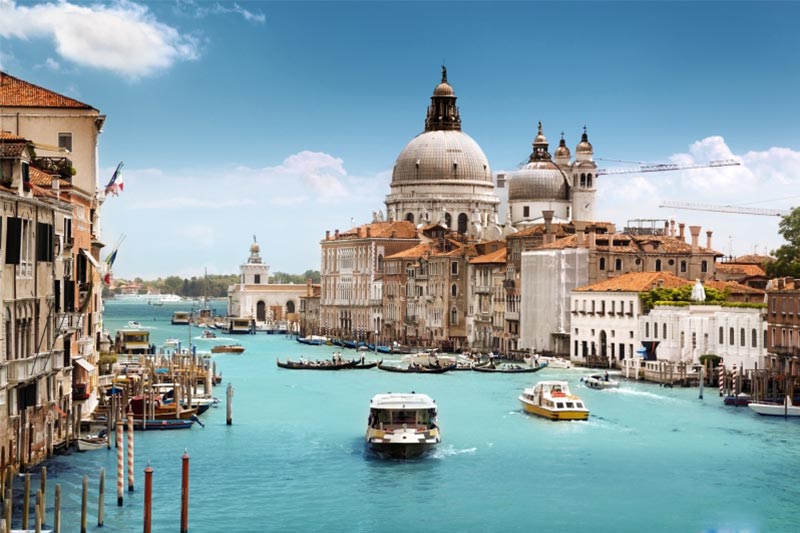
The Grand Canal of Venice, without exaggeration, is the lifeline and primary symbol of this legendary city—an S-shaped waterway that passes through the heart of one of the most enchanting cities in the world, serving both as a busy transportation route and as one of Europe’s most romantic sights. For a traveler visiting Italy, seeing the Grand Canal is not merely observing a canal; it is an experience that showcases the history, architecture, art, and everyday life of Venice all at once.
This canal is the largest and most famous part of Venice’s network of waterways, with origins dating back many centuries. The buildings lining both sides of the canal mostly date from the thirteenth century onward and display a rich variety of architectural styles, including Byzantine, Gothic, Renaissance, and Baroque. As a result, traveling along the Grand Canal feels like passing through a living museum—one that has water instead of walls.
One of the most fascinating aspects of the Grand Canal is its historical and social role. In the past, it was the main route for trade and transportation, and even today it remains the busiest waterway in the city. Public boats, water taxis, gondolas, and even cargo vessels all travel along this route, offering tourists an authentic view of everyday Venetian life.
The historic parade of colorful boats with locals dressed in traditional costumes provides a unique opportunity to experience Venice’s authentic culture and witness the grandeur of its maritime past. Its most famous bridge, the Rialto Bridge—mentioned in Shakespeare’s works—and the canal’s appearance in a James Bond film have both played significant roles in attracting tourists to the area, making it especially appealing to cinema enthusiasts.
For travelers to Venice, the Grand Canal is the best place to begin discovering the city. Whether by gondola, water bus, or simply walking along its banks, the canal offers a complete portrait of the spirit of Venice—a city whose glorious past still flows upon its waters.
17) Piazza San Marco
santa-maria
Piazza San Marco is the beating heart of Venice and undoubtedly the city’s most famous square—a place where Venice’s history, art, and urban life converge. For a traveler visiting Italy, walking through this square is not merely a sightseeing activity, but an entry into one of Europe’s most significant historical stages. Over the centuries, it has hosted official ceremonies of the Venetian Republic, celebrations, parades, and political events, and it still serves as a central gathering place for both tourists and locals.
One of the distinctive features of Piazza San Marco is its unique location—an open square overlooking the Venetian Lagoon that, during certain seasons, takes on a completely different and spectacular atmosphere due to the phenomenon known as “acqua alta,” or high water. The historic cafes surrounding the square, some of which date back several centuries, allow visitors to sit in a classic setting and observe the vibrant life of the square.
St. Mark’s Basilica
On the eastern side of the square stands St. Mark’s Basilica, an extraordinary masterpiece of Byzantine architecture that symbolizes Venice’s power and wealth during its peak. The basilica was originally built to house the relics of Saint Mark, the patron saint of the city—relics that, according to historical accounts, were brought from Alexandria to Venice. This made St. Mark’s one of the most important religious and political sites in the city.
The exterior of the basilica, with its magnificent domes, decorated arches, and historic statues, captures the attention of every visitor at first glance. Yet its greatest splendor lies within, where golden mosaics vividly depict scenes from the Bible and the history of Venice. In the past, the basilica served as the venue for official ceremonies of the Doges of Venice and major religious celebrations, playing a central role in the city’s political and spiritual identity.
For travelers to Venice, visiting Piazza San Marco and St. Mark’s Basilica offers a chance to experience the grandeur of the past, understand Venice’s historical significance in Europe, and immerse themselves in a space that served for centuries as the city’s center of power and culture.
⬅️ Address: P.za San Marco, 328, 30100 Venezia VE, Italy ☎️ Phone: +39 041 2708311 🕚 Visiting hours: 8:00 AM to 2:00 PM 📍 Location:Saint Mark’s Basilica ✔️ Website:basilicasanmarco.it
18) Doge’s Palace
Doge’s-Palace
Doge’s Palace (Palazzo Ducale) is one of the most significant and influential historic buildings in Venice—a place where political power, justice, and the grandeur of the city were concentrated for centuries. For travelers visiting Italy, and especially Venice, exploring this palace offers a unique opportunity to understand the governance of one of the most powerful city-states in European history.
Located beside St. Mark’s Square, the palace served as the official residence of the Doge, the ruler of Venice, while simultaneously functioning as the city’s administrative and judicial center. Unlike many royal palaces that were primarily residential, the Doge’s Palace was the heart of decision-making—where crucial political, economic, and military strategies were shaped. This makes it particularly compelling for visitors interested in history and politics.
Architecture of Doge’s Palace
Architecturally, the palace is a remarkable example of Venetian Gothic style—a refined blend of elegance, intricate detail, and monumental scale. Its exterior façade, with delicate arcades, patterned stonework, and light-colored marble, creates a distinctive image unlike other European palaces. Yet the true drama unfolds inside: vast halls with soaring ceilings, monumental paintings by masters such as Tintoretto and Veronese, and grand chambers that once hosted meetings of the Great Council of Venice.
The Doge’s Palace witnessed countless historic events, from confidential political sessions to trials and judicial sentences. Parts of the palace connect to the infamous Venetian prisons via the Bridge of Sighs—an emotional and powerful section of the visit that leaves a lasting impression on many travelers.
For visitors to Venice, the Doge’s Palace is not merely a historic monument; it is a living narrative of power, art, justice, and even human tragedy. Exploring it allows you to see Venice not only as a romantic city, but as a formidable historical power that once shaped the course of Mediterranean and European affairs.
⬅️ Address: P.za San Marco, 1, 30124 Venezia VE, Italy ☎️ Phone: +39 041 271 5911 🕚 Visiting Hours: 8:00 AM – 6:00 PM 📍 Location:Doge’s Palace ✔️ Website:palazzoducale. visitmuve.it
19) Dorsoduro District
Dorsoduro
The Dorsodurodistrict is one of the most authentic and charming areas of Venice—a place where artistic atmosphere, local tranquility, and breathtaking views come together. For travelers visiting Italy who want to experience Venice beyond its crowded tourist attractions, Dorsoduro is a smart and distinctive choice. Located in the southern part of the city, this neighborhood, thanks to its unique position, enjoys more light, space, and calm than the central areas.
One of Dorsoduro’s main attractions is its artistic and cultural environment. The district hosts some of Venice’s most important museums and art centers in Italy, including the Gallerie dell’Accademia, which houses a valuable collection of classical Venetian paintings and is considered a key destination for art history enthusiasts. The presence of this gallery has made Dorsoduro a popular area for art students and art lovers alike.
Dorsoduro is also ideal for peaceful walks and enjoying Venice’s distinctive scenery. Canal-side promenades, small squares, and cozy cafes create an intimate atmosphere where visitors can experience the everyday life of local residents. From this neighborhood, there are beautiful views toward the Grand Canal and nearby churches, making it especially appealing for photography and relaxation.
Another highlight for tourists is the presence of historic churches and unique architecture in the area. The Church of Santa Maria della Salute, with its large white dome, is one of Venice’s visual icons and among Italy’s most important landmarks, located at the entrance to Dorsoduro. Beyond its religious significance, this church played a crucial role in the city’s history, particularly during past outbreaks of plague.
For travelers to Venice, Dorsoduro offers an opportunity to see a calmer, more artistic, and more authentic side of this historic city. The district shows that Venice is not only about Piazza San Marco and gondolas, but also a living city with genuine neighborhoods full of stories that are well worth exploring.
20) Gondola Ride
gondola-ride-venice
A Gondola Ride is one of the most iconic and emotional experiences a traveler can have in Venice—an experience whose name is inseparably linked with the city and even with traveling to Italy itself. For many tourists, a gondola is not just a boat, but a way to connect with the spirit of this floating city and see Venice from a calm and unique perspective.
Gondolas are traditional, narrow Venetian boats that have navigated the city’s canals for centuries. Sitting in a gondola as it glides gently across the water offers the opportunity to admire historic architecture, ancient bridges, and houses built directly on the water—without the crowds of busy streets. This experience is especially intimate and peaceful in the smaller, quieter canals, revealing a more poetic side of Venice.
For travelers visiting Venice, knowing a few things before taking a gondola ride is important. The experience is usually private, with a fixed and predetermined price, making it especially suitable for couples or those seeking a special and memorable activity. The ride typically lasts a standard amount of time, and the route often includes a combination of narrow canals and sections of the Grand Canal.
It is also worth noting that gondola riding is not merely a tourist attraction; it is an integral part of Venetian culture and history. In the past, gondolas were the primary mode of transportation for the Venetian nobility, and even today their shape, color, and construction rules are preserved according to tradition. This authenticity allows visitors to feel as though they are experiencing a living part of the city’s history.
A gondola ride is considered one of the most romantic experiences among Italy’s attractions. The gentle movement on the water, the sound of the oars, passing beneath ancient bridges, and the reflections of light on the canals create an atmosphere that many travelers remember as one of the highlights of their trip. For anyone visiting Venice, a gondola ride is not just an activity, but a lasting and deeply pleasant experience.
21) Rialto Market
Rialto-Market
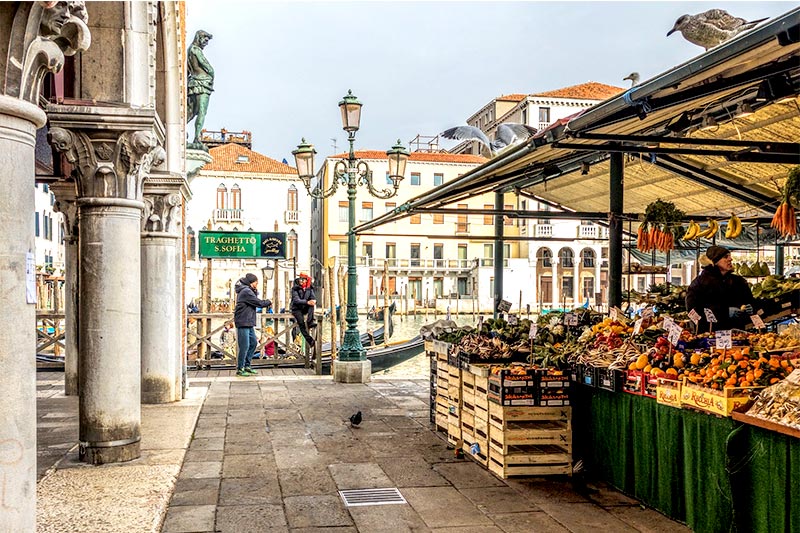
Rialto Market is one of the liveliest and most authentic experiences a tourist can have in Venice—an old, bustling market located right beside the Grand Canal and near the famous Rialto Bridge, known for centuries as the beating heart of the city’s food trade. This is where tourist Venice steps aside and the real Venice reveals itself.
As soon as you enter Rialto Market, the first thing that captures your attention is the vibrant colors and the pleasing order of the stalls. Fresh vegetables, seasonal fruits, the day’s catch of fish, various meats, cheeses, and spices are carefully arranged to highlight both quality and visual appeal. The fish market section, in particular, is one of the most fascinating parts, where local fishermen bring in the fresh catch from the Venetian Lagoon early in the morning for sale.
For travelers visiting Italy, Rialto Market is not just a place to shop; it is an opportunity to observe the lifestyle of local residents. Here, you can see how Venetians select ingredients for their traditional lunches or dinners, converse with vendors, and ask about freshness and quality. Even if you do not plan to buy anything, walking through the market offers a vivid glimpse into Italian food culture.
Another attraction of Rialto Market is its proximity to the Grand Canal. After exploring the market, you can stand by the water and watch the boats passing by or try local foods and drinks at one of the nearby cafes and bars. Many of Venice’s food tours also begin here, introducing visitors to the city’s traditional flavors and culinary heritage.
Ultimately, for any traveler who wants to experience everyday life and the true taste of Venice beyond its historic monuments, Rialto Market is one of the most captivating and memorable attractions in Italy.
⬅️ Address: Calle Prima de la Donzella, 306, 30125 Venezia VE, Italy 🕚 Visiting hours: from 8:00 AM
📍 Location: Rialto Market
22) Murano and Burano Islands
murano island venice
The islands of Murano, Burano, and Torcello are three popular and distinctive destinations around Venice that offer visitors a more complete picture of the life, art, and natural beauty of the Venetian Lagoon. If you are traveling to Italy and spending a few days in Venice, this island tour is one experience that is truly worth the time and cost.
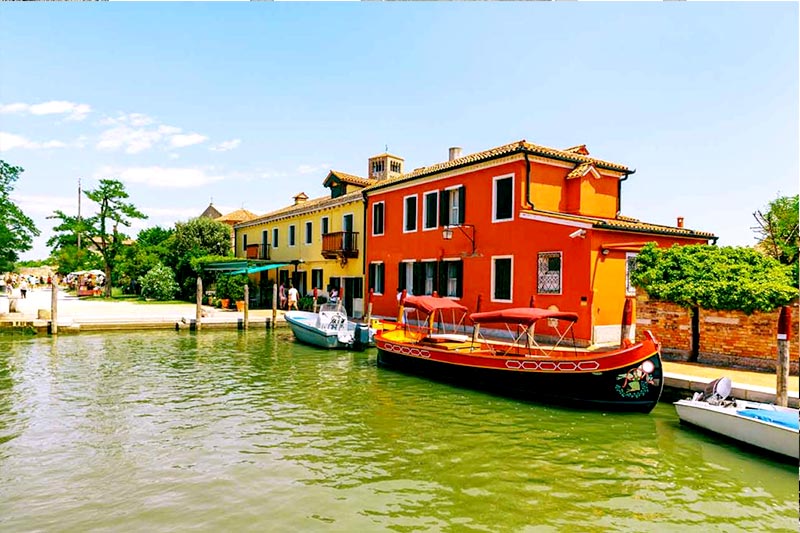
Murano is the closest island to Venice and is most famously associated with the art of glassmaking. For centuries, master glass artisans have worked on this island, and Murano glass is recognized worldwide as one of Italy’s most renowned handicrafts. In Murano, visitors can tour glass workshops, watch the glassmaking process up close, and visit the Murano Glass Museum. Elegant shops filled with colorful chandeliers, sculptures, and glass jewelry line the streets, and even a simple walk around the island carries a distinctive artistic atmosphere.
Burano Island
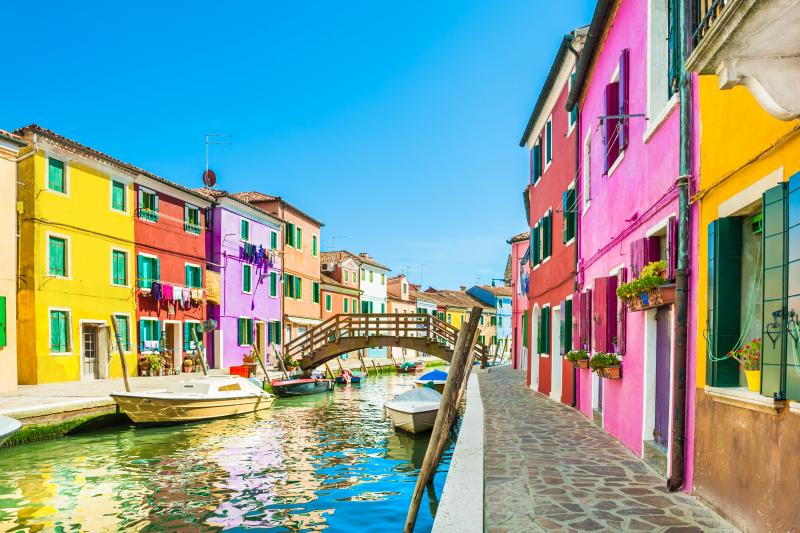
Burano lies a bit farther away, but for many travelers it is the most captivating part of the tour. Its small houses painted in bright, cheerful colors make Burano’s streets and canals one of the most photogenic places in Italy. The island is also famous for its traditional lace-making craft. Burano’s atmosphere is calm, intimate, and far more local than central Venice, making it an ideal place for photography, relaxing in cafés, and leisurely strolling without any rush.
Torcello is the quietest and least populated of the three islands. Here, there are no crowds—only nature, greenery, and history. The island’s main attraction is the Cathedral of Santa Maria Assunta, known for its historic mosaics and its open views over the Venetian Lagoon. Torcello is especially appealing to those who appreciate silence, history, and natural landscapes.
In terms of cost, visiting these islands is usually done in two ways:
By public water bus (Vaporetto), whose fare varies depending on whether you purchase a single-ride ticket or a day pass; this option is generally more economical.
Or by combined guided tours that include boat transportation, a guide, and sometimes visits to glassmaking workshops; these tours are more expensive but also more convenient and well organized.
Overall, a tour of the islands of Murano, Burano, and Torcello offers an excellent opportunity to see a different side of Venice—a blend of art, color, history, and tranquility that makes your trip to Italy more complete.
23) Gallerie dell’Accademia
Gallerie-dellAccademia
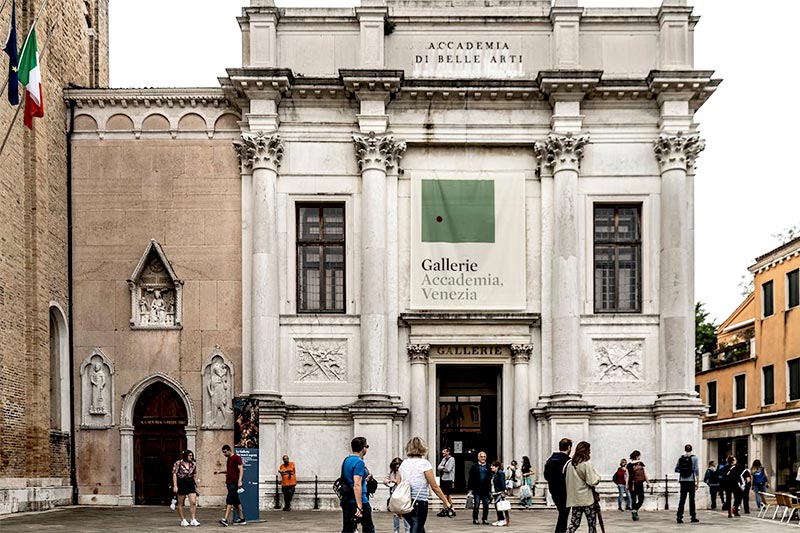
Gallerie dell’Accademia is one of the most important and valuable artistic centers in Venice—and even in Italy as a whole—a place where the history of the city’s art can be experienced in a coherent and profound way. For travelers visiting Venice who want to understand the city’s artistic spirit beyond its architecture and canals, a visit to this gallery is a key choice.
The Gallerie dell’Accademia houses an exceptional collection of artworks from the 13th to the 18th centuries, a period when Venice was at the height of its cultural and artistic power. Masterpieces by great painters such as Titian, Veronese, Tintoretto, and Bellini are displayed here, helping visitors understand the evolution of Venetian painting, the use of color and light, and religious and mythological narratives. Seeing these works enriches your perspective as you walk through the city and encounter its churches and palaces, allowing you to appreciate their artistic details more deeply.
However, Venice’s cultural richness is not limited to its famous museums. Alongside the Gallerie dell’Accademia, there are lesser-known museums and palaces that offer a more distinctive experience. Ca’ Mocenigo is one such place, dedicated to the history of clothing, textiles, and even perfume in Venice. This palace demonstrates that Venice was not only a center of trade and politics, but also played a significant role in shaping European fashion and aristocratic lifestyle.
⬅️ Address: Calle della Carità, 1050, 30123 Venezia VE, Italy ☎️ Phone: +39 041 5222247 🕚 Visiting hours: 8:00 AM to 7:00 PM 📍 Location:Galleria Accademia ✔️ Website:gallerieaccademia
Italy Attractions — Milan
tourist attractions milan italy
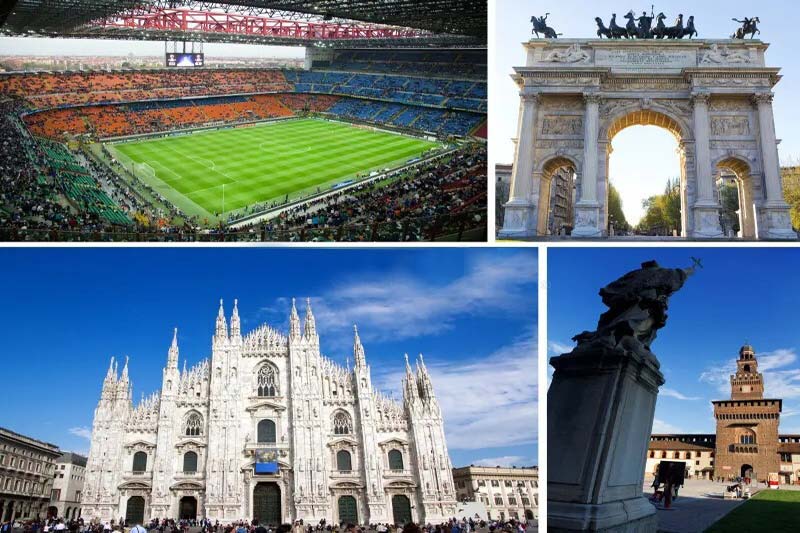
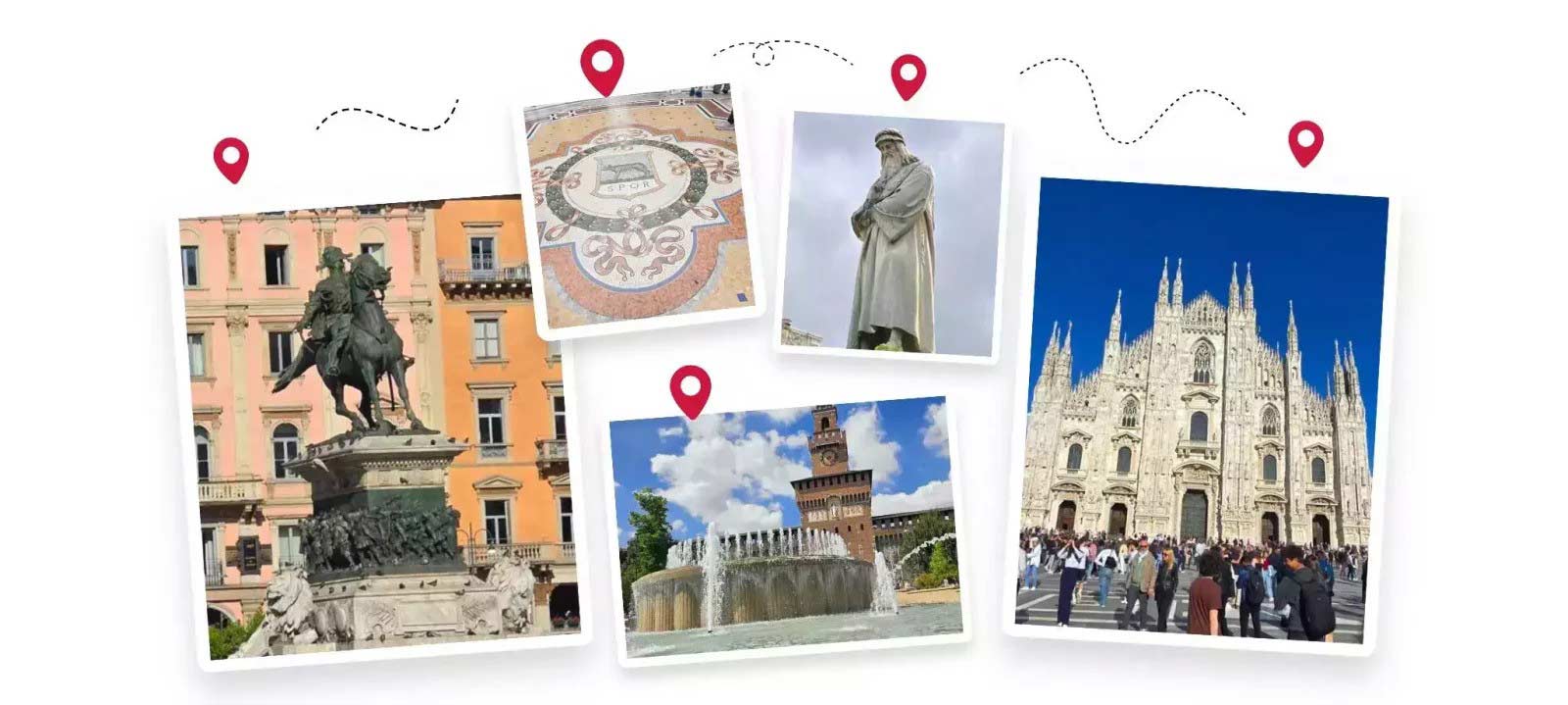
Milan is one of the most important and well-known cities in northern Italy—a city that simultaneously serves as Italy’s economic heart and major metropolis, the capital of fashion, and one of Europe’s key cultural and historical centers. Milan is located in the Lombardy region in northern Italy and, due to its proximity to the Swiss border and major European cities, has a highly strategic geographic position. The city lies on the fertile Po Valley plain and has a relatively humid continental climate; each year it hosts millions of tourists from around the world. Unlike cities such as Rome and Florence, which are primarily historical, Milan offers a blend of history, modernity, art, and commerce. The city is a popular destination for:
Fashion enthusiasts
Architecture and art lovers
Business and exhibition travelers
During events such as Milan Fashion Week or major international trade fairs, the city reaches peak levels of activity. Overall, Milan is a city that showcases a glorious artistic past alongside today’s fast-paced modern life—a distinctive destination for those who want to experience a more modern face of Italy.
24) Duomo di Milano
Duomo-di-Milano
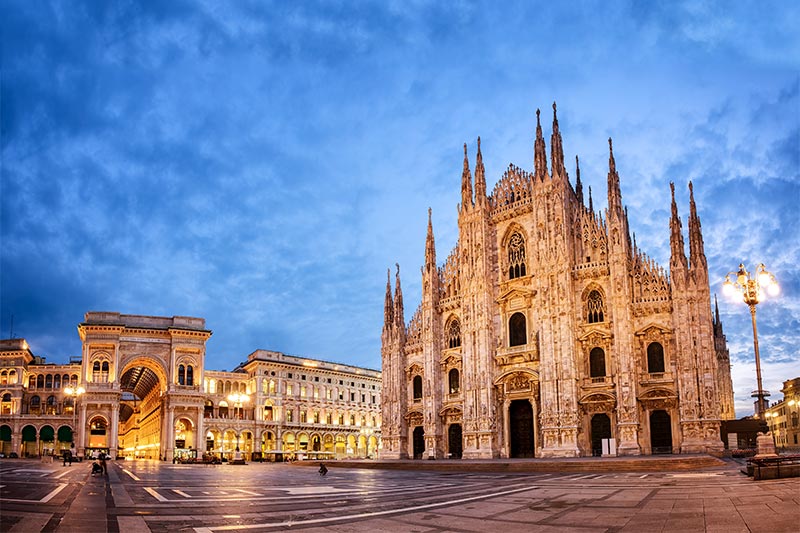
If you are interested in history and architecture, the Duomo Cathedral is the best choice for you in Milan. This structure is not just a church; it is a complete experience of Milan’s history, art, architecture, and identity. The Duomo is the main symbol of the city—a monument whose grandeur takes your breath away the moment you enter the square. It is one of the largest churches in the world and one of the most outstanding examples of Gothic architecture in Europe. Construction of Milan Cathedral began in 1386, a time when Milan was one of Italy’s major political and religious centers. Remarkably, it took more than six centuries to complete, with generations of architects and artists contributing to its development. For this reason, alongside its dominant Gothic style, traces of Renaissance and Neoclassical influences can also be seen.
Main Attractions of the Duomo for Tourists
Stunning Exterior The cathedral’s white marble façade, adorned with more than 135 spires and thousands of decorative statues, creates a breathtaking sight. Every corner of the building tells a religious or historical story.
Duomo Rooftop One of the most unique experiences is visiting the rooftop, where you can see the spires up close and enjoy a panoramic view of the city of Milan.
Magnificent Interior Massive columns, enormous stained-glass windows (among the finest in Europe), and the tranquil atmosphere of the cathedral convey a simultaneous sense of grandeur and spirituality.
Madonnina Statue (Madonnina) The golden statue of the Virgin Mary at the very top of the cathedral is considered by many locals to be the symbolic protector of the city of Milan.
⬅️ Address: Via Carlo Maria Martini, 1 – 20122 Milano ☎️ Phone: +39 02 361691 🕚 Visiting hours: 8:00 AM to 7:00 PM 📍 Location:duomomilano ✔️ Website:duomomilano.it
25) Arco della Pace
Arch-of-Peace
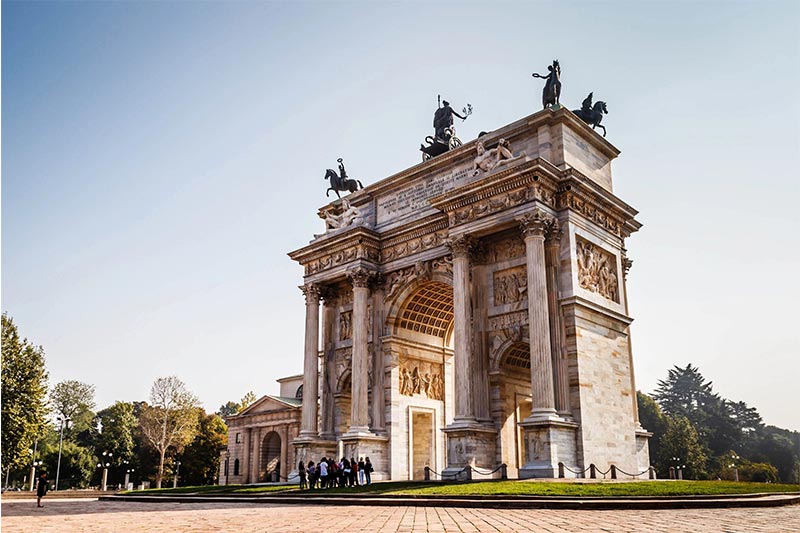
The Arch of Peace is not just a historic structure; located at the entrance to Parco Sempione, it is an ideal spot for walking, photography, and experiencing Milan’s calm urban atmosphere. The combination of the arch’s classical architecture with the park’s green surroundings creates a distinctive appeal, different from the crowded attractions of the city center. Construction of the Arco della Pace began in the early nineteenth century by order of Napoleon Bonaparte. Its original purpose was to commemorate Napoleon’s military victories and demonstrate the power of his empire. However, after Napoleon’s fall, the function and meaning of the monument changed, and it later became a symbol of peace—a transformation reflected in its current name. The presence of cafés and walking paths, especially at sunset, has made the area around the arch one of the most popular spots for both tourists and locals.
Who is this attraction suitable for?
Enthusiasts of European history and the Napoleonic era
Lovers of classical architecture and urban landmarks
Travelers who want to enjoy the green space of Parco Sempione alongside visiting a historic monument
Photographers seeking a distinctive perspective of Milan
Overall, the Arch of Peace in Milan is a place where history, art, and urban tranquility come together in a single frame—an ideal location to pause, observe, and experience a different side of the city.
26) San Siro Stadium
San-Siro-Stadium
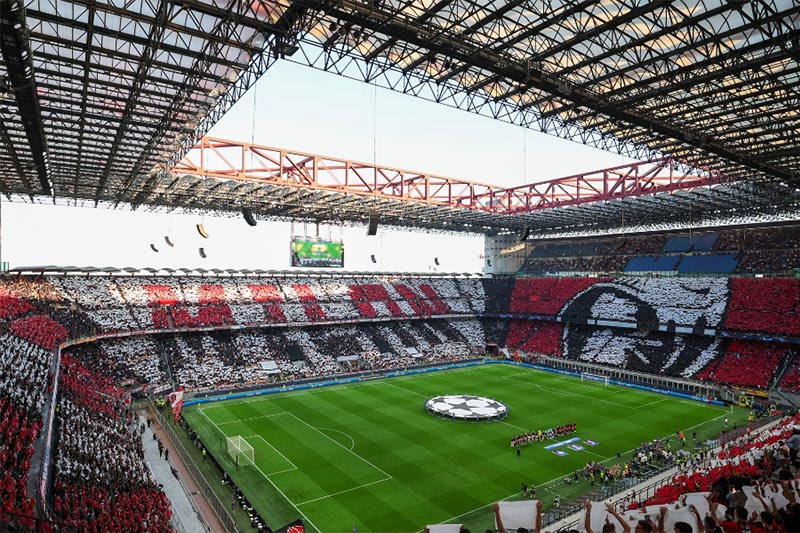
For travelers visiting Milan—especially those coming from countries such as Iran, Pakistan, or Iraq—a visit to San Siro Stadium (Giuseppe Meazza) can be one of the most distinctive and memorable experiences of their trip, as such an opportunity is not easily accessible in many of these countries. San Siro is not just a stadium; it is a hub of European football, a place where decades of passion, excitement, and football history come alive. For visitors who rarely have the chance to experience large, modern, high-energy stadiums in their home countries, San Siro represents football at the highest level.
AC Milan and Inter Milan, two historic and highly decorated clubs, have shared this stadium as their home for many years. San Siro was originally built in 1925 for AC Milan. In 1947, their rival Inter also moved in, and since then the stadium has become the beating heart of Milan’s football culture. Its official name was later changed in honor of Italian football legend Giuseppe Meazza. Seeing the place where icons such as Maldini, Zanetti, Kaká, Ronaldo, and Ibrahimović have played is thrilling for any football enthusiast.
⬅️ Address: Piazzale Angelo Moratti, 20151 Milano MI, Italy 🚶 Capacity: 75,817 📍 Location:SanSiro Stadium ✔️Year built: September 1926; 99 years ago
27) Parco Sempione is a place to breathe in Milan
Parco-Sempione-Milan
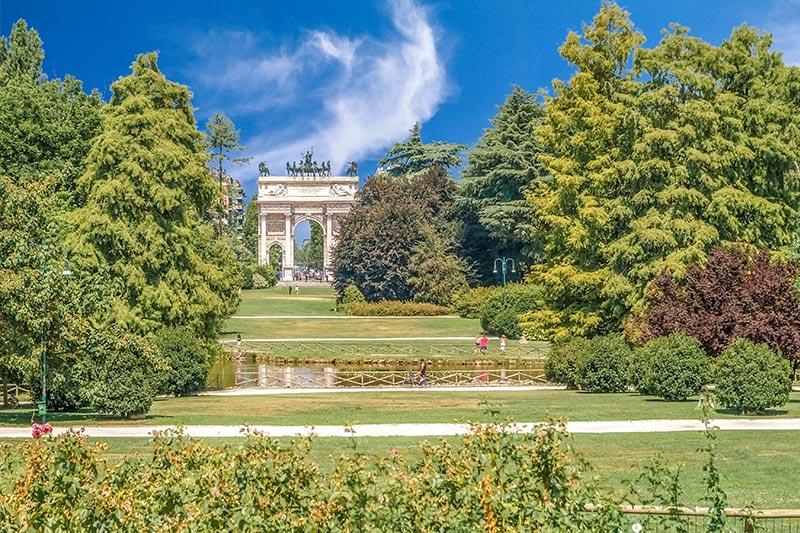
Parco Sempione, with an area of about 116 hectares in the center of the city of Milan, is one of the most popular green spaces of this city; a place where both tourists and local residents come to rest and get away from the hustle and bustle of the city. Milan is a lively and modern city, and the existence of such a large park in its heart provides an excellent opportunity for walking, sitting on the grass, and enjoying a calm atmosphere.
In this park, one can walk among the trees and pedestrian paths while at the same time seeing a view of historic monuments and urban buildings. The location of the park is also very convenient; Parco Sempione is located between Sforza Castle and the Arch of Peace (Arco della Pace), and for this reason many tourists also visit this park while visiting these two attractions. In general, Sempione is a suitable place to rest among sightseeing programs in Milan and to enjoy green space alongside the city’s historical attractions.
Information needed about Parco Sempione:
⬅️ Address: 20121 Milan, Metropolitan City of Milan, Italy 📍 Location:Parco Sempione
28 ) Leonardo da Vinci Museum of Science and Technology
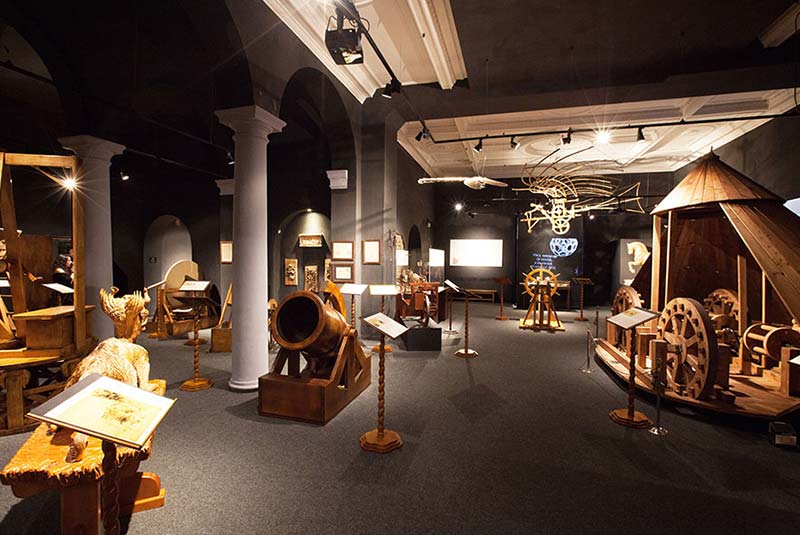
This museum is the largest science and technology museum in Italy and is considered a highly valuable destination for anyone interested in human progress, invention, engineering, and innovative thinking. Visiting this museum helps you gain a deeper understanding of ideas from centuries ago—sciences that laid the foundation for today’s technologies. For travelers visiting Milan, the Leonardo da Vinci Museum of Science and Technology (Museo Nazionale Scienza e Tecnologia Leonardo da Vinci) offers a unique opportunity to become closely acquainted with the brilliant mind of one of the greatest figures in human history. This museum is not merely a place for displaying objects, but an inspiring experience of the connection between science, technology, art, and human creativity.
The Leonardo da Vinci Museum of Science and Technology was opened in 1953 in a historic complex that had previously been a monastery. Choosing the name Leonardo da Vinci for this museum was entirely deliberate, as he symbolizes Italy’s multidimensional scientist, artist, and inventor, and a significant part of his life and activities is closely connected with the city of Milan.
Main Attractions of the Museum for Tourists
Real models built based on da Vinci’s designs—from flying machines and engineering tools to military structures—are among the most fascinating sections of the museum. Many areas of the museum are designed interactively, allowing visitors to engage with scientific and technical concepts. Exhibitions on the history of science and industry The presence of a submarine, locomotives, and real industrial machinery
Visitor Information — Leonardo Museum:
⬅️ Address: Via San Vittore, 21, 20123 Milano MI, Italy ☎️ Phone: +39 02 485551 🕚 Visiting hours: 8:00 AM to 6:30 PM ✔️ Website:museoscienza.org Year established: 1953
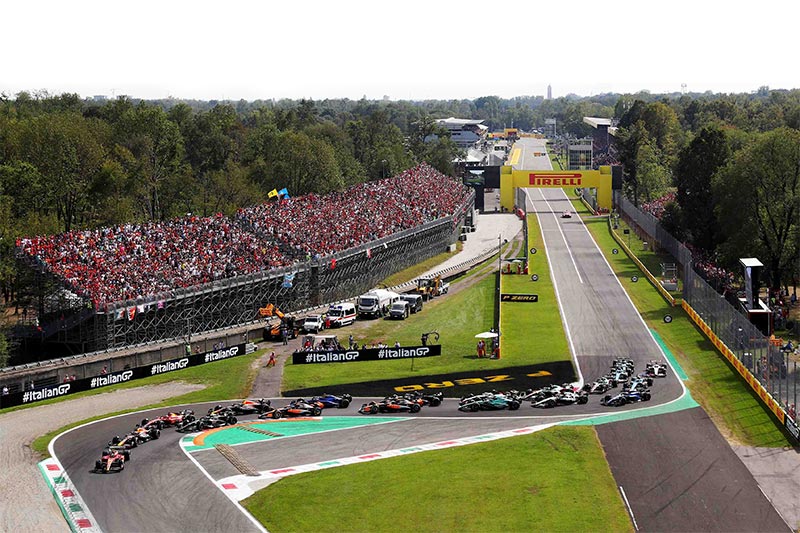
29) Autodromo Nazionale di Monza
Autodromo Nazionale di Monza italy
For travelers visiting Milan—especially those interested in speed, excitement, and the world of motorsport—a visit to the Autodromo Nazionale di Monza is an unforgettable experience. This circuit is not merely a race venue; Monza is considered one of the historic symbols of Formula 1 worldwide. Known as the “Temple of Speed,” it is a place where adrenaline and velocity merge. Even if your trip does not coincide with official race events, walking through the complex still conveys the atmosphere of major global competitions. The main track, approximately 8 kilometers long, hosts the Formula 1 Italian Grand Prix and major motorcycle racing events each year—competitions in which some of the greatest drivers in history have raced.
Overall, visiting the Monza circuit offers a chance to experience pure excitement, the history of motorsport, and Italy’s racing culture—an experience that transforms a trip to Milan from an ordinary journey into a high-adrenaline adventure.
⬅️ Address: Viale di Vedano, 5, 20900 Monza MB, Italy ☎️ Phone: +39 039 24821 🕚 Visiting hours: 8:00 AM to 6:30 PM 📍 Location:Autodromo Nazionale ✔️ Website:monzanet.it/ Capacity: 118,865 people
Places to visit in Italy – Naples
naples-attractions
Naples (Napoli) is one of the most distinctive cities in Italy. It is located in southern Italy, in the Campania region. The city lies on the coast of the Tyrrhenian Sea and, facing the Bay of Naples, has developed with a direct view of Mount Vesuvius, the volcanic mountain.
Naples has a Mediterranean climate and one of the mildest climates in Italy. The city possesses a deep, multilayered history. From ancient Greece to Rome, the Middle Ages, and the modern era, Naples is one of the oldest continuously inhabited cities in Europe. It is also the birthplace of authentic Italian pizza.
Naples is an excellent choice for those seeking authentic, less touristy Italy—history and archaeology enthusiasts, food lovers, and travelers who want to experience something beyond the clichés of Rome and Venice.
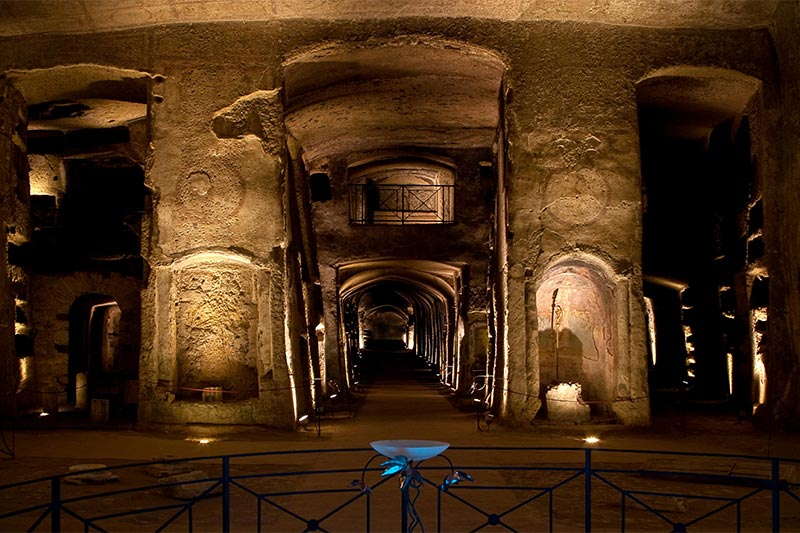
Underground Naples
Underground Naples
Underground Naples (Underground Naples / Napoli Sotterranea) is one of the most astonishing and distinctive attractions in Italy—a place where visitors travel not only through space, but through time. This underground complex represents the hidden and lesser-seen layer of Naples, a city where much of its history flows beneath the feet of its people. Its origins date back more than 2,300 years.
Most tourists see only the Naples above ground, but this attraction takes you to the city’s concealed layer, formed beneath streets, houses, and churches. There are no display vitrines or explanatory panels here; narrow corridors, stone ceilings, and dim lighting make you feel history rather than simply read about it. Underground Naples is not just a tourist site; it is the hidden soul of the city.
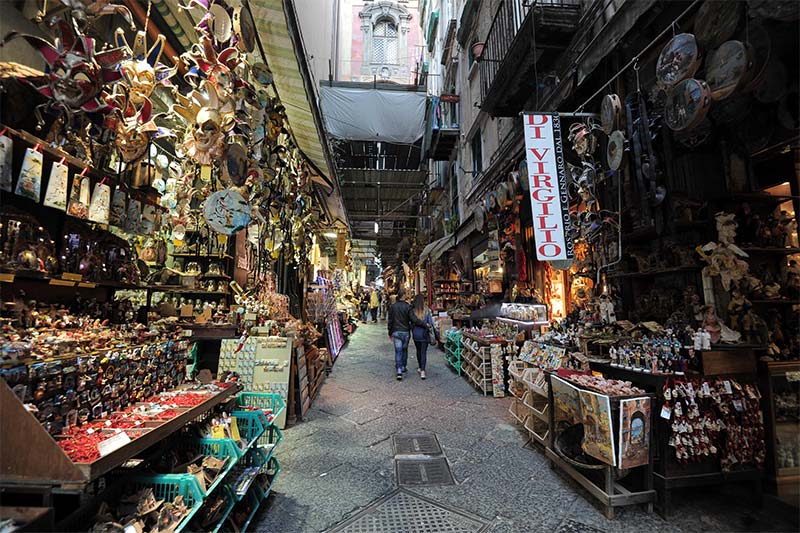
Via San Gregorio Armeno
Via San Gregorio Armeno
Via San Gregorio Armeno is one of the most distinctive and lively tourist attractions in Naples—a short but character-filled street known as the “Christmas Street,” which beautifully showcases the city’s traditional and popular spirit. Located in the historic center of Naples, it forms an important part of the old urban fabric.
Its worldwide fame comes from the workshops and shops dedicated to crafting handmade figurines for Nativity scenes (Presepe), an art that has been preserved in Naples for centuries. The street is filled with color, sound, the scent of handicrafts, and the presence of both tourists and locals—especially in the months leading up to Christmas, when the atmosphere reaches its peak.
The origins of this street date back to ancient Greek times, but its modern reputation emerged during the Middle Ages with the flourishing of Nativity scene craftsmanship. The street takes its name from the monastery and church of San Gregorio Armeno, which remains one of the area’s important religious buildings. Over the centuries, this street has become the main center of presepe art in Italy.
Castel Sant’Elmo
Caste-SantElmo-naple
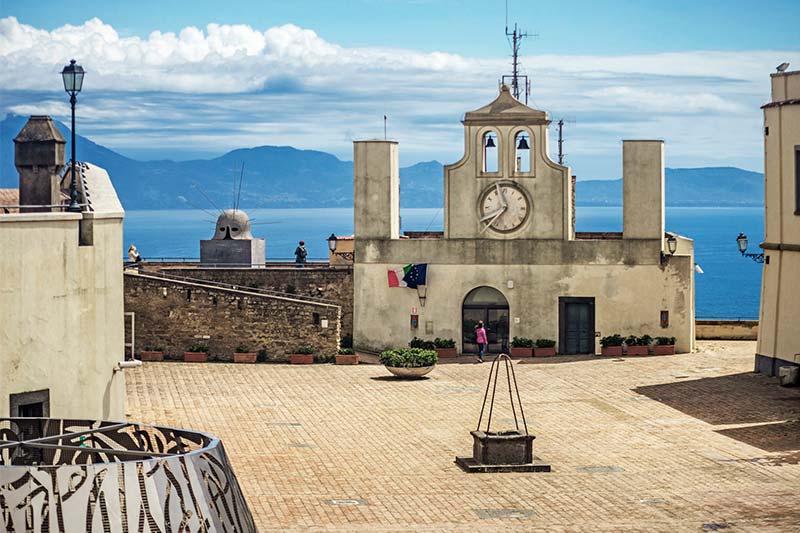
Castel Sant’Elmo is one of the most prominent historic fortresses in Naples, southern Italy—a structure that, when viewed from above, resembles a star perched atop the Vomero Hill and offers a 360-degree panorama of the entire city, the Bay of Naples, and Mount Vesuvius. This strategic position allowed the fortress to play a significant military role in defending the city for centuries, and today it has become one of Naples’ most attractive tourist sites. In different periods, the castle served as a defensive stronghold, a prison, and a military headquarters, and visiting it provides insight into Naples’ turbulent history and the city’s role in the Mediterranean.
Visiting Castel Sant’Elmo is not just about seeing a historic building; it is an opportunity to better understand the geography, history, and spirit of Naples. The combination of breathtaking views, impressive military architecture, and an active cultural atmosphere makes this fortress one of the essential stops for any traveler to Naples—from history enthusiasts to photographers and adventurous visitors.
Italy Attractions on a 3-Day Trip
If you have only three days for a trip to Italy, you should choose cities that contain the most concentrated collection of historical and cultural landmarks. The best scenario for such a short trip is usually to focus on Rome + Florence + Venice, as each represents a different facet of Italy’s identity: the Roman Empire, the Renaissance, and the city of canals.
Day 1: Rome – The Heart of Italy’s History
rome-italia
Rome is essential for a short trip, because the country’s greatest symbols are located in this city.
Top Attractions in Rome:
Colosseum: The massive amphitheater of ancient Rome and one of the most famous structures in the world
Roman Forum: The remains of the political and social center of the Roman Empire
Vatican and St. Peter’s Basilica: The largest church in the world and a masterpiece of Renaissance architecture
Trevi Fountain: The most famous fountain in Italy; it is customary to toss a coin into it
Pantheon: An ancient temple with a remarkable dome that has remained intact
Rome is a summary of 2,500 years of history—from ancient Rome to the Renaissance and Christianity.
Day 2: Florence – The Cradle of the Renaissance
Florence-italia
It is about 1.5 hours from Rome by high-speed train and is ideal for a full day.
Top Attractions in Florence:
Florence Cathedral (Duomo) with Brunelleschi’s famous dome
Piazza della Signoria: The historic heart of the city
Uffizi Gallery: Works by Leonardo da Vinci, Michelangelo, and Botticelli
Ponte Vecchio: The historic bridge over the Arno River
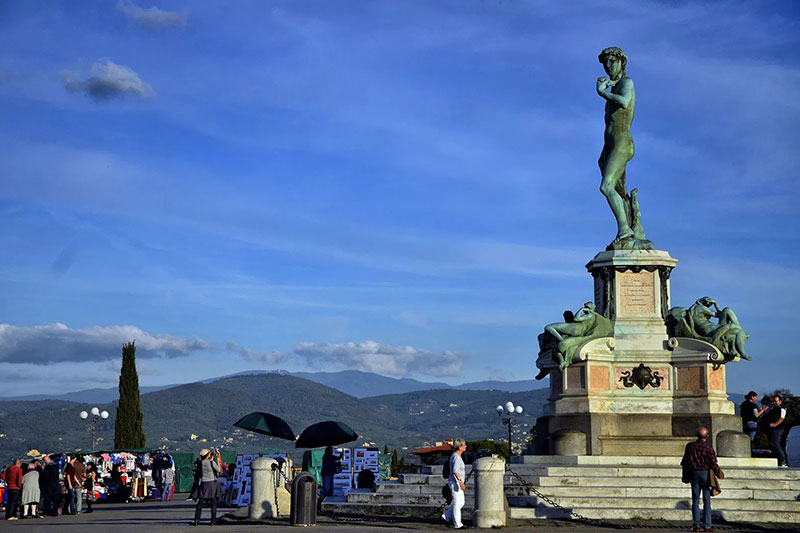
Piazzale Michelangelo: The best viewpoint for seeing the city
Florence is the birthplace of the Renaissance—a city that transformed European art and architecture.
Day 3: Venice – The City of Canals
venice-city
It is about 2 hours from Florence by train and offers a completely different experience.
Top Attractions in Venice:
Piazza San Marco: The most famous square in Venice
St. Mark’s Basilica: Magnificent Byzantine architecture
Doge’s Palace: The seat of the rulers of the Venetian Republic
Grand Canal and the Rialto Bridge
Gondola rides in the canals
Venice is a unique city in the world, built on water and offering an atmosphere completely different from other Italian cities.
Important Tips for Visiting Italy Attractions
essential-accesorries-travel-to-italia
Visiting Italy’s attractions is far more enjoyable—and helps prevent wasted time and money—if done with prior planning and knowledge. The country is filled with historical sites, museums, and crowded tourist cities, so knowing a few key tips can completely transform your travel experience.
Planning and Scheduling
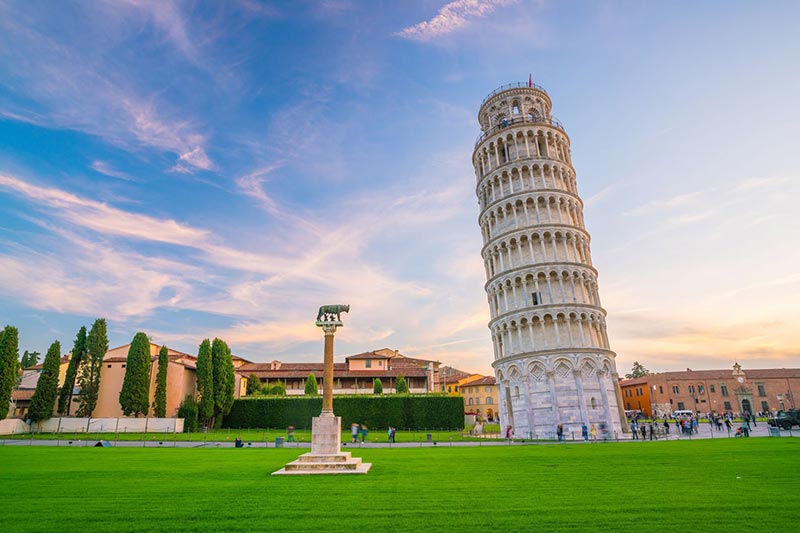
Careful planning and timing are very important when visiting Italy’s popular attractions. It is best to purchase tickets online in advance for places such as the Colosseum, the Vatican, the Uffizi Gallery, or the Leaning Tower of Pisa to avoid long queues during peak seasons. Be sure to check opening hours beforehand, as many museums are closed on Mondays and some churches are not open to visitors during religious services. For a quieter and more pleasant experience, plan your visits for early morning or near sunset, since midday usually brings both larger crowds and—especially in summer—uncomfortable heat.
Time and Route Management
When managing time and routes in Italy, the distance between cities is an important factor. High-speed trains are the best and fastest option for traveling between major cities such as Rome, Florence, and Venice, and on short trips it is advisable to focus on a few nearby cities rather than spending time on long transfers. Most historic city centers are paved with cobblestones, and sightseeing often involves long walks, so wearing comfortable, suitable shoes is essential. Italy’s old, narrow streets can also be complex and confusing, so having an offline map or using Google Maps will help you navigate more easily and avoid wasting time getting lost.
Rules and Cultural Etiquette
Respecting local rules and cultural customs is important when visiting Italy’s attractions. To enter major churches such as St. Peter’s Basilica or the Duomo, appropriate clothing is required—shoulders and knees must be covered, and this rule is strictly enforced. Preserving historical sites is also taken very seriously; sitting on ancient structures, writing on walls, or touching certain artworks can result in fines. Silence and respect are expected in religious places, and photography may be prohibited in some churches or sections, so it is advisable to check signs before taking photos.
Safety and Comfort
For a safe and comfortable trip, be mindful of your belongings in crowded areas such as Rome’s metro, busy streets, and around major attractions, as pickpocketing is common in tourist zones. To prevent fatigue during long sightseeing days, schedule breaks and use public drinking fountains—especially in cities like Rome—to refill your water bottle. If you plan to dine at popular restaurants or join highly sought-after tours, particularly during peak tourist seasons, it is wise to make reservations in advance to avoid long waits or lack of availability.
Conclusion:
Italy is one of those destinations where each city has its own distinct identity and atmosphere, and together they form a complete picture of history, art, and Mediterranean life. From ancient Rome with the Colosseum and the Vatican, to Renaissance Florence, romantic Venice with its canals, modern and fashionable Milan, and energetic Naples at the foot of Mount Vesuvius, each city reveals a different facet of Italy’s spirit. Even on a short three-day trip, a smart selection of a few major cities can provide a condensed yet captivating glimpse of the country—a journey through millennia of history, magnificent architecture, renowned museums, and lively squares and cafés.
Ultimately, enjoying Italy’s attractions is not just about seeing famous landmarks, but also about how you travel. Advance planning, ticket reservations, efficient time management between cities, respect for cultural norms, and attention to travel details all contribute to a smoother and deeper experience. Italy appeals both to lovers of history and art and to those who want to wander through old streets, taste local cuisine, and admire extraordinary landscapes—a destination that rarely feels complete after just one visit and almost always invites new discoveries each time.
Frequently Asked Questions
Where should we visit in Italy at night?
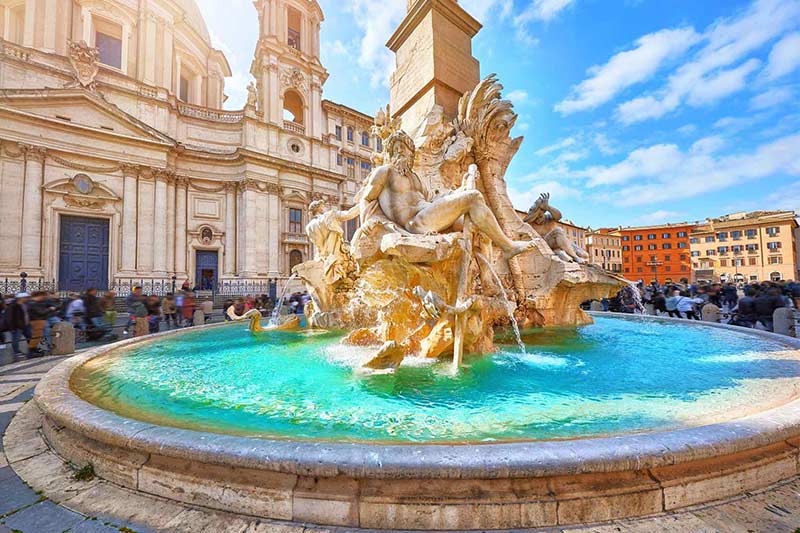
Rome has a completely different character at night. Walking around the illuminated Colosseum, sitting by the Trevi Fountain, strolling through Piazza Navona, or crossing the bridges over the Tiber River are classic nighttime experiences. The Trastevere district is also very popular for dinner and wandering, thanks to its local restaurants and cafes.
Florence is ideal for calm and artistic evenings. Piazza del Duomo, Ponte Vecchio, and Piazzale Michelangelo offer spectacular nighttime views. Many travelers end their evening with a walk through the historic center and time at a traditional café or restaurant.
Venice may be the most romantic city in Italy at night. When the daytime crowds fade, Piazza San Marco and the city’s narrow alleys become quieter and more atmospheric. Walking along the canals or taking a gondola ride late in the day offers a special experience of Venice after dark.
Milan has a more modern nighttime atmosphere. The Navigli district, with its canals, cafés, and restaurants, is one of the best areas for evening outings. The area around Piazza del Duomo and the Brera district are also excellent choices for nighttime shopping, dining, and café culture.
Naples has more energetic nights; its historic streets, pizzerias, and waterfront remain lively after dark. Walking along the coast and seeing Mount Vesuvius silhouetted in the night creates a unique atmosphere.
Which attractions in Italy are free to visit?
Trevi Fountain: Visiting this famous landmark is completely free; its nighttime illumination is especially beautiful. Piazzale Michelangelo: One of the best viewpoints in the city, with no entrance fee. Piazza San Marco: Entry to the square and its outdoor spaces is free. Parco Sempione: One of the best urban green spaces for relaxing at no cost. Spaccanapoli Street: The most famous historic street for free exploration.
Can you travel between cities in Italy by metro?
No. In Italy, the metro operates only within cities and does not function as an intercity network like in some countries. You can use the metro to get around cities such as Rome, Milan, Naples, or Turin, but traveling between cities requires trains, buses, or flights.




 Reading suggestion: The Most Colorful Cities in the World