When Falak-ol-Aflak Castle is mentioned, it feels as if a curtain is lifted from ancient tales and history begins to breathe again. This is a place where kings once ruled from the tops of its towers, and people regarded it as a symbol of security and authority. The moment you step into its courtyard or walk through its corridors, the silence of the stones begins to speak, the scent of history fills the air, and it feels as though time slowly drifts away from the present and slips into the past.
Falak-ol-Aflak is not merely a castle; it is a living narrative — a part of Iranian identity and culture preserved in the heart of Lorestan. The spirit embedded in its architecture and history is what allows it to continue shining in the hearts of history lovers and travelers, captivating every visitor. The importance of discussing this castle begins right here: realizing that you are not standing before a simple military structure, but before a valuable fragment of this land’s past — a monument that has stood tall over Khorramabad for centuries and witnessed the many rises and falls of the region.
In the following sections, we will explore the castle’s history, architecture, its notable sections, and the essential information you need for a better visit—so you can experience the site with a deeper understanding.
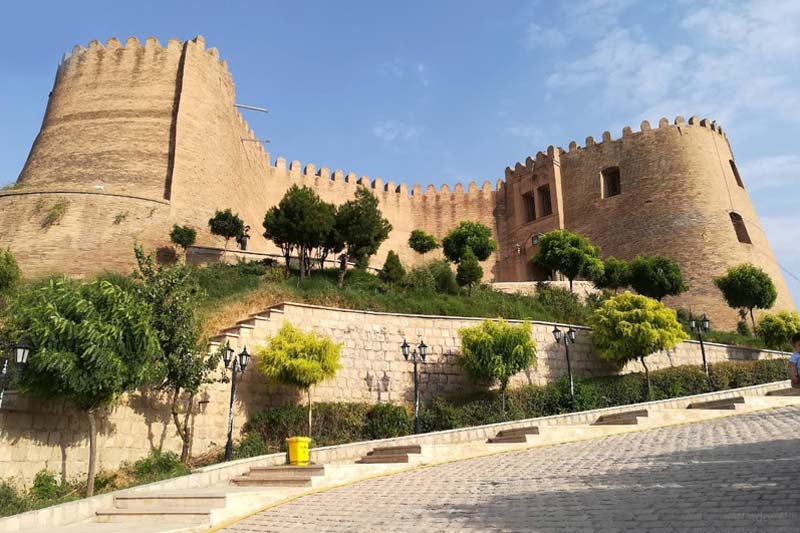
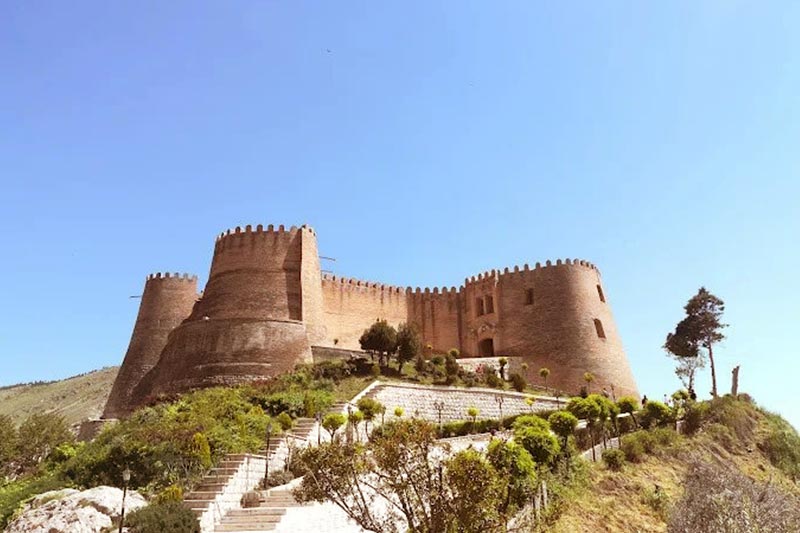
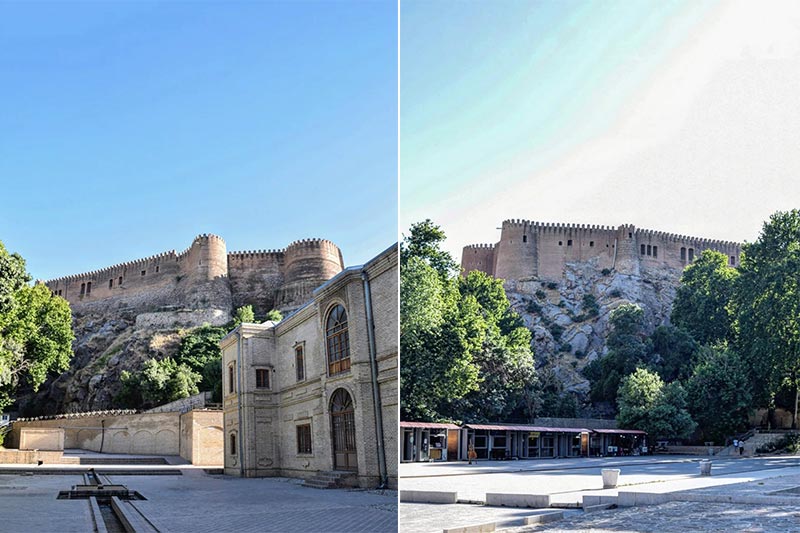
Falak-ol-Aflak Castle is one of Iran’s most significant historical monuments, located on Imam Khomeini Street in downtown Khorramabad, Lorestan Province. Built on a high hill at the center of the city, the Khorramrud River flows beside it. Due to its elevated, dominating position, the castle is visible from nearly every point in the city.
Approximate coordinates:
Iran, Lorestan Province, Khorramabad, city center, atop Falak-ol-Aflak Hill, near Imam Khomeini Square.
The castle sits close to major city centers, and access is available via main roads—particularly Shariati Street and routes leading to Imam Khomeini Square.
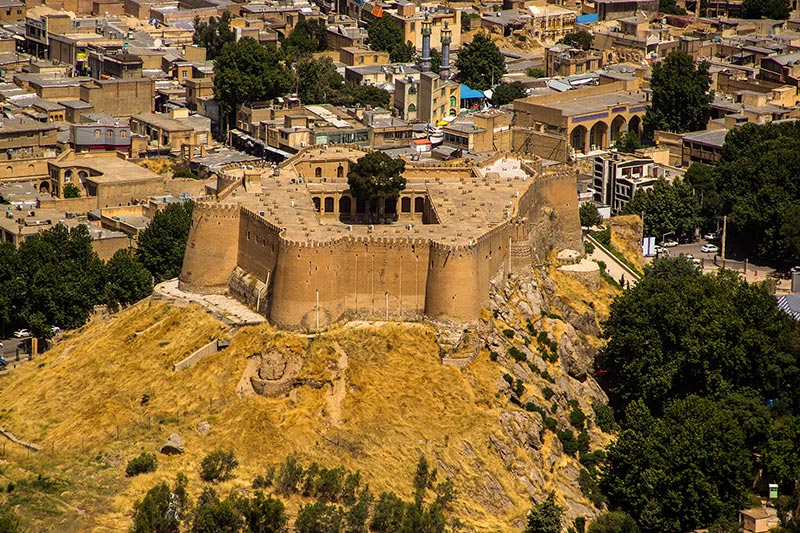
Falak-ol-Aflak Castle is one of the most important surviving defensive structures from the Sassanian era, with an estimated age of around 1,800 years. Its earliest function was to control communication routes in Lorestan and protect the Khorramabad plain. Its strategic hilltop location allowed full oversight of the city and the surrounding plains, making it a military and security stronghold.
During Islamic periods, the castle continued to serve its administrative and military roles. In the Safavid and Qajar eras, it functioned as a governmental headquarters, military garrison, and storage site for weapons. Its defensive towers, thick walls, and numerous interior spaces supported administrative, military, and strategic operations. These diverse functions elevated the castle from a purely military fort to a regional center of power.
The name “Falak-ol-Aflak” is derived from the Arabic words for “sky/heaven,” meaning roughly “The Heavens” or “The High Skies.” The name likely refers to the castle’s height and dominance over the city, symbolizing a structure that seems to reach the sky.
In recent decades, extensive restoration and national heritage registration revived damaged sections of the castle. Transforming its interior spaces into anthropology and archaeology museums enhanced its cultural value and reintroduced it as a major tourist attraction in western Iran.
Architectural evidence suggests the castle was built during the Sassanian period. Its primary function was securing communication routes and protecting the Khorramabad plain. The interior included guard rooms, storage spaces, and troop quarters, all arranged to support defensive operations.
These varied uses demonstrate the castle’s continuous central importance throughout history.
The architecture combines defensive and governmental functions. The structure includes eight towers, thick stone walls, and a series of interconnected interior spaces. The primary construction materials are stone, gypsum mortar, and brick—ensuring resistance against harsh conditions.
The castle’s design maximizes visibility for defense, with towers positioned for full oversight of surrounding areas. The interior includes a central courtyard, interconnected rooms, halls, towers, and access corridors.
The walls are high and exceptionally thick. The eight towers strengthen the defensive system. The main entrance is located on the southern side, accessed by ascending the hill. The arrangement of the spaces reflects advanced engineering precision.
The castle was constructed on a naturally elevated hill, giving it complete visual control over the city. Being located at the center of the plain and near the Khorramrud River ensured water access and control over passing routes — strengthening its defensive purpose.
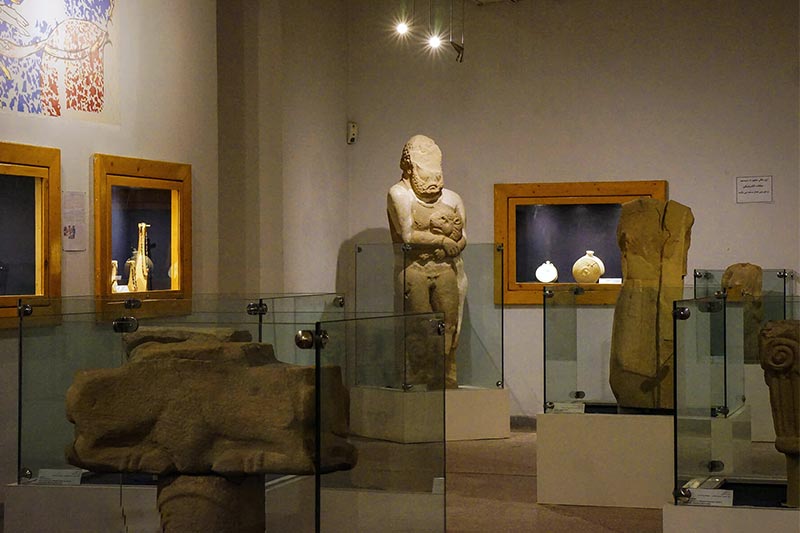
Today, Falak-ol-Aflak Castle is home to two main museums: the Anthropology Museum and the Archaeology Museum. These two institutions showcase significant aspects of the history and culture of Lorestan. Upon entering the castle, visitors not only experience its historical architecture but also become familiar with the cultural heritage of the region.
This museum features a collection of traditional clothing, everyday tools, and indigenous customs of Lorestan. Various aspects of Lur people’s lives—including music, cuisine, ceremonies, and traditional arts—are presented.
This museum houses artifacts dating from prehistoric times to the Islamic period. Stone sarcophagi, pottery, metal tools, and objects unearthed from archaeological sites in Lorestan make up the main displays.
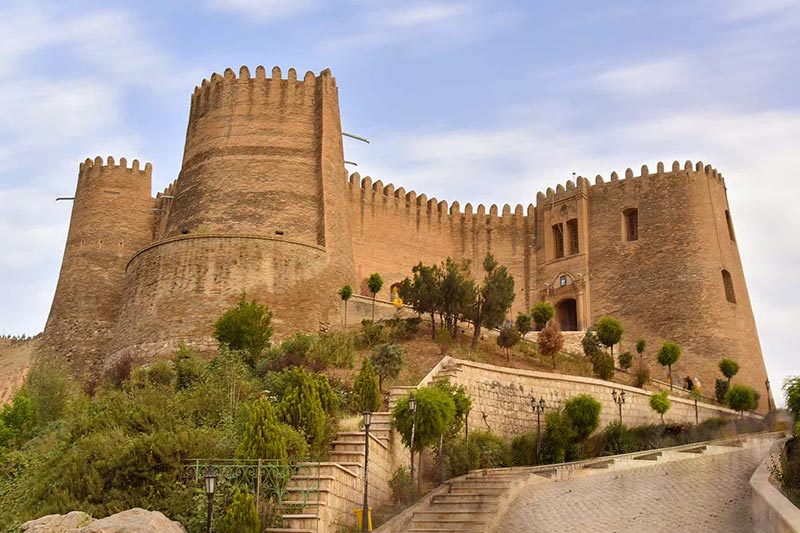
Visiting Falak-ol-Aflak Castle requires awareness of the opening hours, access routes, and entrance fees. Visits are generally conducted during daylight hours, and tourists can easily reach the castle through Khorramabad’s main streets. The outer courtyard also offers an excellent viewpoint for photography.
Visiting hours are generally from morning until evening. Entrance fees differ for domestic and international tourists. It is recommended to check the latest information on tourism websites before your trip.
Spring is the most suitable season for visiting Falak-ol-Aflak Castle. During this time, the nature of Khorramabad reaches its peak freshness, the rivers carry more water, and the mild mountain climate creates ideal conditions for sightseeing. However, in the early weeks of Farvardin (late March to early April), coinciding with Nowruz holiday travel, the number of visitors usually increases, resulting in a more crowded experience.
If your goal is to see the castle in a calm atmosphere, with open views and the ability to walk through various sections without congestion, the best time to visit is from the second half of Farvardin to the end of Ordibehesht (mid-April to late May). During this period, the weather is stable and the city is no longer crowded from the holiday season. Visiting during early morning hours or around sunset also provides a more pleasant experience, as the angled natural light enhances the castle’s appearance and allows for more beautiful photography.
Overall, the combination of mild weather, spring landscapes, and the decrease in visitor numbers after Nowruz makes spring the best choice for exploring this historic monument.
For a better visit to the castle, it is recommended to wear appropriate shoes, bring water, and plan your timing. Visitors interested in history may want to spend more time in the museums. The area surrounding the castle offers excellent photography opportunities, and sunrise or sunset is the ideal time to capture its beauty.
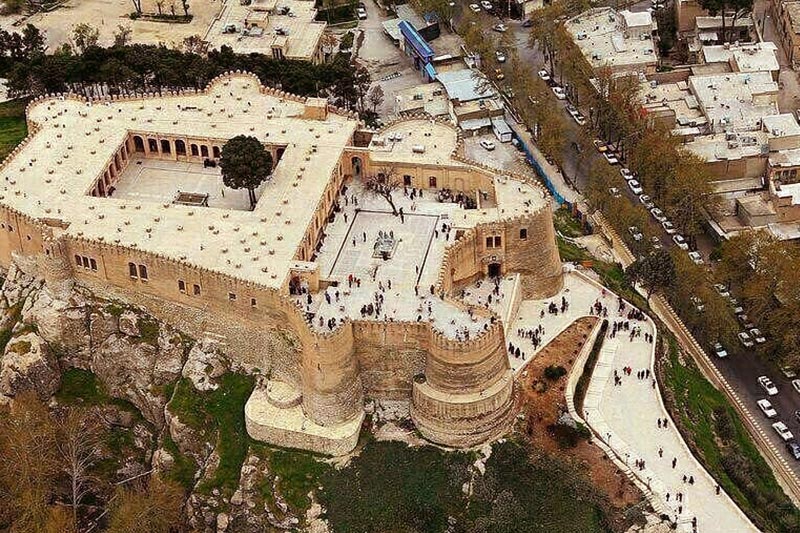
Falak-ol-Aflak Castle is one of the most prominent historical monuments in Khorramabad, preserving the military architecture of the Sassanian and post-Sassanian periods. With its eight fortified towers, two main courtyards, and a collection of functional spaces, the castle once served as the regional center of governance, an ammunition depot, and a defensive stronghold. The structure was designed in such a way that it provided full surveillance over the city while remaining resistant to potential attacks. The presence of guard rooms, a complex entrance corridor, and an ancient well known as the “Mysterious Well” reveals the multiple layers of defensive and residential functions of the fortress. Today, the castle stands as one of the most important tourist attractions in Lorestan, hosting museums and cultural exhibitions that connect visitors with the region’s history, architecture, and identity.
These rooms were constructed in different parts of the castle and served as stations for soldiers, points for monitoring movement, and storage areas for defensive equipment.
The castle contains eight towers responsible for surveillance, perimeter defense, and housing military forces. Their height and the angles of their construction allowed for complete visibility over the surroundings.
The entrance to the castle consists of a gently sloping corridor that was historically used as a controlled passageway. Its design helped reduce the speed of intruders.
This courtyard served as a gathering area, a venue for administrative ceremonies, and a distribution point for access to other parts of the castle.
The appeal of the Mysterious Well lies in its hidden architectural design, central location, and the historical narratives associated with it. Its form is such that it cannot be easily identified from the outside, reinforcing the impression of secret passageways or security-related functions. Its great depth and enigmatic structure, along with stories about underground tunnels connected to it, capture the imagination of visitors. Its placement at the heart of the castle also indicates precise planning by the builders for securing water during times of crisis. Altogether, these factors make the well one of the castle’s most mysterious and fascinating attractions.
The walls of Falak-ol-Aflak Castle, built with significant thickness from stone, brick, and strong mortars, form the main defensive layer of the complex. Their height and arrangement of materials allowed them to withstand military impacts and prevent enemy penetration. These walls are fully integrated with the towers and passageways, creating a unified defensive system.
Restoration efforts in recent years have aimed at stabilizing the structure, preventing tower collapse, and reviving historical spaces. The operations have included reinforcing the walls, repairing damaged sections, improving visitor pathways, and implementing modern moisture-control systems. Throughout the process, great care has been taken to preserve architectural authenticity and minimize intrusive interventions.
In the surrounding area of the castle, natural springs and waterfalls once served as important water sources. Traditional watermills powered by these streams played a key role in supplying flour and supporting the economic life of the historic city. The proximity of these water resources further enhanced the castle’s strategic importance.
The second courtyard of the castle was a quieter and more functional space compared to the first. It typically hosted internal activities, provided access to administrative and ceremonial rooms, and served as a route to the towers and service areas. Its more enclosed design offered greater security and focus.
The internal bathhouse belongs to the post-Sassanian period and follows the traditional layout of Iranian bathhouses, including a dressing room, hot room, and an underfloor heating system. The presence of this bathhouse indicates that the castle, in addition to its military function, also served residential and governmental purposes.
These chambers were used by governors, commanders, and administrative officials. Their architecture is more refined compared to other parts of the castle and includes ceremonial rooms, administrative spaces, and meeting halls. These structures highlight the political and administrative significance of the castle throughout different historical periods.
If you plan to visit Falak-ol-Aflak Castle, simply make your way to Imam Khomeini Street, which locals refer to as “12 Borji Street.” Access by private car is very straightforward, as the road leads directly to the castle area. If you are using public transportation, buses are a convenient option, with several routes passing near the castle. The closest bus stop to this historic site is Sabzeh-Meydan Station, which is only a few minutes’ walk from the castle entrance.
An ancient hydraulic structure of Khorramabad, built in a circular stone design to regulate water flow. This whirlpool dates back to the Sassanian era and was part of the city’s water management system.
An old water-powered mill that operated using the natural flow of nearby springs. It is one of the few remaining structures demonstrating the traditional method of grain grinding.
A beautiful urban lagoon in the center of Khorramabad, famous for its clear, turquoise-colored water. It is a popular spot for boating and family recreation.
A historical bridge from the Sassanian period, built with carved stones and remarkable precision. It formed part of an ancient transportation route and is considered a symbol of old Lorestan engineering.
A shrine dedicated to a revered mystic of the region. With its traditional architecture and spiritual atmosphere, it is one of the city’s popular pilgrimage sites.
A mountainous region known for its striking landscapes, unique vegetation, and colorful rock formations. It is one of the main destinations for nature tourism around Khorramabad.
A large bathhouse from the Safavid era, featuring valuable architecture and traditional decorative elements. It reflects the historical bathing culture and social traditions of the city.
A Sassanian-era inscription carved into a rock face, containing royal symbols and writings. It is considered an important archaeological document of Lorestan’s ancient identity.
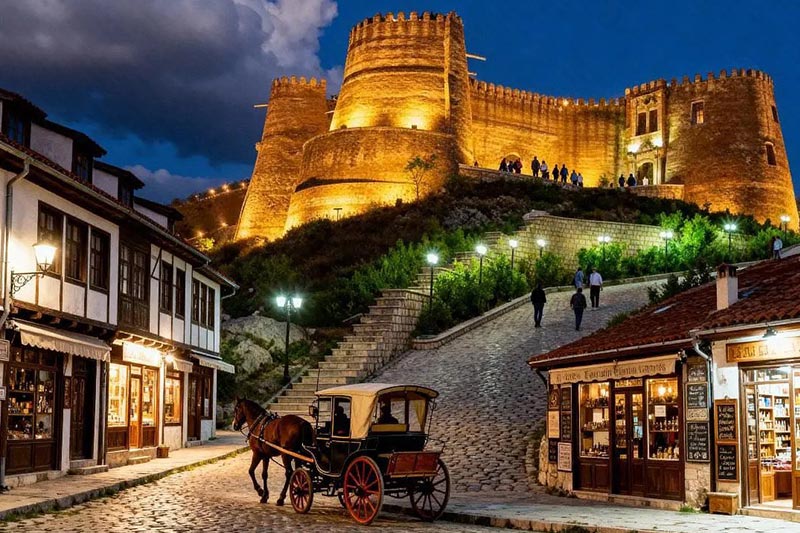
At night, Falak-ol-Aflak transforms into more than just a historical monument— it becomes a living legend. The interplay of light and shadow brings the structure to life, guiding viewers on a visual journey through the history of Lorestan.
A trip by plane is not just about purchasing a ticket — comfort during the flight is equally important. To ensure a pleasant travel experience, seat selection is one of flysepehran’s key services. This option allows you to choose seats with extra legroom, aisle seats, window seats, or seats next to your travel companions, ensuring a more enjoyable and comfortable journey.
Ultimately, Falak-ol-Aflak Castle — with its unique combination of historical significance, military–political role, tourism potential, and cultural influence — stands not only as one of Lorestan’s most valuable heritage monuments but also as a national treasure that plays a lasting role in introducing Iran’s history, identity, and tourism potential to the world.




 Reading suggestion: The Grand Egyptian Museum