


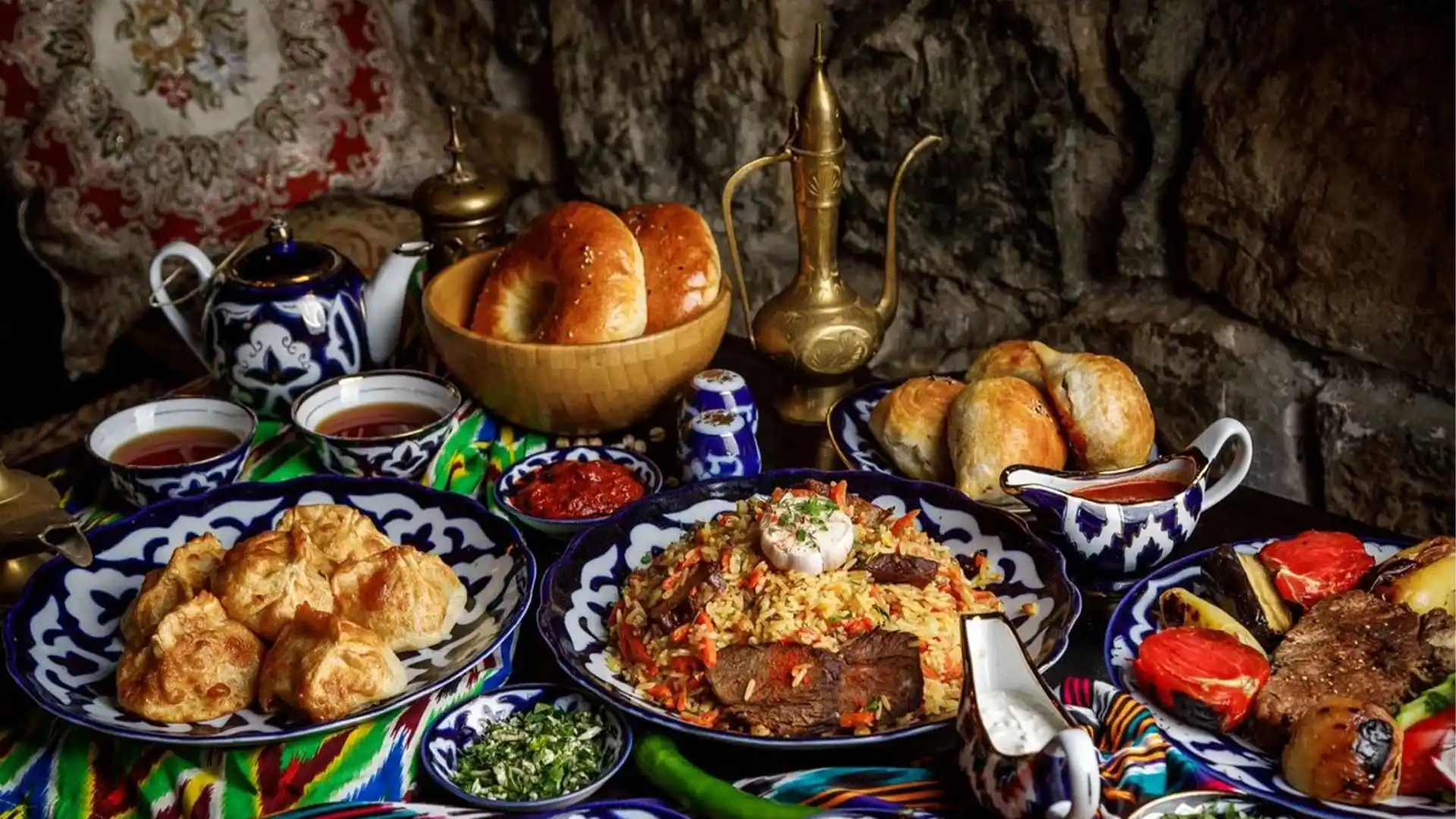




If you are planning to travel to Tajikistan or are interested in learning about the food culture of nations and the lifestyle of the people of this country, getting to know Tajikistan Foods is one of the most fascinating parts of this journey. Tajik cooking is a blend of Central Asian flavors, Iranian influences, and nomadic traditions, reflected in hearty dishes, local breads, fragrant soups, and simple yet delicious desserts. In this article, you will discover the most famous foods of Tajikistan, along with its sweets and edible souvenirs—treats that make the travel experience richer and culturally more meaningful.
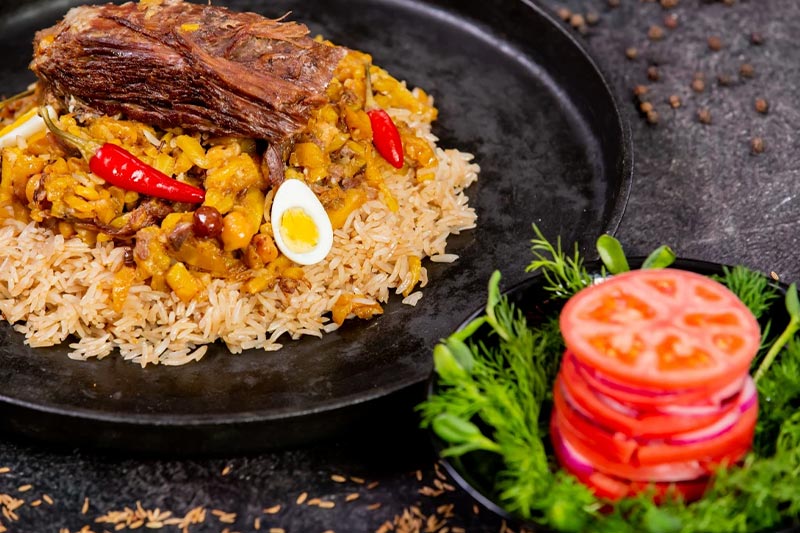
Tajik plov, also known as plov or osh, is the most famous and important traditional dish of Tajikistan. It is made from rice, carrots, onions, and aromatic spices, usually topped with large chunks of meat (often lamb or beef). Compared to many other rice dishes, Tajik plov is richer and oilier, which gives it a particularly delicious flavor.
In the Tajik language, the word osh simply means “food,” highlighting the central role this dish plays in the country’s culinary culture. Tajiks typically serve it in a large shared platter called a tabak, around which everyone sits together—an important symbol of hospitality and unity.
To prepare Tajik plov, first the meat is sautéed with onions until golden. Then, thinly sliced carrots are added, and the ingredients are allowed to cook together. After that, the washed rice, along with special spices, is placed on top of the mixture and steamed over low heat so that the aroma and flavor of the ingredients are absorbed into the rice. Finally, the plov is served either layered or mixed.
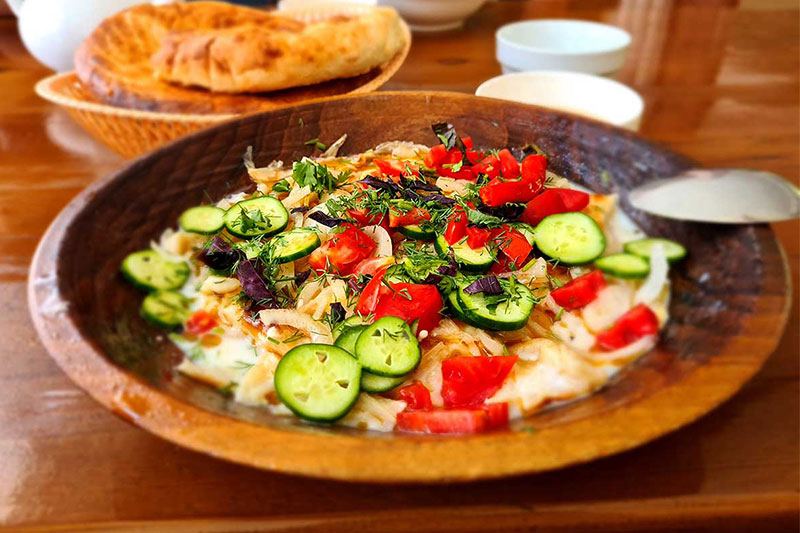
Qurutob is one of the most distinctive and authentic Tajikistan Foods, mostly known as a light, meat-free meal. This dish is a combination of local bread, fresh vegetables, and a creamy sauce that has a unique and very pleasant flavor, making it an excellent option for those who want to take a break from meat dishes.
The most important element of this food is Qurut — small balls of dried, salty cheese that are dissolved in water to create a white, flavorful sauce. This sauce is poured over pieces of bread and then topped with ingredients such as onions, tomatoes, cucumbers, fresh herbs, and sometimes chili peppers.
To experience the authentic taste of this dish in Tajikistan, you should visit a Qurutobkhona — restaurants that specialize in serving qurutob and is considered part of the country’s culinary culture.
To prepare qurutob, local flatbread is first torn into pieces and arranged in a dish. Then the salted qurut is dissolved in water to make a thick, creamy sauce. This sauce is poured over the bread until it becomes completely soft. Finally, fresh vegetables such as onions, tomatoes, cucumbers, and aromatic herbs are added on top, and the dish is ready to serve.
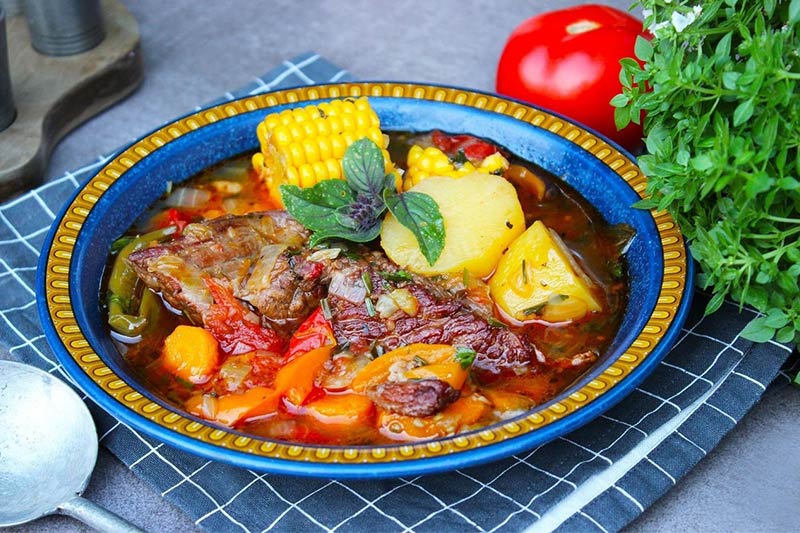
Shurbo is one of the most common and nostalgic Tajikistan Foods, and the word itself means “soup” in Tajik. This warm and nourishing dish is served throughout the country and is a staple of daily meals.
Traditional shurbo is usually made with potatoes, carrots, pieces of meat, and a small amount of fat, which enhances its rich and energizing flavor. It is especially popular during colder seasons but can be found year-round in homes and local restaurants.
Its simplicity, combined with high nutritional value, makes shurbo one of the most typical meals in Tajikistan.
Meat pieces are first simmered in water to extract their flavor. Chopped carrots and potatoes are then added and cooked slowly until tender. The soup is seasoned with salt and spices and served hot.
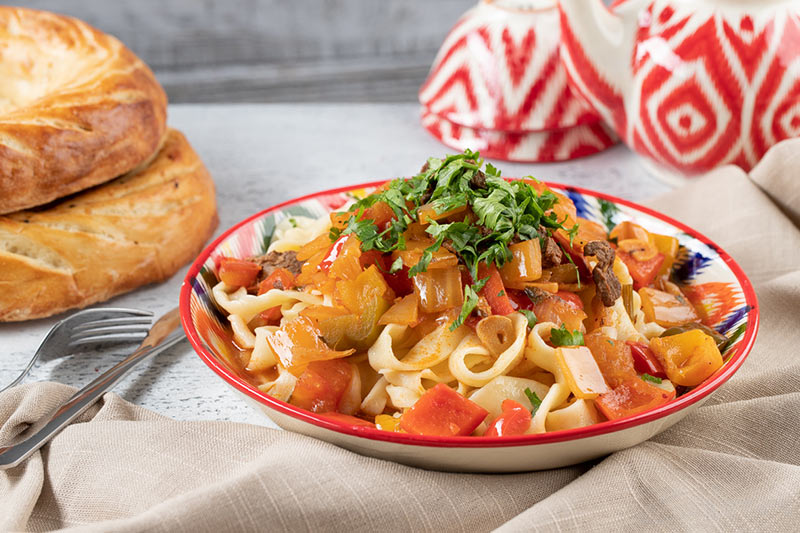
Laghman is a traditional and beloved dish in Tajikistan that resembles soup but is thicker and more substantial than shurbo. Its defining feature is thick noodles that form the base of this aromatic and hearty meal.
The noodles are served in broth with vegetables and pieces of meat, creating a rich and satisfying flavor. Laghman is widely enjoyed both at home and in restaurants and is typically considered a complete, filling meal.
Thick homemade or ready-made noodles are cooked until soft. Meat is then simmered with vegetables such as onions, carrots, and peppers in water or broth to create a rich soup. Finally, the noodles are placed in a bowl and topped with the broth and cooked ingredients.
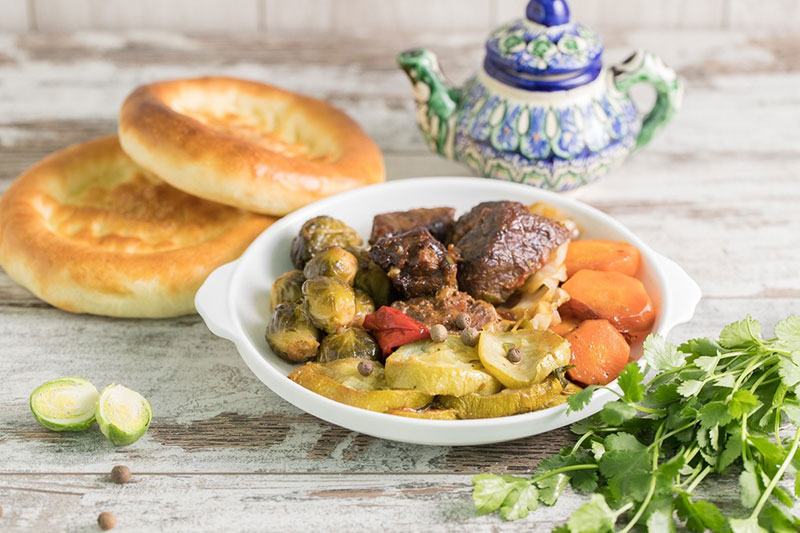
Dimlama is an extremely healthy and nourishing dish based primarily on a variety of fresh vegetables. It is very flexible, allowing almost any vegetables to be used, though cabbage, potatoes, carrots, bell peppers, onions, and tomatoes are most common. Pieces of meat are usually added to create a complete and energy-rich meal.
All ingredients are layered in a large pot (kazan), topped with cabbage leaves, and then slow-cooked over low heat for several hours. This allows the flavors to blend thoroughly, resulting in a delicious and nutritious dish. Dimlama is a popular homemade meal among Tajiks and is valued both for everyday dining and festive occasions.
Meat and chopped vegetables are layered in a pot, covered with cabbage leaves to retain steam and juices. The pot is then cooked slowly over low heat for several hours until the vegetables are tender and flavors are fully combined. It is usually served with bread or rice.
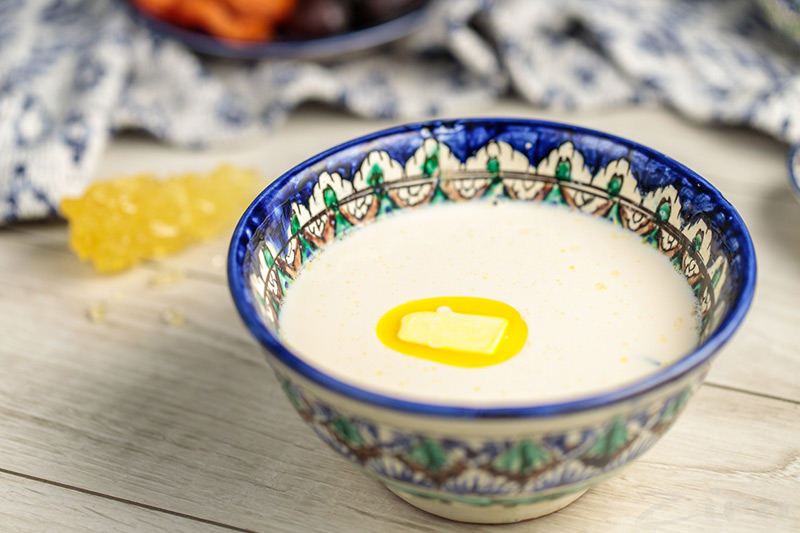
In the Tajik language, shirchoi literally means “milk tea,” and it is exactly what the name suggests: a simple and flavorful combination of tea and milk. This drink-dish is usually served with pieces of bread that are dipped into the milk tea, and sometimes a piece of butter is added to create a richer, creamier taste.
Despite its simplicity, shirchoi is extremely popular and is consumed at almost any time of day in the Pamir region. Although it is traditionally considered a breakfast item, people in the Pamir may even enjoy it after dinner as a dessert. For many locals, shirchoi is an inseparable and essential part of everyday life.
To prepare shirchoi, brewed tea is first mixed with milk to create a milder color and flavor. Small pieces of bread or local flatbread are then dipped into the mixture, and butter may be added if desired to enrich the drink further. Shirchoi is typically served hot and is best enjoyed as part of breakfast or a light snack.
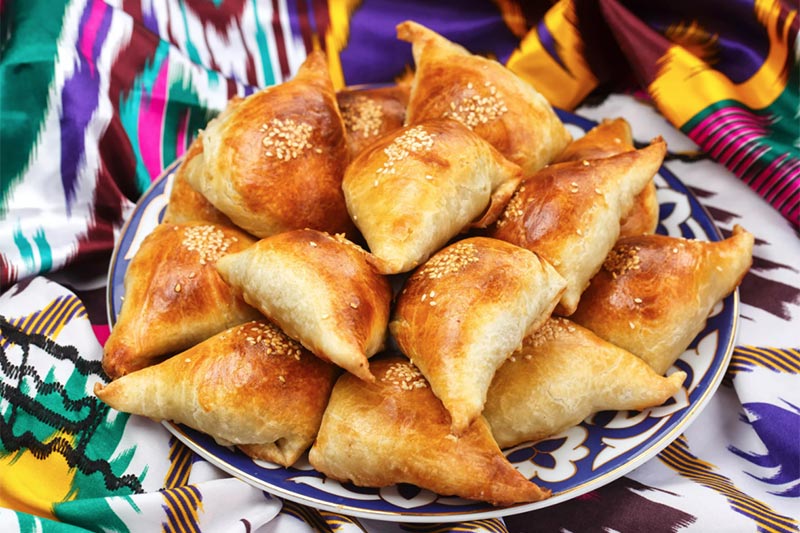
Sambusa is one of the most popular and recognizable street foods in Tajikistan. It is essentially a type of stuffed pastry, usually filled with minced meat and onions. You can find sambusa in almost every street and market across Tajikistan, often sold by vendors at affordable prices. It is a quick and delicious option when traveling and in need of a light but filling snack.
The dough is first prepared and filled with a mixture of minced meat and onions. It is then shaped into triangles or semicircles and deep-fried until golden and flavorful. Sambusa is usually served hot and can be eaten as a snack or part of a main meal.
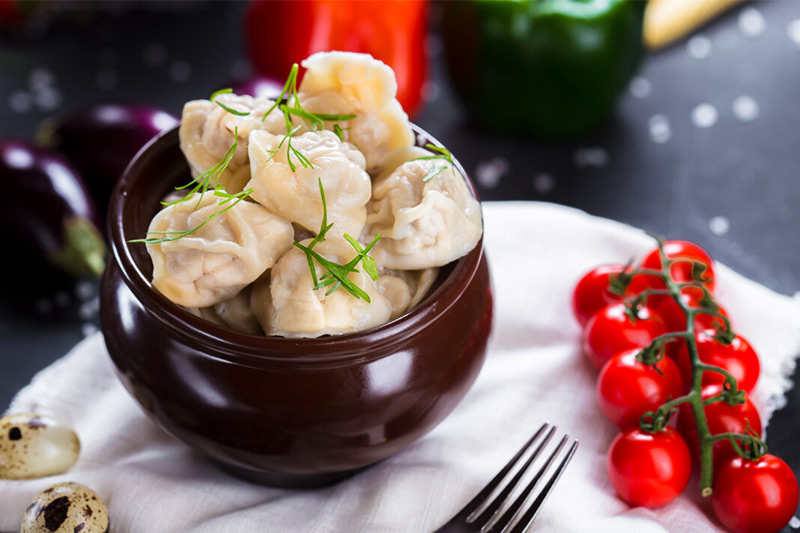
Manti is a traditional and popular Tajikistan food served as steamed or boiled dumplings. It is typically filled with minced meat and is considered a healthier option compared to fried street foods. So, manti is relatively small in size, making it suitable both as a side dish and as a snack during travel. Its mild flavor and high nutritional value have made it a favorite among families and restaurants alike.
Thin dough is prepared and filled with minced meat and onions. The dumplings are shaped into semicircles or squares and then steamed or boiled until fully cooked and tender. Manti is usually served hot and can be enjoyed with local sauces or yogurt.
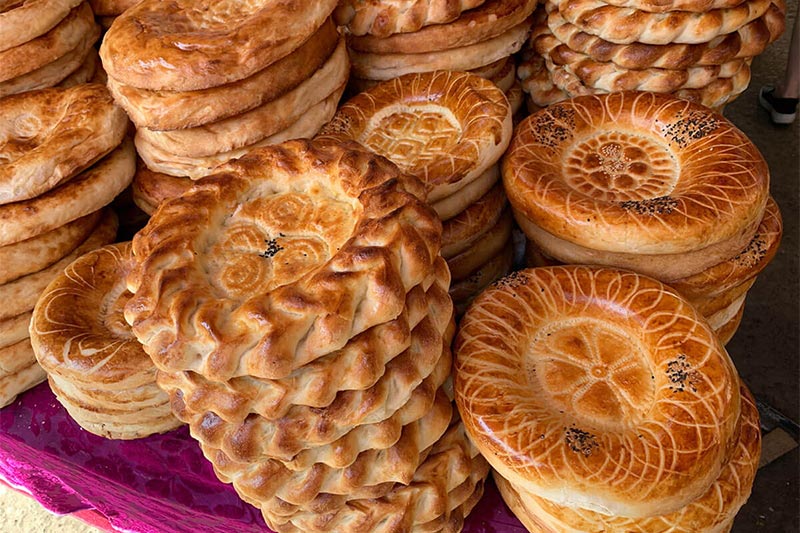
Bread, known as non, is the most important element of Tajikistan Foods culture. Although it is not considered a standalone dish, its presence alongside nearly every meal gives it a special place on the Tajik table.
Tajik bread is typically large, round flatbread baked in traditional clay ovens. Beyond being a staple food, it symbolizes blessing, hospitality, and respect for food in Tajik culture and is always placed at the center of the table.
In Tajikistan, almost no meal is complete without bread, which is served with soups, stews, rice dishes, and even tea.
Dough made from flour, water, salt, and yeast is shaped into a round form. Traditional patterns are pressed onto the surface, and the bread is baked in a hot oven until golden on the outside and soft inside. It is usually served fresh and warm alongside various dishes.
Tajikistan’s foods reflect the lifestyle, climate, and hospitable culture of its people. From Tajik plov as the national dish to home-style meals such as dimlama and shurbo, from street snacks like sambusa and pastries to the unique traditional drink shirchoi, all demonstrate that Tajik cooking is based on simplicity, fresh ingredients, and nourishing meals. Alongside these foods, Tajik bread (non) holds a special place and appears in almost every meal.
When traveling to Tajikistan, tasting these dishes is not only a delicious experience but also a way to gain a deeper understanding of the culture and everyday life of its people.