

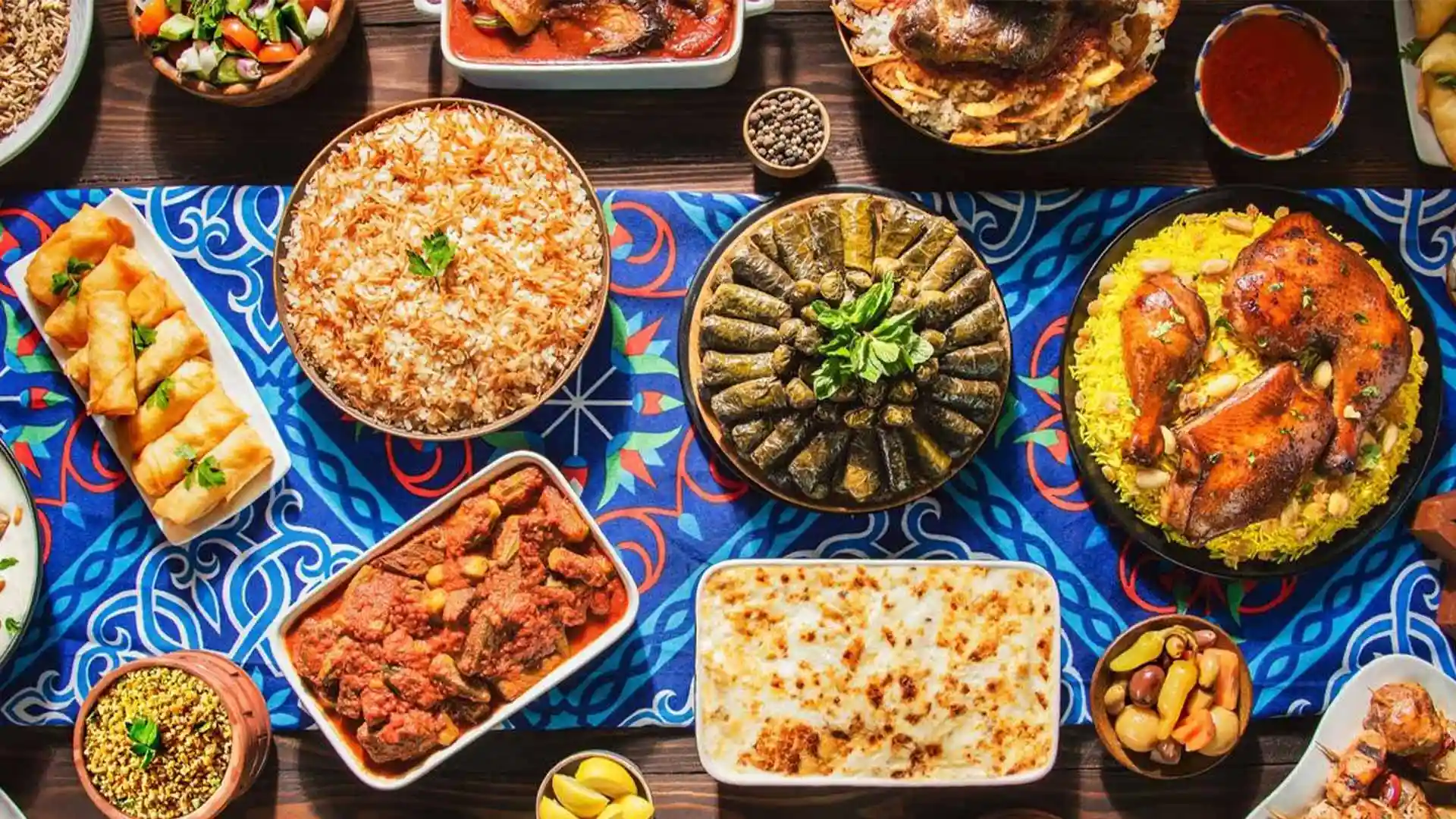


Iranian cuisine is one of the richest and most diverse culinary traditions in the world. From aromatic rice dishes and slow-cooked stews to smoky kebabs and festive meals, the best Iranian food reflects the country’s history, geography, hospitality, and deep-rooted Food Culture. Each dish tells a story of local ingredients, family traditions, and regional flavors that make Persian cuisine truly unforgettable.
With their remarkable diversity and unique flavors, Iranian dishes are among the most attractive cultural experiences for tourists visiting Iran.
For travelers who want to explore the country’s rich heritage and culinary variety, Iran offers an unforgettable journey through taste, tradition, and local identity. Thanks to its diverse climates and regional lifestyles, Iranian cuisine varies widely from one area to another. In the northern and southern regions, seafood is especially popular, while in mountainous areas, many traditional dishes are meat-based and designed to provide warmth, energy, and endurance in colder weather.
These regional differences not only make Iranian cuisine appealing to international tourists but also offer a deeper understanding of the country’s Food Culture, traditions, and way of life. By traveling through different cities and tasting local dishes, visitors can discover new flavors and gain a closer connection to Iran’s cultural diversity.
Iranian dishes are known for their thoughtful use of spices, herbs, and flavoring ingredients that create rich and layered tastes. Ingredients such as saffron, cinnamon, turmeric, dried rose petals, and fresh herbs give Iranian food its distinctive aroma and depth of flavor. These combinations do more than make the dishes delicious; they also reflect traditional knowledge of ingredients and their role in everyday cooking.
Fruits also play an important role in Iranian cuisine. Ingredients such as plums, barberries, sour cherries, quince, and pomegranates add a balance of sweetness, sourness, and freshness to many traditional dishes. This use of fruit in savory recipes creates unique flavor profiles that make Persian dishes especially memorable for travelers and food lovers.
Iranian food also reflects the country’s climatic diversity, local products, history, and cultural exchanges over the centuries. From festive meals served during Nowruz to comforting dishes prepared for family gatherings, food has always played an important role in Iranian ceremonies, hospitality, and daily life.
For this reason, Iranian cuisine has earned a special place among world cuisines. Its deep connection with history, Food Culture, regional identity, and complex flavors makes it a source of discovery and delight for anyone interested in global culinary traditions.
Iranian food holds a special place among world cuisines because of its unique aromas, rich flavors, cultural depth, and historical significance. Every dish tells a story of tradition, hospitality, and local identity, from saffron rice and slow-cooked stews to smoky kebabs and colorful regional specialties.
These qualities have made Iranian cuisine appreciated not only in Iran but also by food lovers and travelers around the world. In the following sections, Sepehran Blog will introduce you to the best Iranian food and some of the most famous Persian dishes you should try on your journey through Iran.
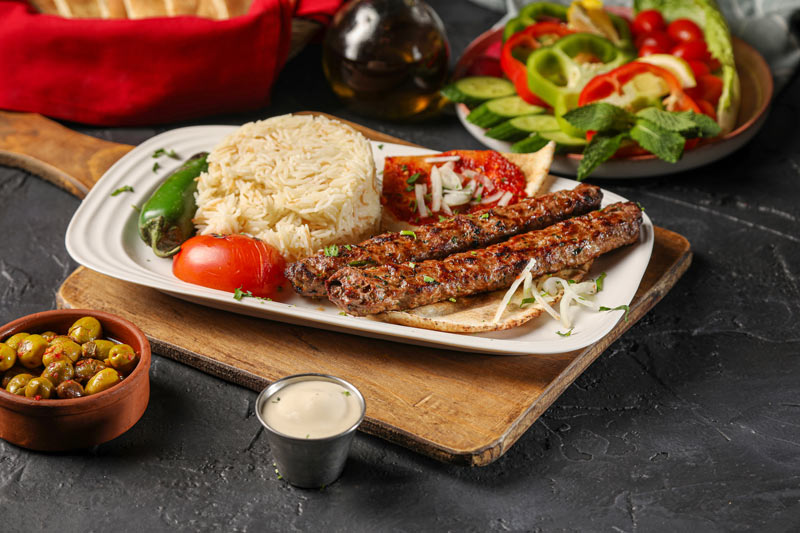
Chelo kebab is one of the most famous Iranian dishes in the world. Chelo Kebab is categorized into various types, including Kebab Barg, Koobideh, Chenjeh, Shishlik, and Soltani. The meat required for this dish varies depending on the type, sourced from lamb, beef, or chicken, although the most popular type is Koobideh made with lamb.
The common form of Chelo kebab has been attributed to Naser al-Din Shah based on the book of Qajar history. According to Mirza Mohammad Reza Motamed al-Ketab, Naser al-Din Shah ordered the chef to prepare a Caucasian dish, which is the early form of today’s Koobideh. The cooking process of this imported dish later changed, leading it closer to the shape and flavor of modern Koobideh.
The oldest Chelo Kebab restaurant in Tehran dates back about 120 years. According to E’temad al-Saltaneh, it was located in Tehran’s market and called “Nayeeb.”
The cooking method of Koobideh is quite challenging and is typically categorized as one of the dishes made by grillers. So, the name “Koobideh” stems from the way the meat is prepared; to make a good kebab, lamb meat is flattened and placed in large mortars, mixed with salt and pepper, and then pounded for hours with large wooden pestles until it becomes a sticky paste. The meat is ready for skewering and cooking over charcoal.
Aside from serving Koobideh with rice, commonly referred to as Chelo Kebab, it has also been traditionally eaten with Sangak bread. Sumac is often used as a suitable spice to kebab. Additionally, raw onions and basil are usually served alongside this dish.
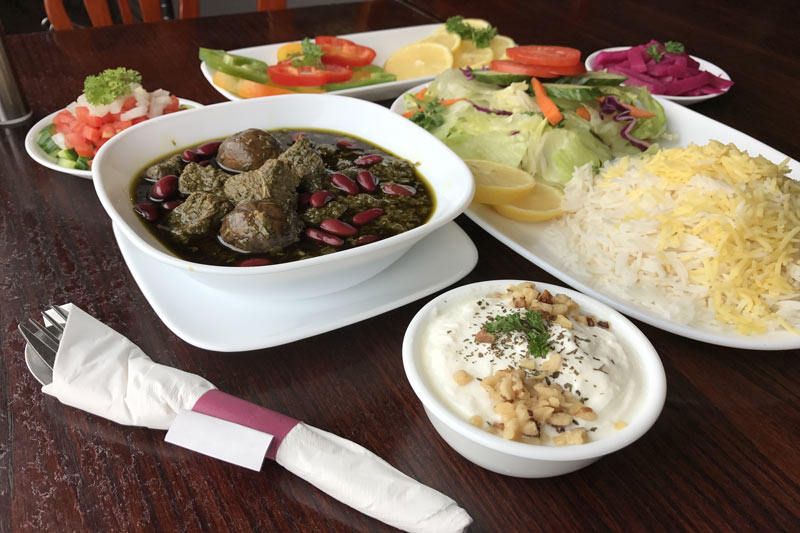
Ghormeh Sabzi is one of the most famous types of Iranian dishes, and in terms of flavor, calories, and smell, it deserves to be counted among the best foods in the world. This Iranian food has a history of 2,000 years and is considered a national dish because it cannot be limited to any specific region or ethnic group in Iran, as it is widely made throughout the country, also with variations in cooking methods and ingredients.
The initial origins of this Iranian stew can be traced back to the nomadic Turkic-speaking Aq Qoyunlu tribes, who were particularly renowned for their livestock and agriculture among Iranian communities. To preserve lamb meat during winter, they had a fascinating method: after slaughtering the sheep, they would cut the meat and sauté it in lamb fat with salt before storing it in jars for the winter.
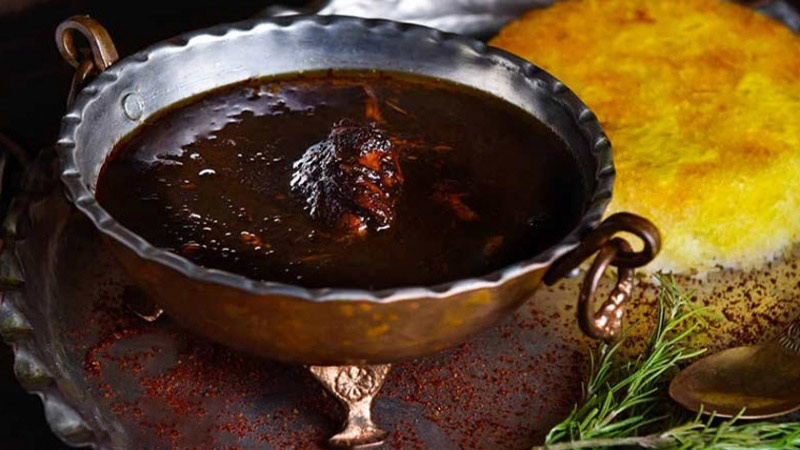
Fesenjan is a distinctly Iranian dish that can be divided into various types based on its ingredients. Despite differences in the raw materials, all follow the cooking style of Tehran fesenjan. Its origins can be traced back to Mazandaran.
Some researchers believe that Fesenjan dates back to the Sassanid era when Iranians cooked it as a Nowruz food in the last days of March. The interesting thing to note is that the Arabicized word Fesenjan is the ancient name of Espangdan.
Some well-known types of fesenjan include Tehran fesenjan, meat fesenjan, small meatball fesenjan, pumpkin fesenjan, almond fesenjan, pistachio fesenjan, hazelnut fesenjan, Rashti fesenjan, fish fesenjan, turkey fesenjan, beet fesenjan, dried plum fesenjan, yogurt fesenjan, eggplant fesenjan, Mazani fesenjan, quince fesenjan, carrot fesenjan, pomegranate fesenjan, and Circassian chicken fesenjan.
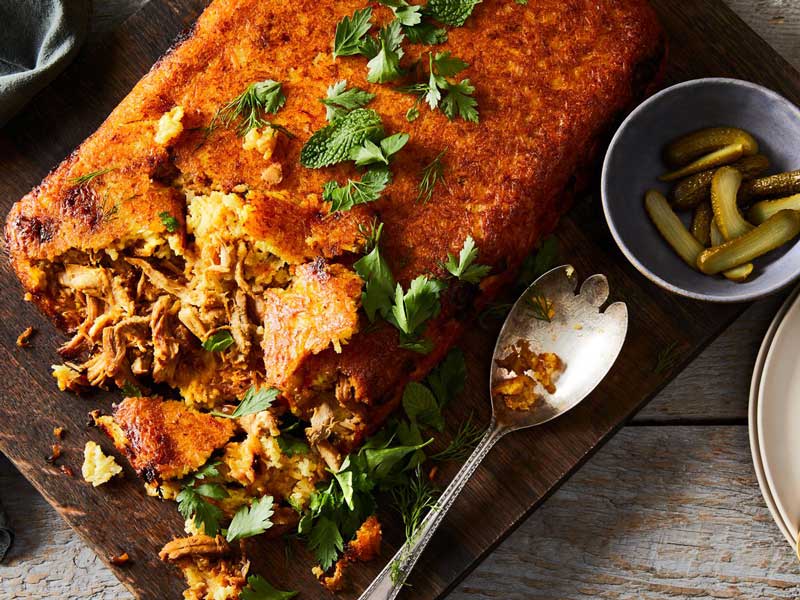
Tahchin is a delicious and popular Iranian dish with rice, chicken (or other meats), yogurt, saffron, and eggs. It has a soft texture and a delightful flavor. Tahchin can be prepared with various types of meat, such as chicken, lamb, and even vegetables. It is part of Iran’s rich culinary culture and is served as a special and delicious dish at gatherings and celebrations.
You can enjoy this authentic and tasty dish at various traditional restaurants throughout the city.
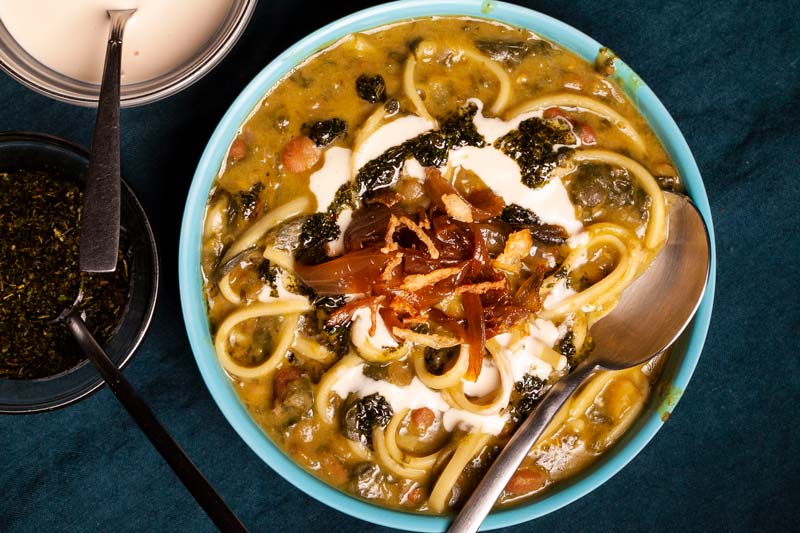
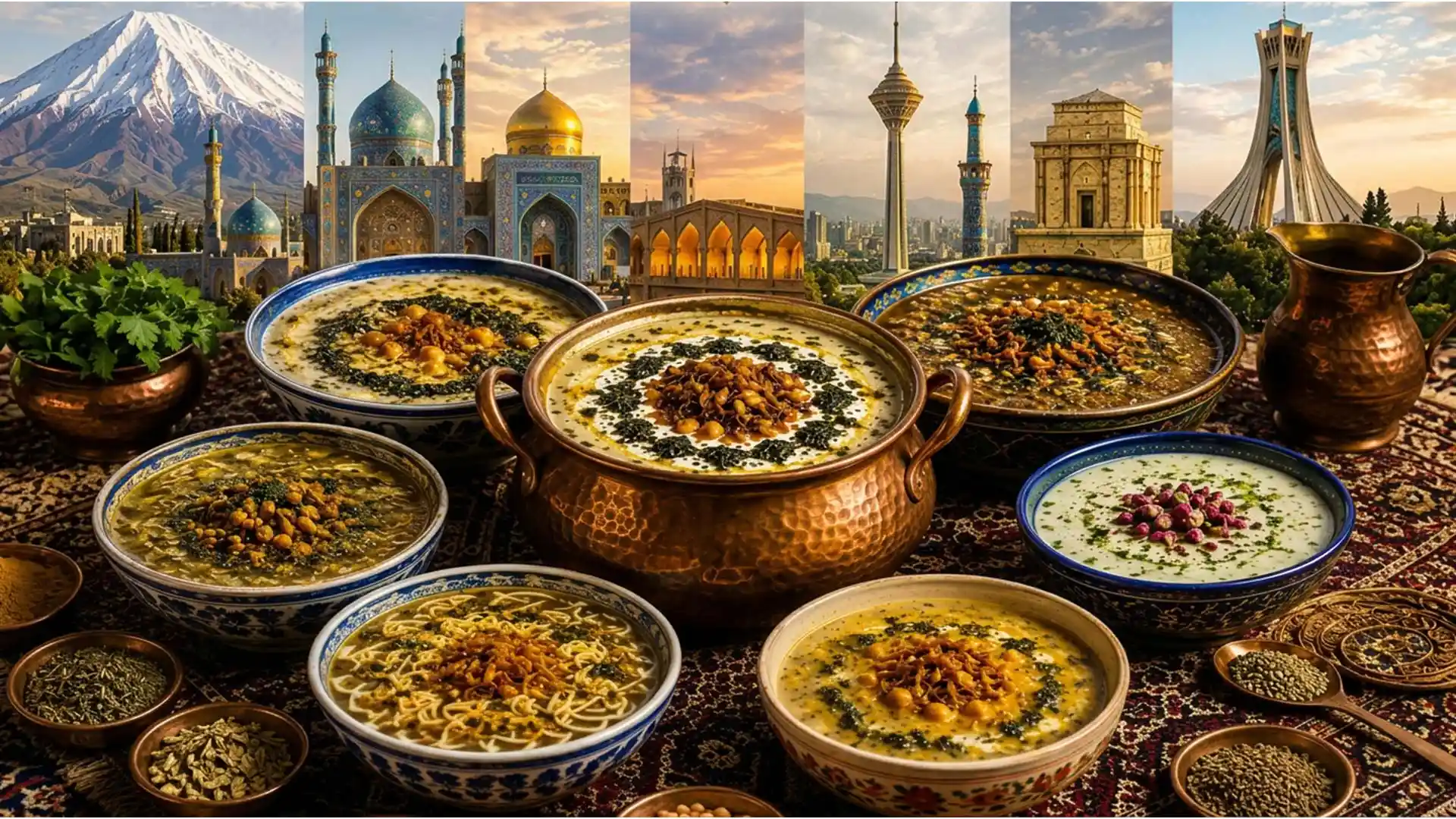
Ash Reshteh is the most popular Iranian soup a special place in Iranian culture and Iranian families in all seasons of the year, especially in cold weather. This hearty dish is a satisfying blend of thin noodles, legumes, aromatic herbs, and traditional flavor enhancers like curd, served as a complete and satisfying meal.
Ash Reshteh plays an important role in Iranian culture and is often served on various occasions, such as during the month of Muharram, Yalda Night, and Nowruz.
The history of Ash Reshtehh dates back to ancient times when Ashes were popular as a part of the daily diet among Iranian families. Over time, this dish evolved into its present form. Also, Ash Reshteh is popular in neighboring countries, with slight recipe variations.
The use of different vegetables in noodles, beans, and curd in this soup has turned it into a complete and nutritious meal that can meet the nutritional needs of the body in one meal. Ash Reshteh is a prominent example of the richness of Iranian cuisine, showcasing the art of combining diverse ingredients.
Ultimately, Ash Reshteh is more than just a dish; it is a part of Iranian cultural and historical identity. This traditional soup, with its unique aroma and flavor, keeps alive memories of family gatherings and traditional ceremonies, passed down from generation to generation, telling the story of Iran’s rich culture and ancient history.
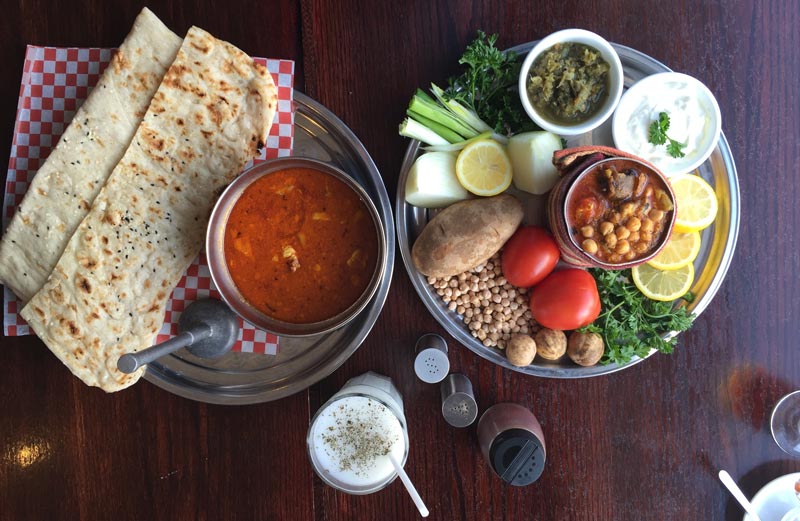
Dizi, also known as Abgoosht, is one of the oldest and most dishes in Iranian cuisine with a rich history in the nation’s culinary culture. Serving this dish is a delightful experience, evoking memories of authentic flavors, traditional gatherings, and warm camaraderie. The history of this dish dates back to pre-Islamic times, and it has remained one of the most beloved dishes among Iranians since then. The main ingredients of Dizi include lamb, beans, potatoes, onions, tomatoes, and spices. Dizi is famous for its delicious and nutritious taste and unique method of preparation and serving.
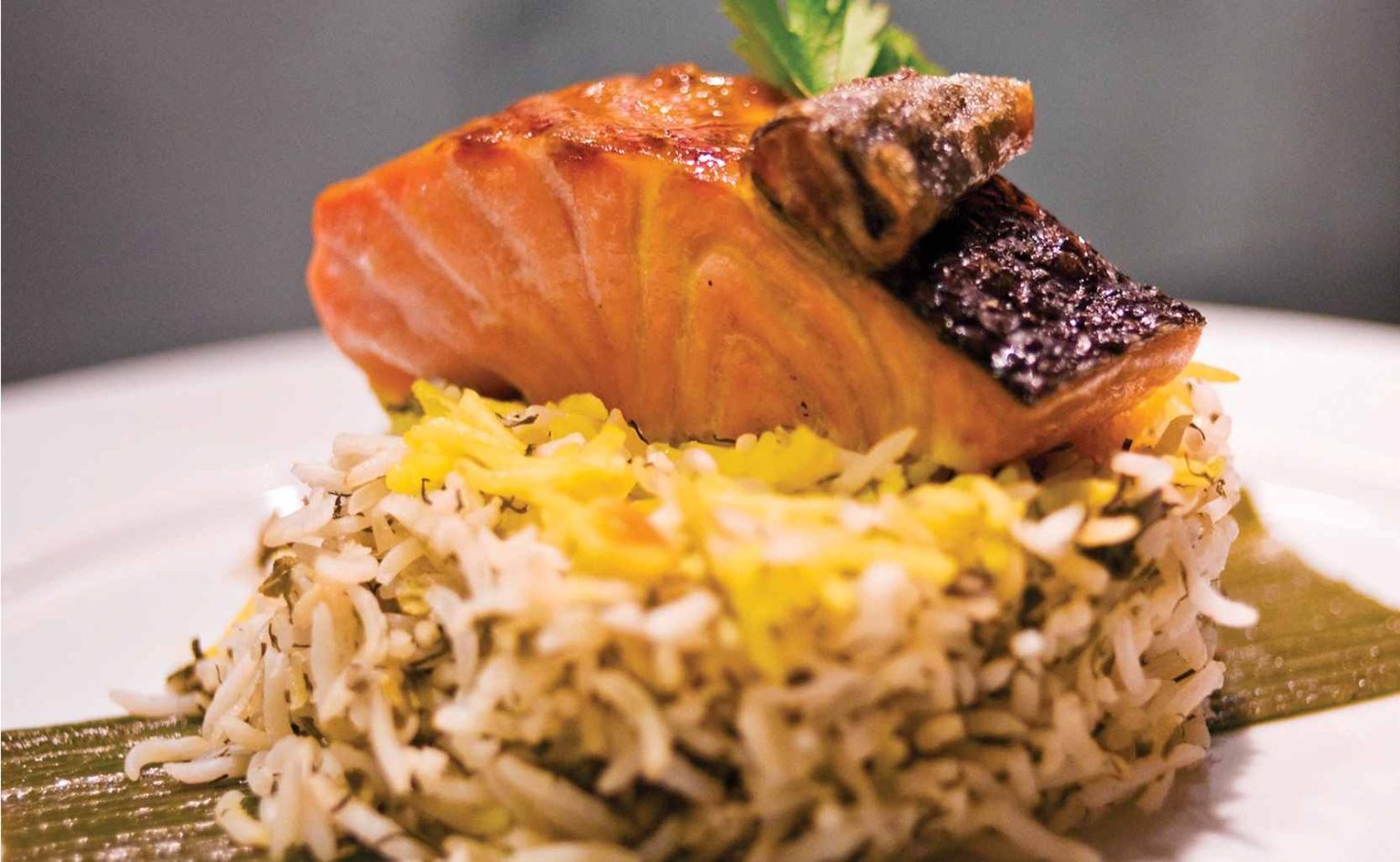
Sabzi Polo with Fish is a traditional Iranian dish, especially popular to prepare during the Persian New Year (Nowruz). Although this delicious dish is commonly served at Nowruz celebrations, its presence on festive tables does not date back to the holiday itself. The tradition of serving Sabzi Polo with Fish likely became popular several centuries after the ancient celebration of Nowruz began.
In Iranian culture, fish holds symbolic significance. Due to its water connection, considered a sacred element, fish has historically been associated with blessings, purity, and abundance. Its image as a symbol of prosperity and sustenance can be found on pottery, jewelry, and various artifacts, often alongside Anahita, the goddess of water.
One of the oldest known depictions of a fish symbol is found on a gold figurine from the “Amu Darya Treasure,” discovered at the ancient site of Takht-e Qobad, dating back to the Achaemenid era. By engraving the image of fish on household items, jewelry, inscriptions, and more, Iranians sought to carry the blessings and purity with water in their lives.
This reverence for fish as a valuable creature is the origin of its presence on every Iranian table during the New Year’s Eve celebration. Symbolically, by eating (or “sacrificing”) the fish, Iranians express their gratitude for God’s blessings and offer thanks for the abundance they have received.
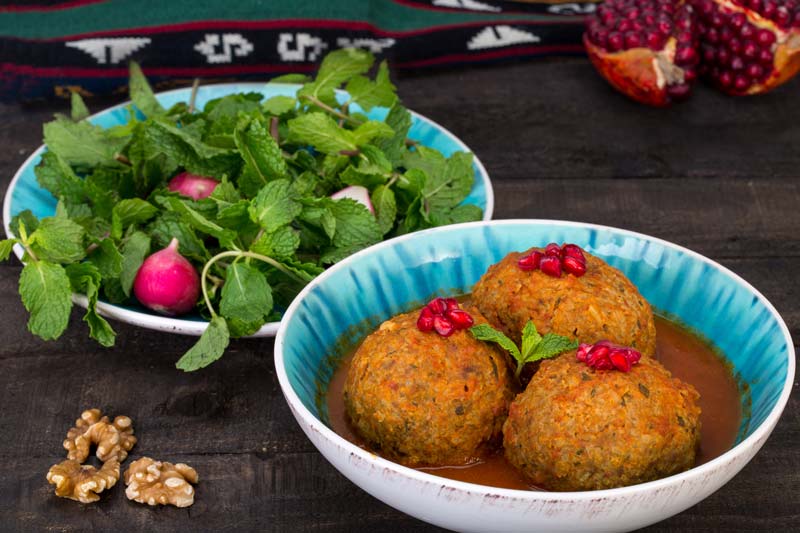
Koofteh, like Abgoosht, is a distinctly Iranian dish, though similar versions exist under the same or related names in regions like India, the Caucasus, Asia Minor, East Asia, North Africa, and Southern Europe. The cooking method for various types of Koofteh is similar, with the main difference lying in the fillings placed inside each type.
Iranian varieties include Tabriz Koofteh, rice Koofteh, Gheimeh Rizeh, dill and fava bean Koofteh, Kashan Koofteh, Ma’alli Koofteh, and Gonjeshki Koofteh. International versions include egg croquettes, meat croquettes, fish croquettes, red lentil meatballs, Indian sparrow-sized Koofteh, Danish Koofteh, meatloaf, vegetable meatloaf, sausage and egg meatloaf, liver meatloaf, spinach meatloaf, mushroom and olive meatloaf, Japanese meatloaf, fish Koofteh, fish meatloaf, and shrimp meatloaf.
The main ingredients of this stew include red meat, which is sometimes replaced with chicken in certain regions, a special mix of herbs consisting of green onions, parsley, coriander, and a bit of fenugreek, along with beans, dried lime (limo Omani), and onions. Rice forms the accompanying portion of the dish, completing this delicious stew.
The special day has been designated for its preparation, known as World Qormeh Sabzi Day. This day aligns with the solar calendar and falls on the first Saturday of Azar (December), approximately three days after Thanksgiving in the West.
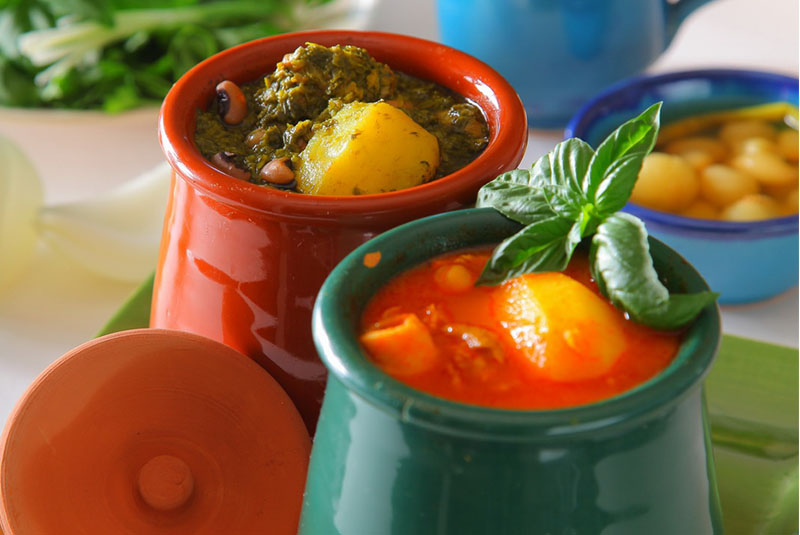
Abgoosht is another traditional Iranian dish with various types such as Bozbash, Curd (Kashk), Wheat(Gandom), Bulgur, and more. It is prepared using a combination of meat and sheep tail, tomatoes, potatoes, and various legumes like chickpeas and beans. This dish is consumed in two parts: first, the broth is eaten as a stew with bread, and then the remaining ingredients, either mashed or not, are placed inside the bread with various condiments such as onions, pickles, and fresh herbs.
The cooking process requires time; therefore, abgoosht is usually prepared earlier than any other dish to allow it to simmer and develop its unique flavor and color.
In the review of historical documents, the oldest document that mentions the method of cooking Abgousht is Divan Atameh, which is one of the cooking treatises of the Shah Ismail Safavi period. In this book, Abgousht is placed in the food section that is categorized under the heading of “Nokhodab” (chickpea soup).
Discover 51 authentic Iranian dishes in the Atlas of Global Cuisines.
Iranian dishes, with their remarkable variety, unique flavors, and deep cultural roots, are more than just meals; they are among the most memorable food experiences in the world. From aromatic kebabs and rich stews to fragrant rice dishes and sweet desserts, every traveler can discover a part of Iran through its cuisine.
In this article, Sepehran Blog introduced some of the best Iranian food and the most famous Persian dishes you should try. Now it’s your turn: what is your favorite traditional Iranian dish? Share your thoughts with us in the comments section.