

 Reading suggestion: The Grand Egyptian Museum

Saadabad Palace in Tehran is one of the most significant legacies of Iran’s monarchical era, prominently standing in the city’s northern part with its striking grandeur. Nestled between mountains, historic gardens, and lush green pathways, it offers visitors a rich blend of history, art, and nature.
This vast complex, which has taken shape over several decades, includes numerous palaces, museums, and mansions, each reflecting a chapter of Iran’s political and artistic history. Today, Saadabad Palace is not only a popular tourist destination but also one of the most comprehensive museum complexes in Tehran.
From the impressive architecture of the palaces to the historical artifacts they house, and the serene atmosphere of the gardens, every element comes together to make visiting Saadabad a unique and memorable experience. In this article on the flysepehran blog, we introduce all the key parts of the complex—including access routes, an overview of the palaces and museums, visitor facilities, and essential tips—to help you plan your visit with ease.
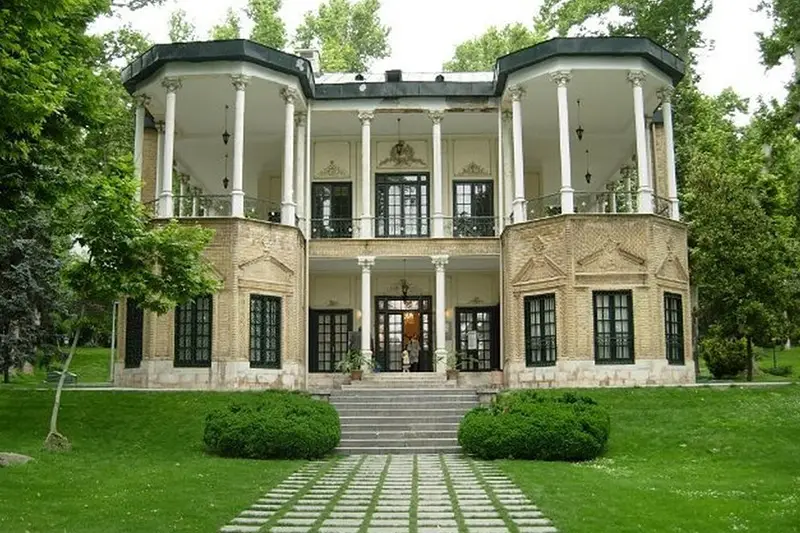
Saadabad Palace in Tehran is a complex whose beauty and grandeur take your breath away at first glance. Located at the end of Darband, this vast estate was once the residence of the royal family and the site of key political decisions, and today it stands as one of Tehran’s major cultural hubs. The sheer scale of Saadabad is so striking that as you walk inside, you feel as though you’ve left the crowded city behind. Long pathways and the shade of trees that have witnessed generations of this land’s history lead you into a place where politics, art, nature, and history coexist side by side.
The palaces and mansions of Saadabad each have their own identity and story. Some are designed in a modern, minimalist language, while others reflect the delicacy and motifs of traditional Iranian architecture.
Among the many buildings in the complex, several stand out due to their historical significance or architectural features. Yet the actual value of Saadabad goes beyond a few well-known palaces. The overall harmony of the landscape design, the thoughtful placement of buildings, pedestrian paths, flowing waterways, and the way spaces connect have turned this estate into a unified and purposeful whole. Visiting Saadabad is more than a simple sightseeing experience; it is a journey through the lesser-told layers of Iran’s contemporary history—where politics, everyday life, architecture, and nature are intricately intertwined. Saadabad is not merely beautiful or simply historical; it is a place where the past was lived, where it flowed through daily life, and where its presence can still be felt in every corner.
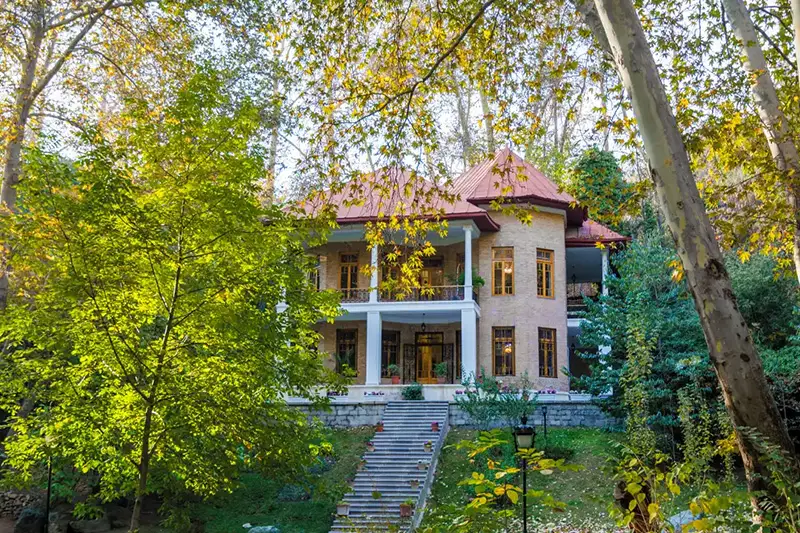
Saadabad Palace is a complex shaped over several historical periods, with each section reflecting a different era. The initial formation of its gardens and buildings dates back to the late Qajar period, when the area was chosen as a summer residence for the kings, and the first mansions were built amid the gardens of Shemiran.
With the rise of the Pahlavi dynasty, the complex underwent significant expansion. Surrounding gardens were acquired, pathways were organized, and new buildings were constructed for members of the Pahlavi family. During this period, the number of palaces increased significantly, and different parts of the complex took on residential, ceremonial, and administrative functions. Construction continued into the era of the second Pahlavi, with each palace being assigned to a specific member of the royal family. The most recent buildings in the complex also date back to this time.
After the 1357 Revolution, Saadabad was no longer used as a royal residence and was opened to the public as a garden-museum complex. Some buildings were given governmental functions, while others were converted into museums and visitor spaces—the form in which tourists experience Saadabad today.
Saadabad Palace is located in the northern part of Tehran, within the administrative area of Shemiranat—an area whose character is closely shaped by the foothills of Mount Tochal. The complex is bordered by Golabdareh to the east, Velenjak to the west, and the Tajrish district to the south. To the north, it extends toward the Alborz mountain range, a direct connection to the mountains that gives Saadabad its distinctive atmosphere.
This setting results in noticeable elevation differences across the complex. The natural slope begins at about 1,650 meters above sea level and continues to rise toward the north. This topography contributes to Saadabad’s cooler, cleaner air and its climate, which feels closer to a mountainous environment than much of Tehran.
Saadabad has several official entrances, offering visitors multiple access routes. Among them, Darband and Zafaraniyeh are the most commonly used entry points.
Visitors usually choose an entrance based on their location or travel plans, as each route offers a distinct experience of entering the Saadabad complex.
Telephone: +98 21 2275 2031–9
Official Website: Saadabad Cultural–Historical Complex website
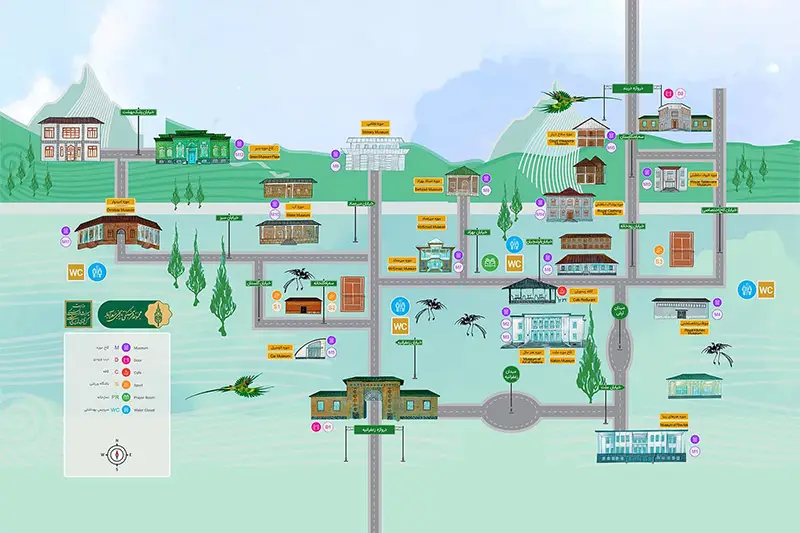
The architecture of Saadabad is the result of several decades of construction and the involvement of different designers. As a result, walking through the complex, you encounter buildings that reflect distinct historical periods. In many of the mansions, the foundations of traditional Iranian architecture are evident. At the same time, the details and forms are influenced by European styles—a fusion that has given Saadabad its unique visual identity.
Among the various structures, the National Palace (White Palace) stands out as a prime example of this blend. With its columned entrance and light-colored stone façade, it combines Western classical design with Iranian decorative elements. Much of the interior work—from plaster reliefs to ornamental motifs—was carried out by Iranian artists, creating a space that feels highly formal and ceremonial.
The Green Palace is another major landmark within the complex. It is best known for its use of green marble and richly detailed interior decorations. The mirrorwork, khatam inlay, and tilework used throughout the building are reminiscent of the artistic styles of the late Qajar period, setting it apart from the other palaces.
Another notable architectural example is the Shams Palace, a two-story building with a more modern design that reflects the introduction of European—particularly German—influences into the complex. In contrast, some of the smaller buildings, such as the Qajar-era mansions, follow a more traditional architectural language, emphasizing simplicity and indigenous forms.
The wide variety of architectural styles found in Saadabad makes the complex feel more like an “architecture gallery” than a conventional royal garden. In this place, the works and tastes of several generations of architects and artists come together to shape the site’s present-day visual identity.
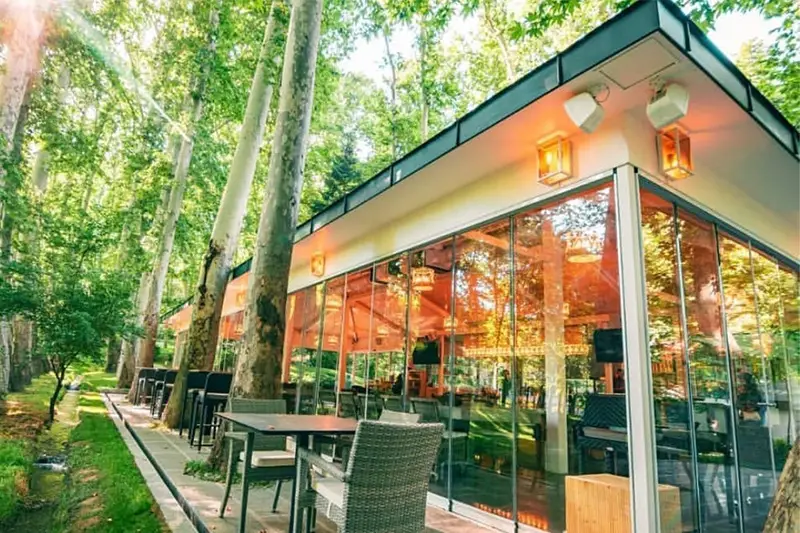
Within the Saadabad Palace complex, Saadabad Cafeee is one of the good options for taking a break, resting, and enjoying food and drinks in a beautiful historical setting.
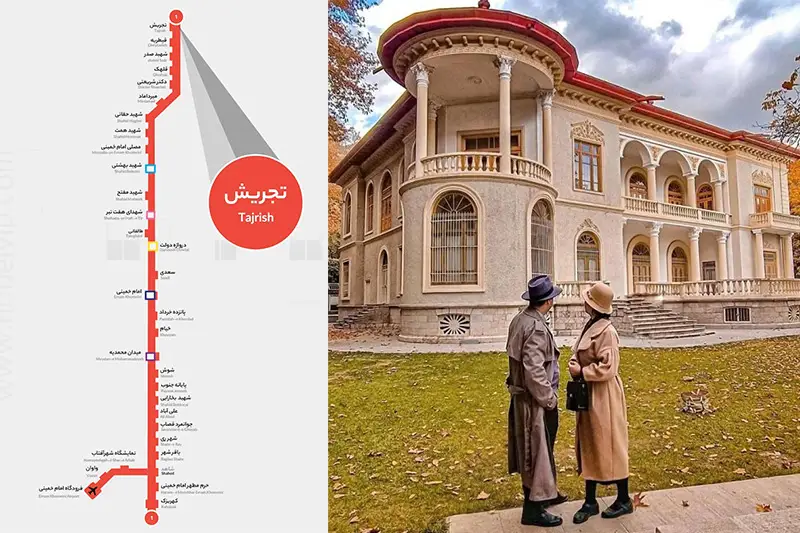
To visit the Saadabad complex, you first need to reach northern Tehran, where the main entrances to the site are located. Whether you arrive in Tehran by train, plane, or bus, your final destination will be either the Darband Entrance or the Zafaraniyeh Entrance, both of which are the main access points to the complex.
If you plan to use public transportation, entering from Darband is usually easier and faster. However, if you are traveling by private car and looking for a more convenient parking option, most visitors choose the Zafaraniyeh Entrance. Below are the details for accessing each entrance, starting with Darband.
Darband Entrance Address:
Tehran, Tajrish Square, Shahid Jafari Street, southern entrance of Darband Square
Depending on your chosen mode of transportation, you have several options:
The easiest public transport route to Saadabad is via Tehran Metro Line 1. From anywhere in the city, ride Line 1 and get off at Tajrish Station. After exiting the station, shared taxis operating on the Tajrish–Darband route are available right outside and will take you directly to the Darband entrance. For many visitors, this is the fastest and most convenient option.
BRT lines that terminate at Tajrish Square are another practical option. After getting off at Tajrish, you can take taxis from Qods Square or the Tajrish taxi stand to Darband. These taxi routes are direct and usually do not take much time.
If you plan to drive to Saadabad, note that the Darband area does not have a dedicated parking lot. You will need to park along nearby streets around Darband Square or in the Tajrish area and walk the remaining distance. The walk is relatively short and leads directly to the Darband entrance.
The Zafaraniyeh Entrance is the second main access point to the Saadabad complex and is commonly chosen by visitors traveling by private car. The main reason is the greater availability of parking along surrounding streets and easier vehicle access to the main gate.
Ways to reach the Zafaraniyeh entrance include:
Zafaraniyeh Entrance Address: Tehran, Valiasr Street, Shahid Fallahi Street (formerly Zafaraniyeh), Shahid Taheri Street
The best entrance depends entirely on your mode of travel and visit conditions:
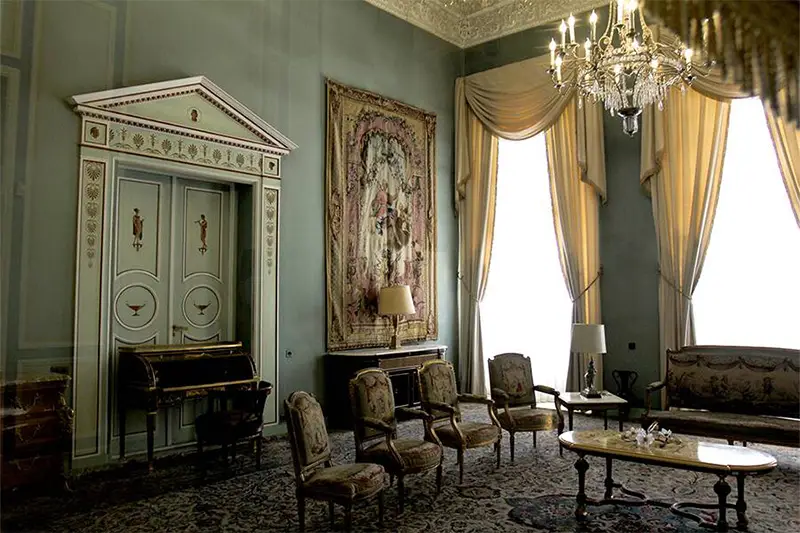
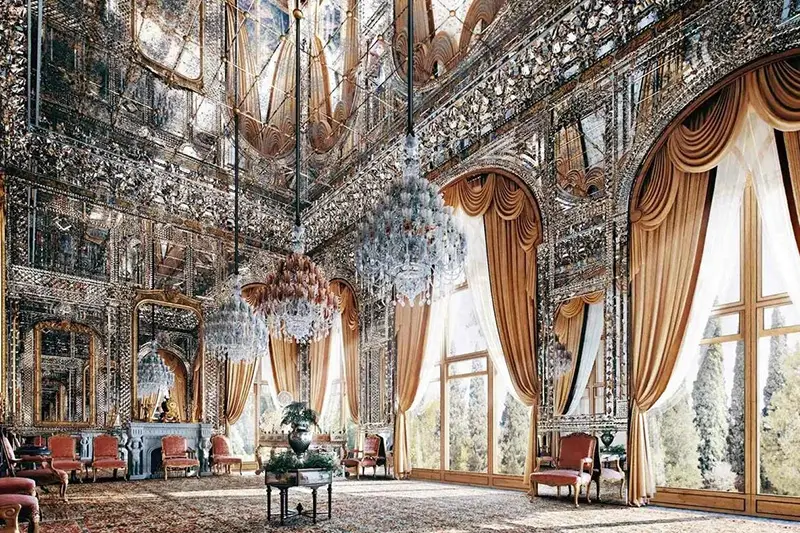
The visiting schedule of Saadabad Palace is adjusted according to the different seasons of the year. Visitors are advised to check museum opening hours before planning their visit.
The Saadabad complex is closed on certain religious holidays. These include:
Visitors are encouraged to check the official calendar in advance to avoid unexpected closures.
Choosing the right time to visit Saadabad Palace greatly affects your overall experience. Spring is one of the most popular seasons, as blooming trees combined with mild weather turn the grounds into one of Tehran’s most pleasant areas. Autumn offers a different kind of beauty, with colorful foliage and a calm atmosphere ideal for walking and photography.
During the hot summer months, although Tehran experiences high temperatures, Saadabad’s higher elevation and dense greenery create a cooler and more comfortable environment. Winter, on the other hand, has a distinct charm in this area. The cold weather gives the complex a quieter mood, and snow-covered landscapes offer a unique and memorable sight for many visitors.
Overall, each season has its own appeal, and depending on your interests, you can enjoy visiting Saadabad Palace at different times of the year.
The Saadabad complex is made up of various sections, each with its own distinct character. Below is an introduction to the major palaces and museums within the estate:
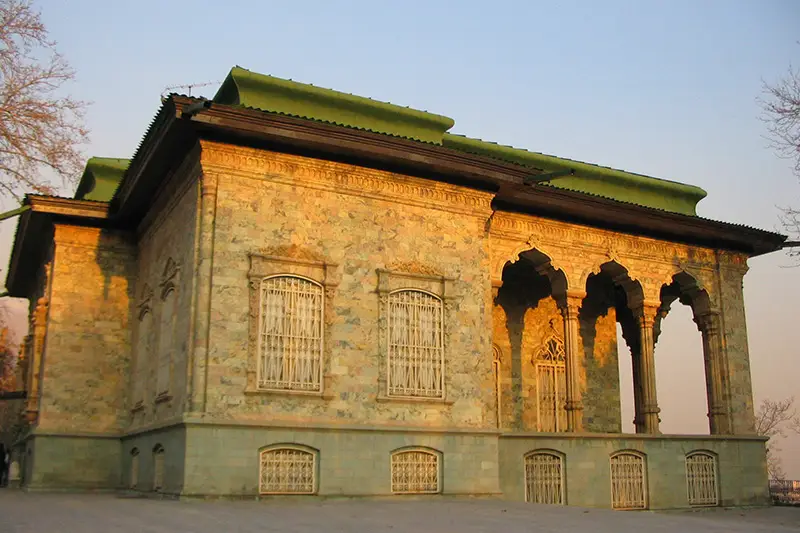
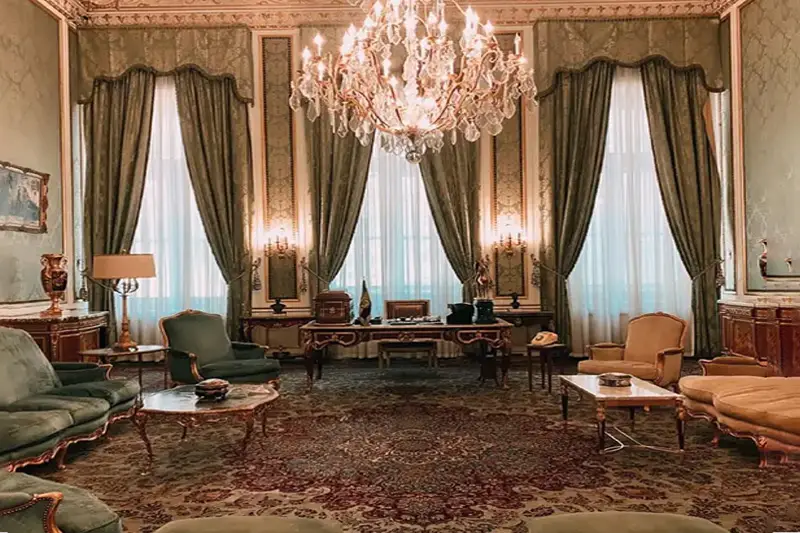
Also known later as Shahvand Palace, the Green Palace is one of the most iconic buildings in the Saadabad complex. Originally a half-finished structure owned by Ali Khan Vali, it was later purchased and completed by Reza Shah. Its most striking exterior feature is the extensive use of rare green marble from the Zanjan mines, which gives the building a distinctive appearance.
During the early Pahlavi era, the palace served as Reza Shah’s summer residence. In later years, following interior and exterior modifications, it came to be known as Shahvand Palace. Its elevated position within the garden provides sweeping views of the northern mountains of Tehran.
The interior showcases a range of Iranian decorative arts, including detailed woodwork, fine plasterwork, and mirrorwork created by renowned artists of the Pahlavi period. The palace consists of two floors and several major halls, many of which still display original historical furniture from the era.
After 1357, the Green Palace was opened to the public as a palace-museum, where visitors can now view a collection of historical objects, including decorative tableware, European furniture, hand-woven carpets, and valuable artworks.
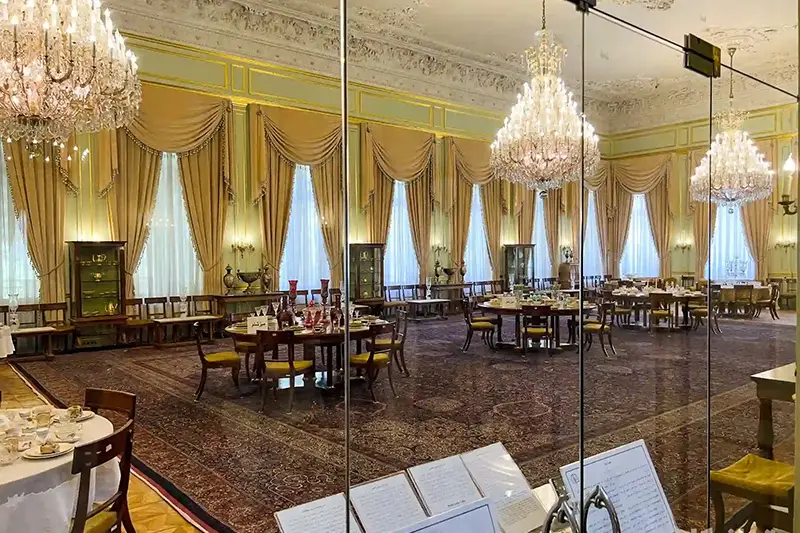
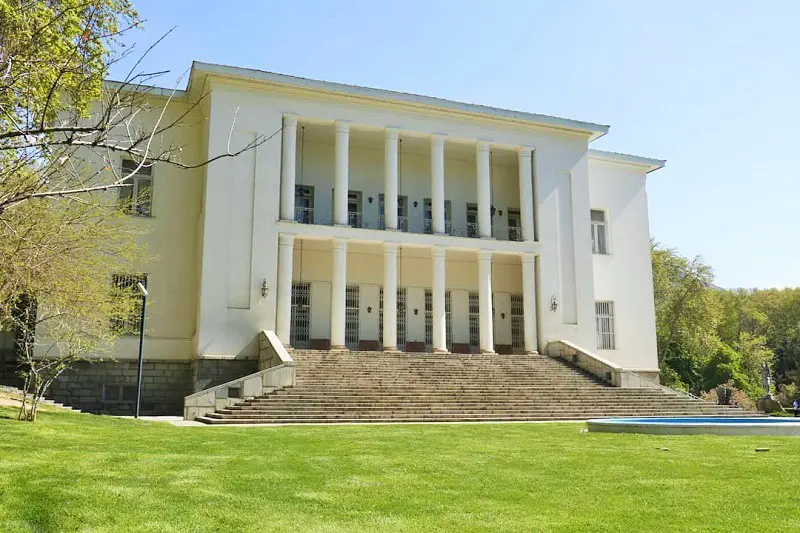
Known for its bright, uniform façade, the White Palace is the largest building in Saadabad and one of the most critical structures from the Pahlavi era. Construction began in the 1310s, and the palace was completed several years later. It was initially intended as the summer residence of Mohammad Reza Shah and his wife, and later became an official royal residence.
The architecture is the result of collaboration between Iranian and European designers, blending Western classical styles with Iranian decorative elements. So, the building includes numerous ceremonial halls, private rooms, and service areas, making it one of the most elaborate structures within the complex.
The palace is filled with valuable artworks and decorative pieces, including intricate plasterwork, renowned paintings, European furniture, fine carpets, and historical tableware. Different floors served different functions, including formal offices, private family areas, and guest reception spaces.
After the revolution, the building was transformed into the National Palace Museum and is now one of the most visited parts of the Saadabad complex.
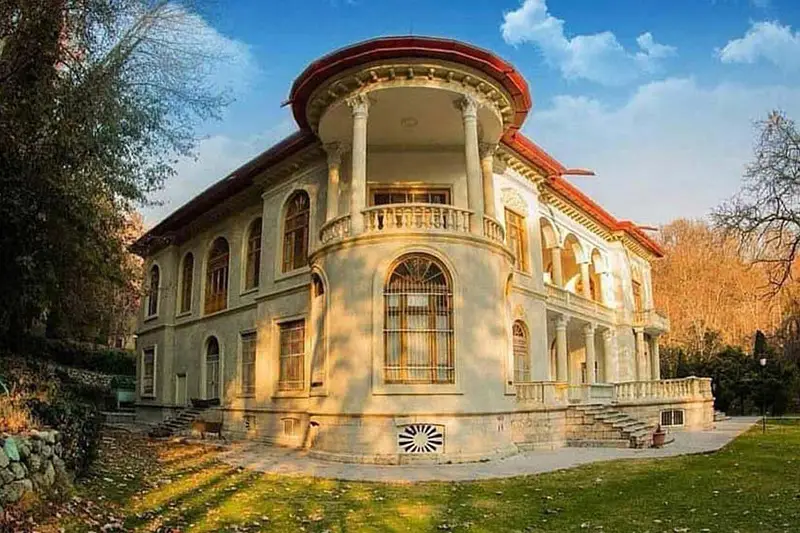
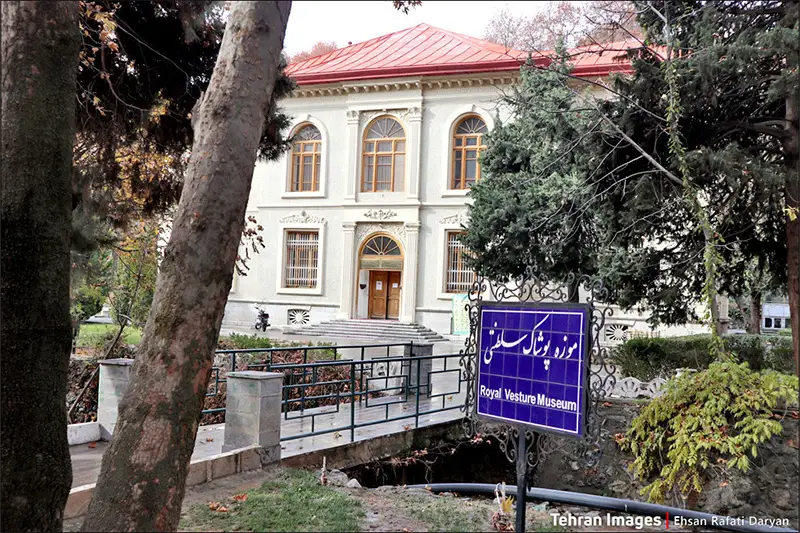
Shams Palace was built as the residence of Reza Shah’s eldest daughter and is located in the northwestern section of Saadabad near the Darband route. Construction lasted several years and was completed in the mid-1310s. Its architectural design blends Western influences with Iranian details, distinguishing it from many other buildings in the complex. After Shams Pahlavi relocated, the palace was repurposed to house ceremonial gifts and valuable royal belongings. Following the revolution, it underwent several functional changes and, for a time, was used as a space for ethnographic exhibits.
Today, the palace operates as the Royal Clothing Museum, displaying garments, photographs, and personal items belonging to members of the Pahlavi family. Its two-story design and interior layout make it one of the most engaging sites within Saadabad.
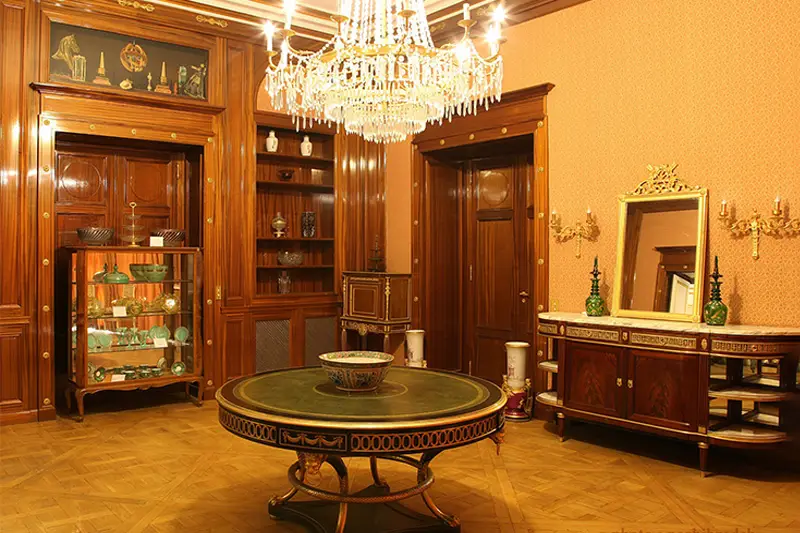
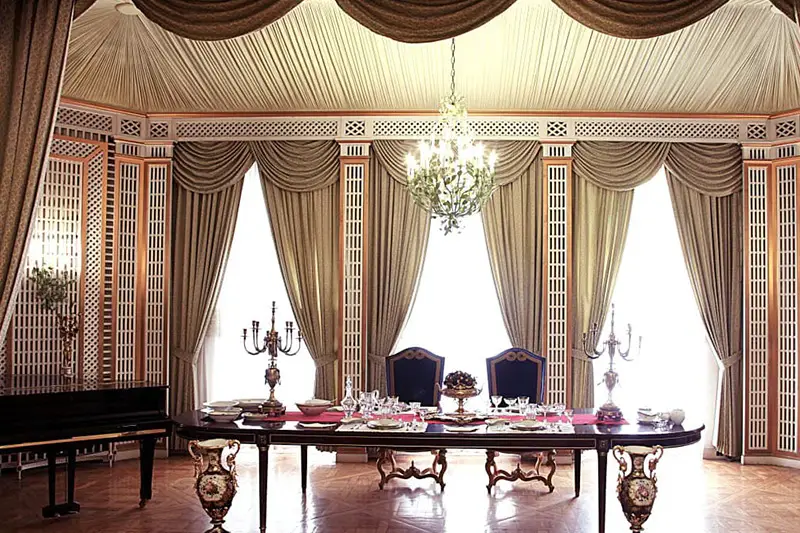
Located in the eastern section of the Saadabad complex, Ashraf Palace was initially built as a residence for Mohammad Reza Shah’s sister and completed in the mid-1310s. Over the years, it underwent several renovations, including redesigns supervised by Ashraf Pahlavi with the involvement of European designers, which enhanced French stylistic elements in the decor.
After the revolution, the palace was repurposed as a museum displaying a collection of fine tableware and decorative objects from the Qajar and Pahlavi periods. Although it was briefly used to exhibit handicrafts, it later returned to its role as the Royal Tableware Museum, which it remains today.
Visitors can explore collections of decorative dishes, silverware, porcelain, and other valuable historical items that reflect elements of the royal lifestyle in Iran.
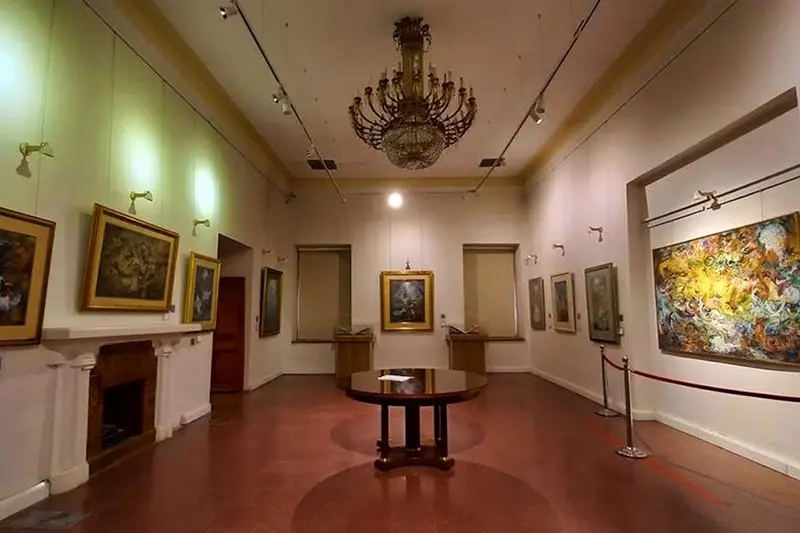
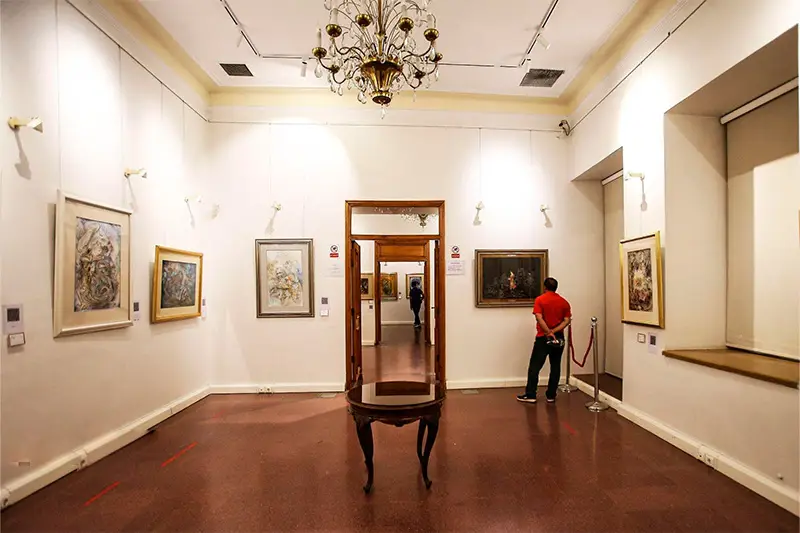
Among the grand palaces of Saadabad stands a more modest building that draws attention through its simplicity. Unlike the ceremonial palaces, this intimate structure offers a calm and understated atmosphere. It is now dedicated to showcasing the works of Mahmoud Farshchian, making it one of Saadabad’s most popular cultural attractions.
Originally built as a residence for one of Reza Shah’s wives, the building retains its peaceful character, with a small courtyard, old trees, and a central pool. In the early 2000s, it was converted into a museum housing Farshchian’s miniature paintings and masterpieces.
Today, the museum offers one of the best opportunities to experience Iranian miniature art up close, with each artwork presenting its own unique narrative of color, emotion, and storytelling.
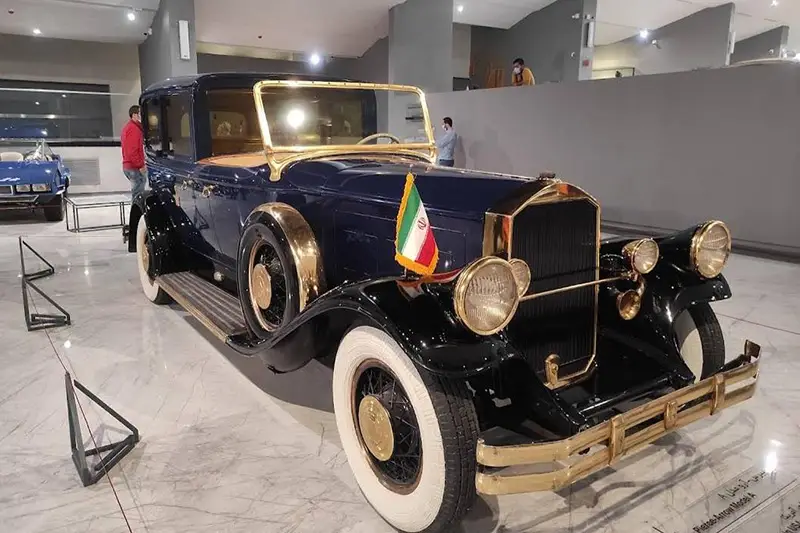
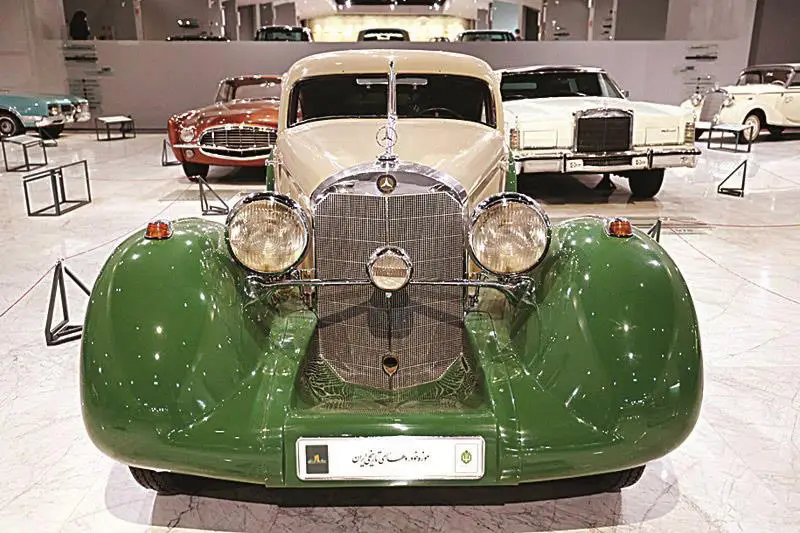
One of the most fascinating sections of Saadabad for car enthusiasts is the Royal Car Museum, showcasing ceremonial vehicles once owned by the Pahlavi family. These cars include renowned international brands, each representing a chapter in automotive history and royal lifestyle.
The exhibition is organized into several halls. One section features classic Rolls-Royce models, while another displays various Mercedes-Benz vehicles. Among them are several rare models of exceptional historical value and very limited production.
A standout vehicle in the collection is the Mercedes-Benz 300 SL, now considered an icon of classic automotive design. Nearby is the ceremonial car of Mohammad Reza Shah, a heavily reinforced Mercedes-Benz 600 with special armored glass—one of the most advanced ceremonial vehicles of its time. This museum offers a unique experience not only for car lovers but also for visitors interested in modern history.
With its rich history and remarkable architecture, Saadabad Palace is today one of Tehran’s most important cultural and historical attractions. Developed during the Pahlavi era, the complex has been transformed into a museum housing a wide range of artistic, cultural, and historical artifacts. Its landscaped gardens and numerous buildings reflect the architectural and artistic evolution of their time.
Since the Islamic Revolution, Saadabad has served as a space for presenting Iran’s contemporary history and artistic heritage. Each palace and museum, with its unique features—from fine arts and historical collections to royal artifacts—offers visitors valuable insights into different chapters of the country’s past. Beyond its significance as a cultural landmark, Saadabad Palace remains one of Tehran’s key tourist destinations, continuing to attract those interested in Iran’s history and culture.