



Read more: Attractions of Yazd

Local Foods of Yazd; When Humans Adapt to Climate:
The life of Yazd’s people resembles epic tales. Yazd is a precious treasure in the central desert of Iran, a city that more than any other demonstrates human adaptation to climate. To build such a magnificent city in the heart of a scorching desert and keep the pulse of life beating there for centuries is itself a heroic saga. It seems the dry, rainless desert climate has taught its people well that adaptation is the secret of survival. When humans adapt to nature, they learn contentment, become independent of everything and everyone, and ask for nothing except from nature itself.
It is no coincidence that they say, “Contentment is an endless treasure.” A content person makes use of whatever nature provides—meeting personal needs while also fulfilling the needs of others. This spirit is clearly reflected in the kitchen of the Yazdi women. Whatever comes from the heart of nature is blended with artistry and brought to the table. Here is a complete list of Yazd’s local dishes, which hold a valuable place in the Culinary Culture of nations, valuable because they show how humans can adapt to everything, even the heat of the desert.
Travel with the Sepehran blog.
A tasteful Yazdi hostess lays out a colorful spread of all kinds of dishes and delicacies to welcome family members and guests. It is no coincidence that the hospitality of Iran’s desert dwellers has become widely renowned. The variety of local Yazdi foods can be summarized in this list:
Bread-based dishes are a nostalgic part of the Iranian table. Most foods served with bread evoke memories of childhood homes and the cooking of mothers and grandmothers—those aromas filling the house and the unforgettable tastes of early years. What a feast it becomes when traditional Yazdi bread accompanies the meal. Below, you will get acquainted with some of the bread-based local foods of Yazd.
Yazdi abgoosht is famous for its sour taste, which comes from adding plums, dried lime, or even fruit leather. Lamb, chickpeas and beans, potatoes, and tomatoes form the main ingredients. Dried fenugreek or tarragon is also added to fill the house with its aroma. It is traditionally eaten with dried Yazdi bread, fresh herbs, and aged garlic pickle.
A quick-to-prepare dish, ideal when you want a light meal using whatever ingredients are at hand. Pieces of traditional dried Yazdi bread are soaked in the soup, which is then enjoyed with fresh herbs, scallions, and homemade pickles. Yazdi eshkeneh is made from potatoes, onions, fenugreek, flour, and spices.
This cool and nutritious dish is an excellent choice for the hot summer days of Yazd. Local kashk (fermented whey), fresh cucumbers, walnuts, raisins, and mint are mixed together, and dried traditional Yazdi bread is crumbled into it. Rich in calcium from the kashk and refreshing from the cucumber, it offers a healthy and revitalizing meal that brings a sense of coolness in the desert heat. With its unique flavor, it is both a pleasant and wholesome summer snack.
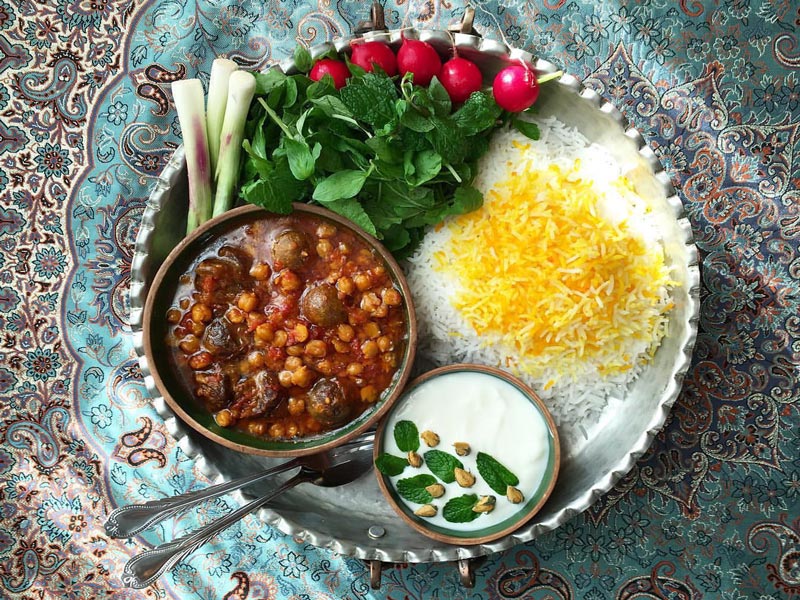
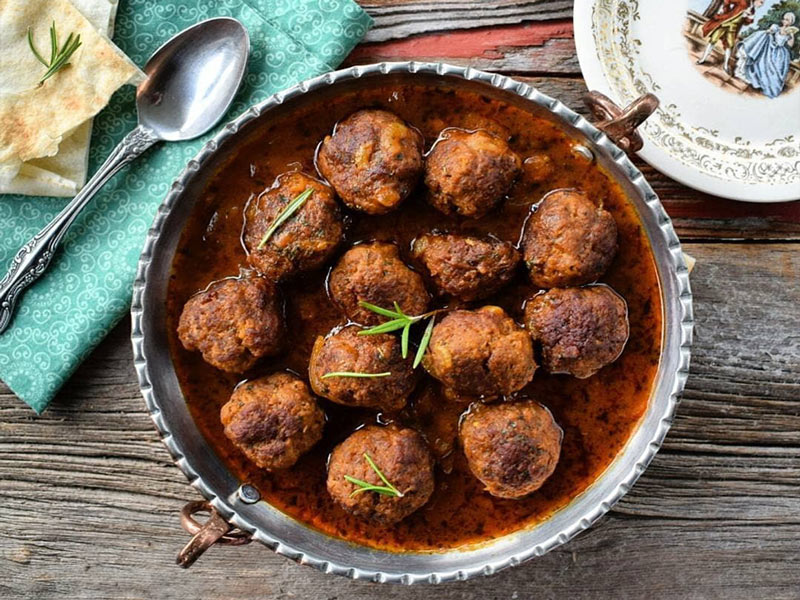
Koofteh dishes are among the most delicious and authentic Iranian foods, prepared across the country with different ingredients and methods. Koofteh Nokhodchi, however, is a local specialty of Yazd. It is made from ground meat mixed with chickpea flour, aromatic herbs, and spices. The mixture must be kneaded well so the balls keep their shape during cooking. The sauce typically includes onions, tomato paste, and spices.
Compared to Koofteh Nokhodchi, this version uses a wider variety of ingredients. Ground meat, chickpea flour, rice, aromatic herbs, walnuts, barberries, split peas, and dried plums are combined and kneaded until sufficiently cohesive to hold their shape while cooking in a sauce. Yazdi meatballs have a distinctive style and are relatively easy to digest.
Carrot meatballs do not require rice. Despite their simplicity, they offer a deep and unique flavor that beautifully represents Yazd’s Culinary Culture. The ingredients include chickpea flour, carrots, ground meat, eggs, and spices, while the sauce is made with tomato paste and seasonings.
Did you know that Yazd is a sister city of Khiva in Uzbekistan? Sister cities: a bond beyond borders
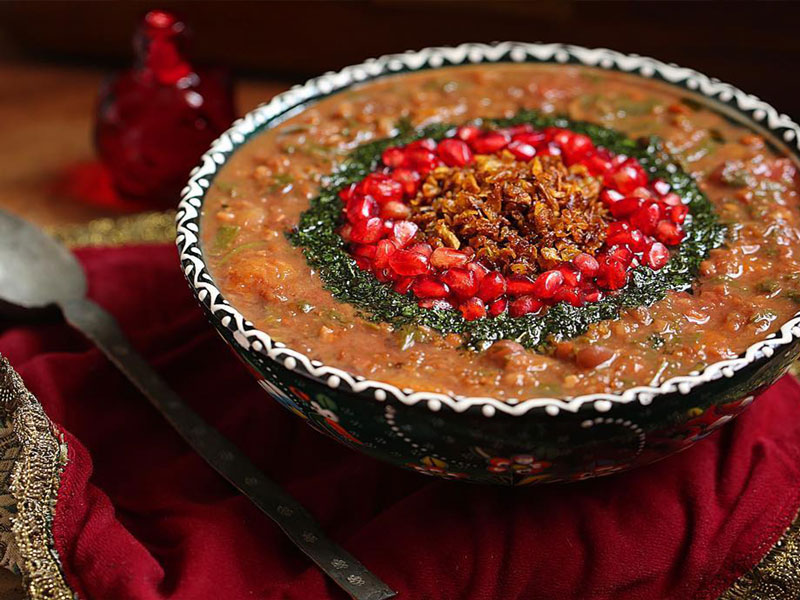
Ash (thick traditional soups) are among the most delicious, nutritious, and authentic snacks in Iranian cuisine. Whenever there is a family gathering, various kinds of ash inevitably appear. These dishes seem deeply connected to friendly conversations and togetherness. On Yazdi tables, ash always holds a special place. Not only are these foods staples of friendly and family gatherings, but they can also be easily found in the city’s cafés. Below are some of the delicious Yazdi ash varieties.
One of Yazd’s most popular soups, Shooly is made with aromatic herbs, beetroot, lentils, and wheat flour. It is light and fragrant, most often served on cold days. Its flavor combines mild sourness and sweetness, completed with garlic and vinegar. Besides being tasty, it is considered a healthy snack due to its wholesome ingredients.
This dish is specific to the people of Yazd Province and is prepared across its various cities. To cook it, a layer of unrisen sourdough is spread at the bottom of a pot, covered with a mixture of meat, vegetables, and legumes. Another layer of dough is added on top, and the process continues until the pot is full. It is then cooked slowly over low heat for a long time until fully steamed and set.
A sweet-and-sour soup traditionally prepared for Yalda Night. Pomegranate seeds, rice, herbs, ground meat, onions, spices—especially angelica (golpar)—are cooked together until well blended. Some people use pomegranate paste instead of fresh seeds.
This sour soup combines plums, herbs, rice, legumes, fried mint, fried onions, and fried garlic, simmered gently until thick and flavorful. It should have a relatively dense consistency and is not meant to be watery.
The main herb in this soup is coriander, cooked with ground meat, rice, fried onions, fried mint, and turnip. It is a winter snack and also considered a home remedy for colds.
Traditionally prepared for breakfast, this soup combines mung beans, herbs—especially fresh spinach—rice, tomato paste, fried onions, and fried mint, simmered with water until thickened. It is served with kashk (fermented whey).
This soup includes hulled wheat, chickpeas, beans, lentils, herbs, fried onions, fried mint, fried garlic, kashk, and spices. Although not exclusive to Yazd and cooked in many Iranian cities, Yazdis often use vinegar instead of kashk, giving it a pleasantly sour flavor.
Discover flavors and tastes with the best foods of Iran.