



 Reading suggestion: Egypt Attractions

The Grand Egyptian Museum (GEM), which opened on November 1, 2025, is known as the largest museum in the world dedicated to the civilization of ancient Egypt. It is located a few kilometers west of Cairo, directly facing the Pyramids of Giza. This museum, which houses over one hundred thousand historical artifacts, is not only a testament to the grandeur of ancient Egypt but also a major architectural, cultural, research, and tourism project designed to welcome more than five million visitors annually.
What distinguishes this museum from others around the world is not merely the volume of artifacts or the size of the building, but the first-ever complete display of the treasure of Tutankhamun, the existence of an advanced restoration center with 19 scientific laboratories, architecture inspired by the geometry of the pyramids, and the transformation of the entire complex into a cultural-recreational destination — not just a building for displaying historical objects.
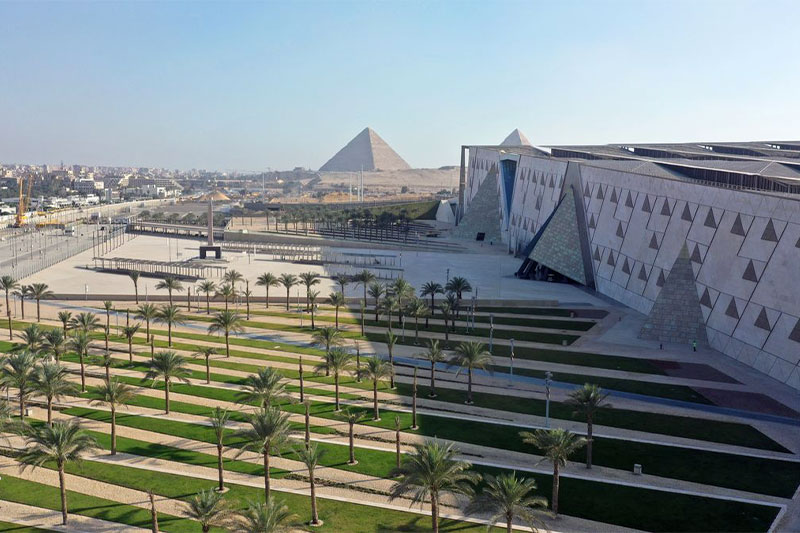
The Grand Egyptian Museum has been built on a land area of approximately 491,000 square meters. Out of this area, nearly 45,000 square meters are exclusively dedicated to exhibition halls for historical artifacts, making it one of the largest indoor museum spaces in the world.
The architecture of the building is based on triangular geometry — a geometry consciously inspired by the structure of the Pyramids of Giza. The façade of the building is composed of a collection of large and small triangles that together form a multilayered surface resembling the ancient Egyptian pyramids. It is as if the complex has emerged from the very heart of that civilization, rather than being built centuries later beside it.
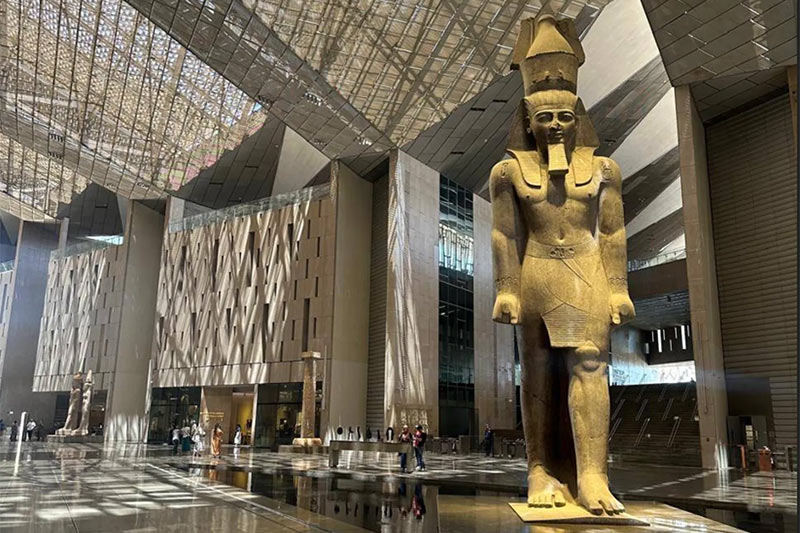
The main entrance of the museum also plays a key role in its visual identity. Upon entering, visitors are greeted by the colossal 83-ton statue of Ramses II — an artifact that serves as the museum’s first historical encounter. After that, visitors enter the “Grand Staircase,” a multi-level space where 59 massive stone artifacts from different periods of ancient Egyptian history, including statues of pharaohs, are displayed.
The lighting of the museum’s interior and exterior has been designed to mimic the angle of sunlight at sunset, evoking the golden color of the light that resembles the desert sands and the setting sun behind the pyramids. The presence of green spaces, palm trees, walking paths, and a direct view of the pyramids are all part of the design philosophy of creating a sense of “time travel” from the museum to the age of the pharaohs — just a few steps away.
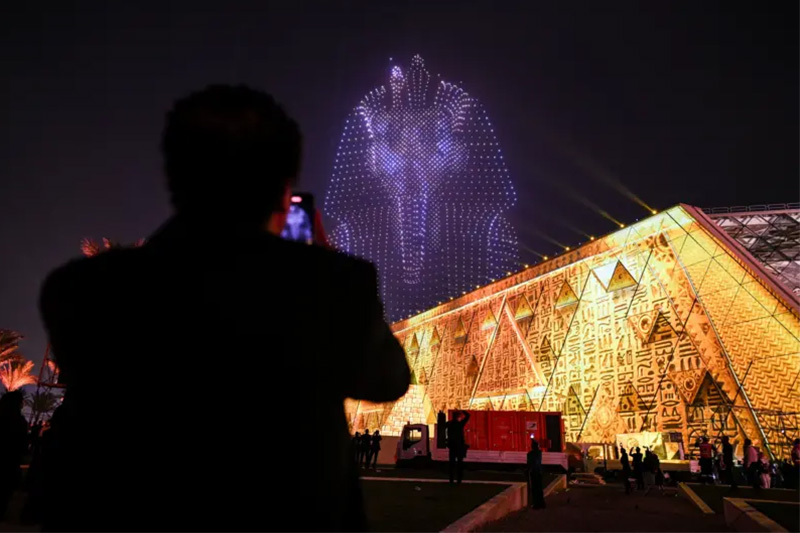
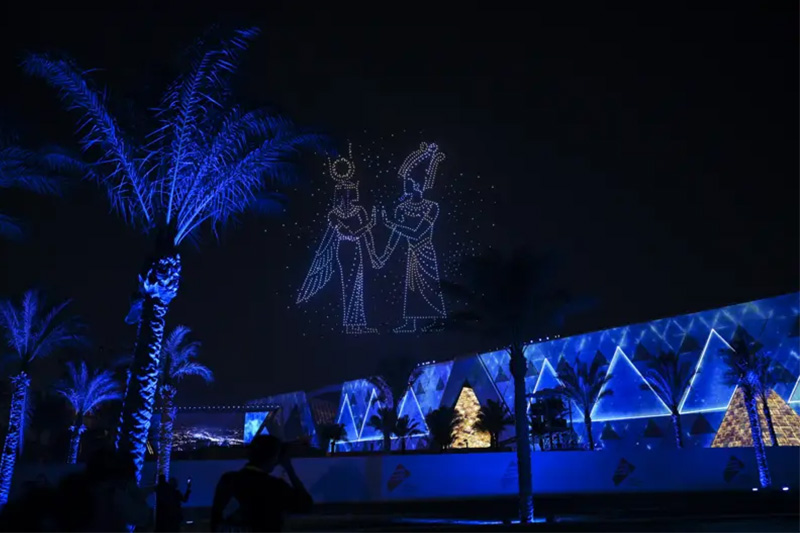
The Grand Egyptian Museum (GEM) is one of the most significant cultural and archaeological projects of the 21st century, built to showcase the grandeur of ancient Egyptian civilization and preserve its priceless artifacts. The idea of establishing this museum was proposed in the early 2000s, to replace the old Egyptian Museum in Tahrir Square and to house valuable collections — especially the treasures of Tutankhamun — in a modern, secure, and fully equipped environment.
Construction of the museum began in 2002 on a plot of land measuring approximately 500,000 square meters, situated next to the Pyramids of Giza. The main building of the museum itself has been constructed on a site of 32,000 square meters and is positioned approximately 10 meters below ground level.
One of the unique features of this complex is a 300-meter-long tunnel connecting the conservation center to the museum, allowing the safe and damage-free transfer of historical artifacts.
Despite delays caused by financial conditions and global crises, construction phases neared completion in the 2020s, and according to plan, the official opening took place in November 2025.
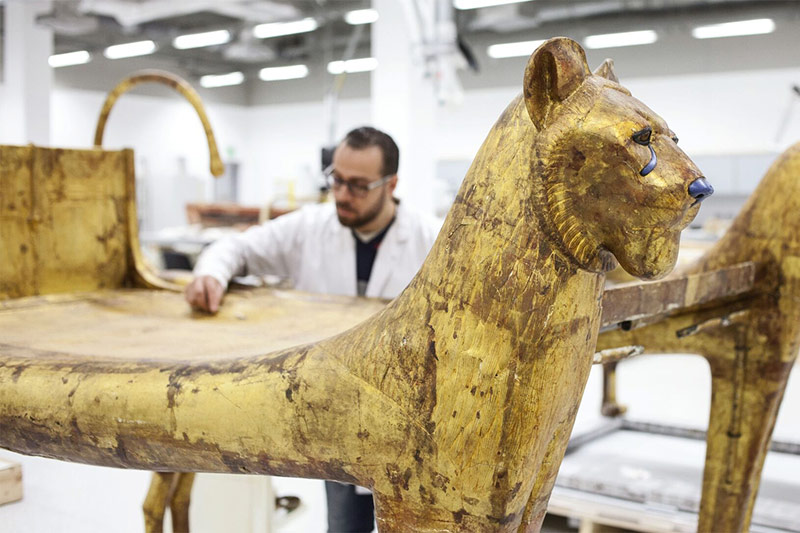
At the heart of the complex lies the Restoration Center of the Grand Egyptian Museum — one of the most advanced conservation facilities in the Middle East. This center consists of 19 specialized laboratories, each dedicated to restoring a specific type of artifact, including:
The total cost of the project has been estimated at over one billion dollars, funded by the Egyptian government, loans from the Japan International Cooperation Agency (JICA), and contributions from global cultural institutions. Many international companies and organizations have contributed to the museum’s lighting design, conservation technology, and security systems.
One of the most essential features of the Grand Egyptian Museum — and the main reason behind global attention — is the complete exhibition of the artifacts belonging to Tutankhamun: a collection of more than 5,300 ancient objects which, since the discovery of his tomb in the Valley of the Kings in 1922, had never been displayed together in a single location.
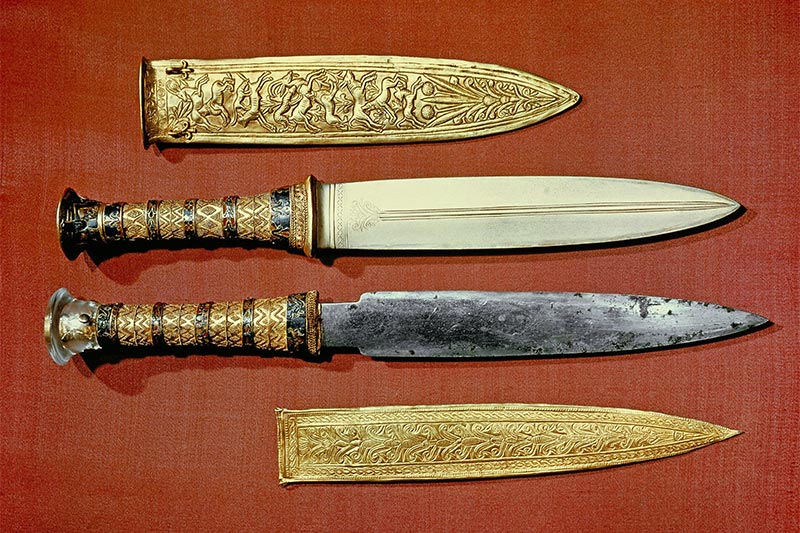
For the first time, everything from the king’s iconic golden death mask to the royal throne, chariots, jewelry, ritual objects, everyday items, and even the dagger made from meteoric iron is presented together in one dedicated hall, adhering to modern museum display standards.
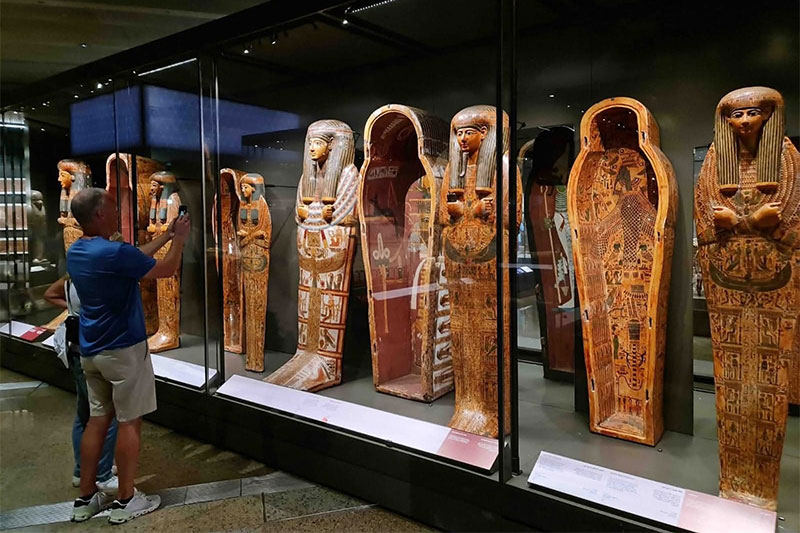
This Museum has been designed as a multi-purpose cultural project and is not limited to the display of historical artifacts. Today, the complex includes the following sections:
Visiting this museum and experiencing its extraordinary combination of history, architecture, digital storytelling, light, visual design, and atmosphere has turned it into a destination where tourists spend not just one hour, but half a day.
| Section | Days of Operation | Visiting Hours |
|---|---|---|
| Museum Complex | Every day except Saturday and Wednesday | 8:30 AM to 7:00 PM |
| Exhibition Halls | Every day except Saturday and Wednesday | 9:00 AM to 6:00 PM |
The Grand Egyptian Museum not only stands as one of the largest museums in the world, but also offers a modern and interactive experience of ancient Egyptian history. Visitors can explore a vast space designed with precise details and take a visual journey from the era of the pharaohs to modern Egyptian art. Below, you can watch the official video of the Grand Egyptian Museum to gain a real sense of its spaces, artifacts, and architectural design.
This Museum (GEM) is located near the Pyramids of Giza, on the western edge of Cairo — a strategic location that turns the visit to both the museum and the pyramids into a unified experience for tourists. The distance from the museum to downtown Cairo is about 20 kilometers, and it can easily be reached by public transportation or private car.
The Grand Egyptian Museum complex includes a large parking area for private cars and tourist buses. Visitor facilities such as information services, wheelchair-friendly pathways, souvenir shops, and restaurants are located near the main entrance.
The exact address of the museum is in the Giza district, on the Faisal–Al-Haram road, with a spectacular view of the three pyramids.
Giza Governorate, Egypt – near the Pyramids of Giza
The Grand Egyptian Museum is a symbol of the magnificence of ancient Egyptian civilization, displaying more than 100,000 historical artifacts in a modern, secure, and educational environment. From the complete treasure of Tutankhamun to the advanced conservation center, every part of this museum provides a unique experience of history, art, and technology.
With pyramid-inspired architecture, secure artifact-transfer tunnels, and advanced visitor facilities, the Grand Egyptian Museum is regarded as a global tourism destination that takes visitors on an unforgettable journey into the heart of ancient history.