

The oldest coffee shops in the world are more than places to order a cup of coffee; they are living landmarks where centuries of travel, trade, literature, and conversation still echo through the rooms. From Ottoman-era coffeehouses in Türkiye to elegant European cafés once frequented by writers, artists, and intellectuals, these historic venues reveal how coffee culture evolved across continents. In this FlySepehran Blog guide, we explore some of the world’s most remarkable historic cafés, uncover the stories behind them, and discover which of these centuries-old establishments travelers can still experience today.
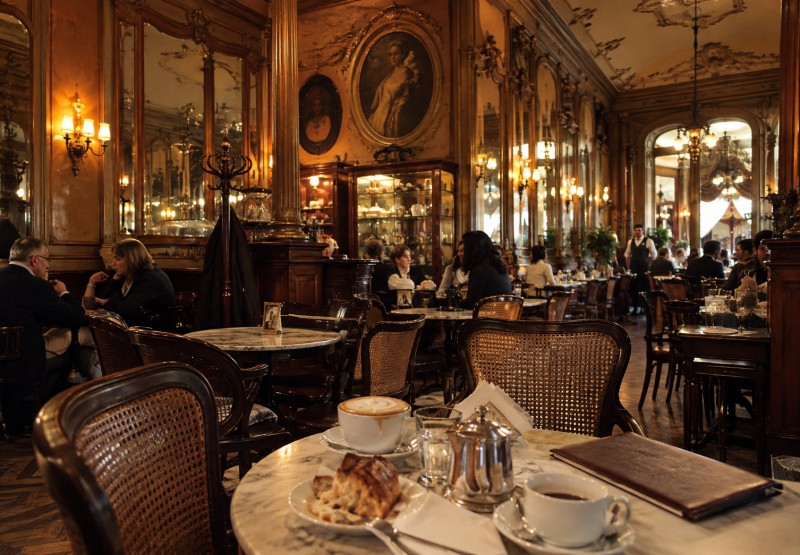
Coffeehouse history stretches back to the Middle East, where coffee became part of urban social life centuries before modern cafés appeared across Europe. By the late 15th century, coffee had spread from Yemen to major cities such as Mecca and Cairo, and during the 16th century, coffeehouses became increasingly common across the Ottoman Empire. These early gathering places were not simply venues for drinking coffee; they served as social spaces where people met, exchanged news, played games, listened to music, and discussed the events of the day. This tradition later influenced European coffeehouse culture, helping turn historic coffeehouses into important centers of conversation, commerce, and intellectual life.
🕰️ Established: 17th century, commonly dated to 1635
📍 Location: Gaziantep, Türkiye
⏰ Opening Hours: Daily, 8:00 AM–12:00 AM
🌐 Website: tahmiskahvesi.com
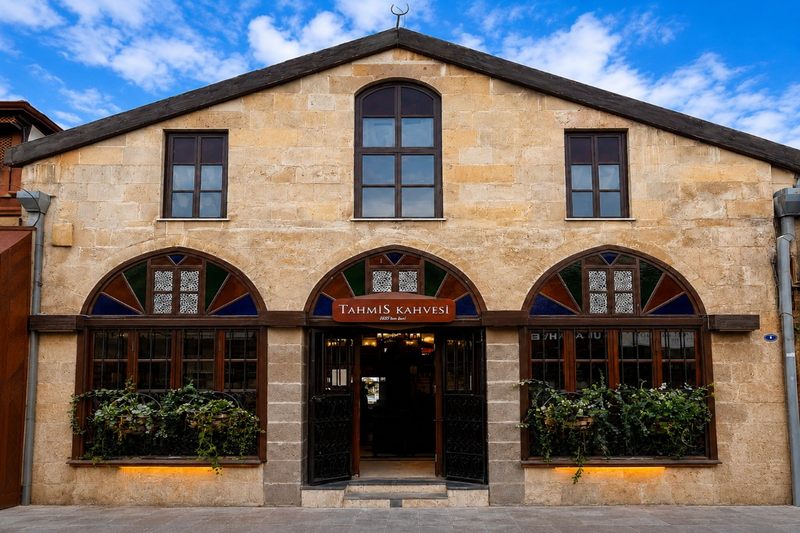
Dating back to the 17th century, Tahmis Kahvesi is one of the most remarkable historic coffeehouses still operating today. Commonly associated with the year 1635, the coffeehouse was established by Mustafa Ağa, a local Ottoman governor, to generate income for the nearby Mevlevi lodge. The name “Tahmis” refers to the traditional process of preparing or pounding coffee, reflecting the building’s deep connection with the region’s coffee culture.
Over the centuries, Tahmis Kahvesi has remained an important social gathering place in Gaziantep. The building survived major fires in the early 20th century and was later rebuilt, preserving its role in the city’s cultural life. Today, visitors can still experience a traditional coffeehouse atmosphere shaped by centuries of conversation, music, and local customs.
One of the highlights of a visit is menengiç coffee, a traditional caffeine-free drink made from roasted terebinth fruits. Alongside Turkish coffee and tea, it remains one of the venue’s signature offerings. For travelers exploring Gaziantep’s historic bazaars and culinary heritage, Tahmis Kahvesi offers a memorable connection to the city’s long-standing coffee culture.
🕰️ Established: 1654
📍 Location: Oxford, United Kingdom
⏰ Opening Hours: Mon–Fri 8:00 AM–6:00 PM; Sat 9:30 AM–7:00 PM; Sun 9:30 AM–6:00 PM
🌐 Website: qlcoffeehouse.com
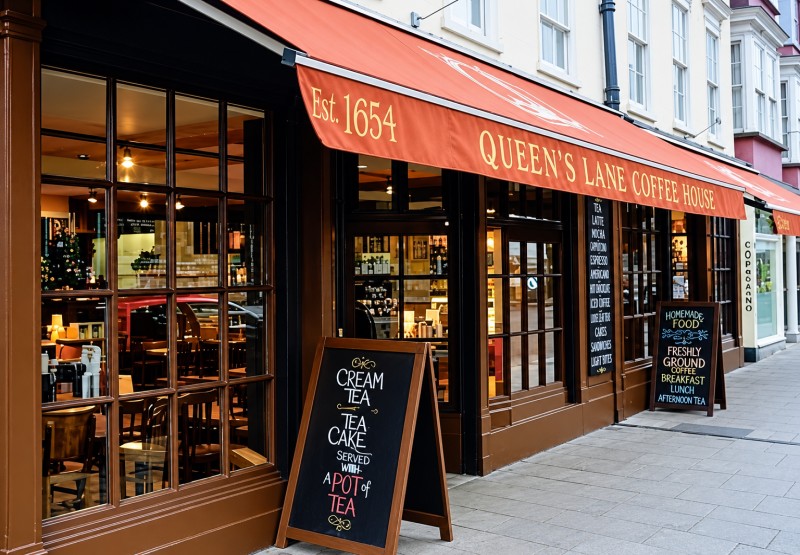
Located on Oxford’s historic High Street, Queen’s Lane Coffee House traces its story back to 1654 and is often described as one of the oldest coffee houses in Europe. Its early history is closely connected with the rise of coffeehouse culture in 17th-century England, when these new establishments became popular meeting places for students, scholars, merchants, and travelers.
Oxford was one of the first English cities to embrace coffeehouse culture. In an academic environment shaped by debate and discovery, coffee houses offered a new kind of social space where visitors could exchange news and ideas outside the university’s formal halls. Queen’s Lane became part of this tradition, helping establish the enduring link between coffee, conversation, and intellectual life in the city.
Today, the café combines its historic identity with the atmosphere of a busy modern Oxford coffee house. Its central location places visitors within walking distance of many of the University of Oxford’s historic colleges and landmarks, making it an easy stop while exploring the city center.
Beyond coffee and tea, the menu includes breakfast dishes, cakes, light meals, and British and Mediterranean-inspired options. For travelers interested in historic cafés, Queen’s Lane is particularly notable not simply for its age, but for its connection to the early development of England’s coffeehouse tradition.
🕰️ Established: 1891
📍 Location: Cairo, Egypt
⏰ Opening Hours: Daily, approximately 8:00 AM–12:00 AM at the Korba branch
🌐 Website: groppi-eg.com
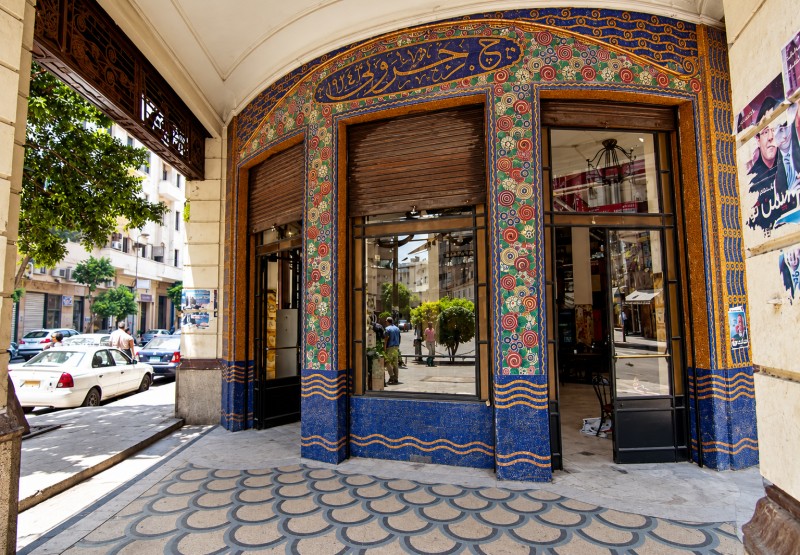
Founded in Cairo in 1891 by Swiss pastry chef Giacomo Groppi, Groppi became one of the most recognizable names in Egypt’s early modern café culture. More than a coffee shop, it developed into an elegant meeting place where Cairo’s cosmopolitan society gathered for coffee, pastries, chocolates, and conversation.
During the first half of the 20th century, Groppi was closely associated with the social life of downtown Cairo. Its cafés attracted members of Egyptian high society, foreign residents, travelers, artists, and intellectuals, reflecting a period when the city was emerging as one of the Middle East’s most cosmopolitan urban centers.
The brand became particularly famous for its European-style confectionery, cakes, chocolates, and ice cream. This combination of café culture and traditional pâtisserie helped distinguish Groppi from the more traditional coffeehouses found elsewhere in Cairo and gave it a unique place in the history of the city’s dining scene.
Today, Groppi survives through locations in Cairo, including its Korba branch in Heliopolis. While some of its historic downtown premises have changed or closed over time, the name remains closely connected with the memory of early 20th-century Cairo and its café culture. For travelers interested in historic coffee shops, Groppi offers a different perspective: not a centuries-old Ottoman coffeehouse, but a landmark from the golden age of cosmopolitan Cairo.
🕰️ Established: 1760
📍 Location: Rome, Italy
⏰ Opening Hours: Temporarily closed; reopening status remains uncertain as of 2026
🌐 Website: anticocaffegreco.eu
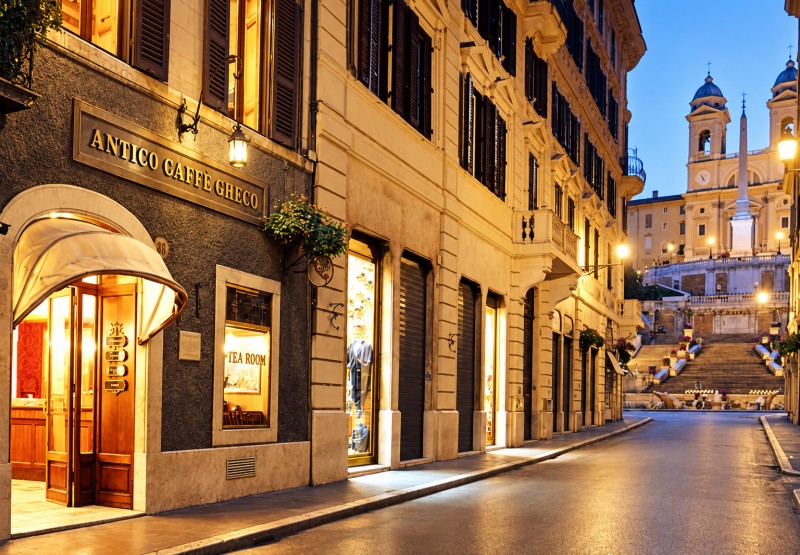
Founded in 1760 by Nicola della Maddalena, Antico Caffè Greco became one of Rome’s most celebrated historic cafés and one of the oldest coffee houses in Italy. Located on Via dei Condotti, just a short walk from the Spanish Steps, the café grew into an important meeting place for generations of artists, writers, musicians, and intellectuals. Its founder was a Levantine coffee maker of Greek origin, which is also where the café’s name comes from.
Over more than two and a half centuries, Caffè Greco welcomed an extraordinary list of visitors, including Johann Wolfgang von Goethe, Lord Byron, Stendhal, Franz Liszt, Richard Wagner, Hans Christian Andersen, James Joyce, and Friedrich Nietzsche. Its cultural significance was reflected not only in its guests but also in its interiors, where hundreds of paintings, portraits, sculptures, and historic objects created an atmosphere closer to a private gallery than a conventional coffee shop.
The café became especially famous for its series of intimate rooms, Pompeian-red walls, marble tables, velvet seating, ornate mirrors, and extensive art collection. This distinctive interior helped turn Antico Caffè Greco into a symbol of Rome’s literary and artistic café culture, particularly during the 18th and 19th centuries.
However, travelers should be aware that Antico Caffè Greco closed in October 2025 following a long-running dispute concerning the lease of its historic premises. As of 2026, discussions surrounding the future use and possible reopening of the site are still ongoing. The café therefore remains historically significant, but visitors should check its official website for the latest status before planning a visit.
🕰️ Established: 1827
📍 Location: Budapest, Hungary
⏰ Opening Hours: Currently closed; check the latest status before visiting
🌐 Website: not found
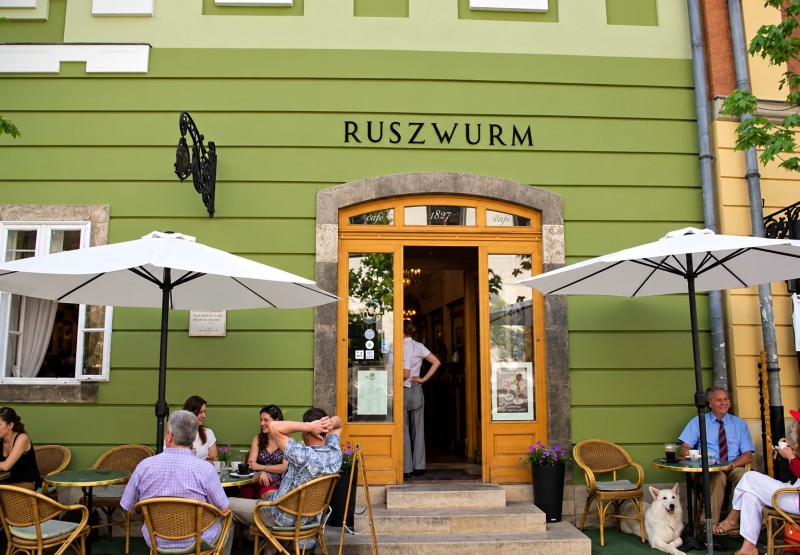
Founded in 1827 by pastry chef Ferenc Schwabl, Ruszwurm Confectionery became one of Budapest’s most historic pastry shops and a long-standing symbol of the city’s café and confectionery culture. Located in the Buda Castle District on Szentháromság Street, the establishment operated from the same address for generations and became closely associated with the culinary heritage of old Buda.
The confectionery later took the name of Vilmos Ruszwurm, who became part of the business in the late 19th century and helped strengthen its reputation. Over the years, Ruszwurm attracted local residents, members of prominent families, and visitors exploring the Castle District. Its protected historic interior, including traditional wooden furnishings and an old-fashioned pastry counter, contributed greatly to its distinctive character.
Ruszwurm was particularly known for classic Hungarian cakes and pastries, including cream cakes, Dobos-style cakes, strudels, and other traditional desserts. Together with coffee, these specialties made the small café a popular stop for travelers looking to experience Budapest’s historic confectionery traditions rather than a modern specialty-coffee scene.
Travelers should note that Ruszwurm is currently closed. Although older listings may still display its former daily opening hours, recent travel platforms no longer list it as an operating café. Its historic location nevertheless remains significant in the story of Budapest’s café culture, and visitors interested in seeing the site should check the official website or current local listings before planning a visit.
🕰️ Established: 1720
📍 Location: Venice, Italy
⏰ Opening Hours: Daily, 9:00 AM–11:00 PM
🌐 Website: caffeflorian.com
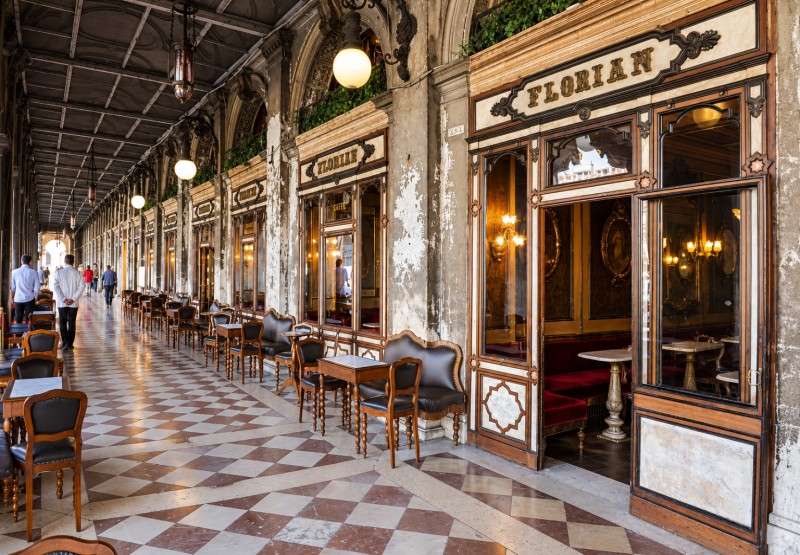
Opened on December 29, 1720, Caffè Florian is one of the most celebrated historic cafés in the world and is widely recognized as the oldest coffeehouse in Italy. It has occupied its location beneath the Procuratie Nuove in St. Mark’s Square for more than three centuries, making it an exceptional example of a historic café that remains part of the daily life of its original city.
The café was founded by Floriano Francesconi under the name “Alla Venezia Trionfante,” meaning “Triumphant Venice.” Before long, Venetians began referring to it simply as “Florian’s,” and the informal name eventually became permanent. Its location in the heart of Venice helped turn it into a meeting point for residents, international travelers, merchants, artists, and intellectuals.
Caffè Florian also played a role in Venice’s cultural and political history. During the 19th century, its rooms witnessed discussions connected with the city’s political life, and wounded participants in the 1848 uprising were treated inside the café. Its richly decorated interiors, largely restored and redesigned during the 19th century, now feature ornate mirrors, paintings, gilded details, and historic furnishings that make the experience feel closer to entering a museum than an ordinary coffee shop.
Today, visitors can enjoy espresso, traditional Italian coffee, pastries, breakfast, afternoon tea, and other dishes while overlooking St. Mark’s Square. Live music and the café’s elaborate historic setting remain central to the Florian experience. For travelers exploring the oldest coffee shops in the world, Caffè Florian stands out not only because of its age, but because it has preserved a direct connection between Venice’s historic coffee culture and the modern city.
Historic coffee shops offer something that modern cafés rarely can: a direct connection to the cultural life of another era. Many of these places have preserved architectural details, traditional interiors, old recipes, and customs that reflect the cities in which they developed. Sitting down for coffee in one of these establishments can therefore become part of the sightseeing experience itself.
They also provide a different way to understand a destination’s history. For centuries, coffeehouses served as meeting places for writers, merchants, students, artists, politicians, and travelers. Conversations held around their tables often reflected the intellectual, artistic, and social changes taking place outside their doors.
For travelers, visiting the world’s oldest coffee shops is not simply about tasting coffee. It is an opportunity to experience local traditions, discover historic interiors, try regional pastries and drinks, and see how coffee culture has evolved from one country to another. Even when a historic café is no longer operating, its story can still reveal an important chapter in the cultural history of its city.
The oldest coffee shops in the world offer far more than a historic setting for a cup of coffee. They reflect the way cities once socialized, exchanged ideas, welcomed travelers, and developed their own café traditions. From the Ottoman coffeehouse culture of Gaziantep to the elegant cafés of Venice, Rome, Oxford, Cairo, and Budapest, each venue tells a different story about the role coffee has played in everyday life.
Some of these historic cafés are still operating, while others have closed or face uncertain futures. That makes checking current opening hours and official websites especially important before visiting. Whether you are interested in architecture, local food, literary history, or simply the atmosphere of a centuries-old café, these places can add a meaningful cultural stop to your trip.
*Tip: The information in this post, including opening hours and whether each café is still open, was updated in October 2026. Details can change, so check the café’s official website before you visit to confirm hours, availability, and prices.