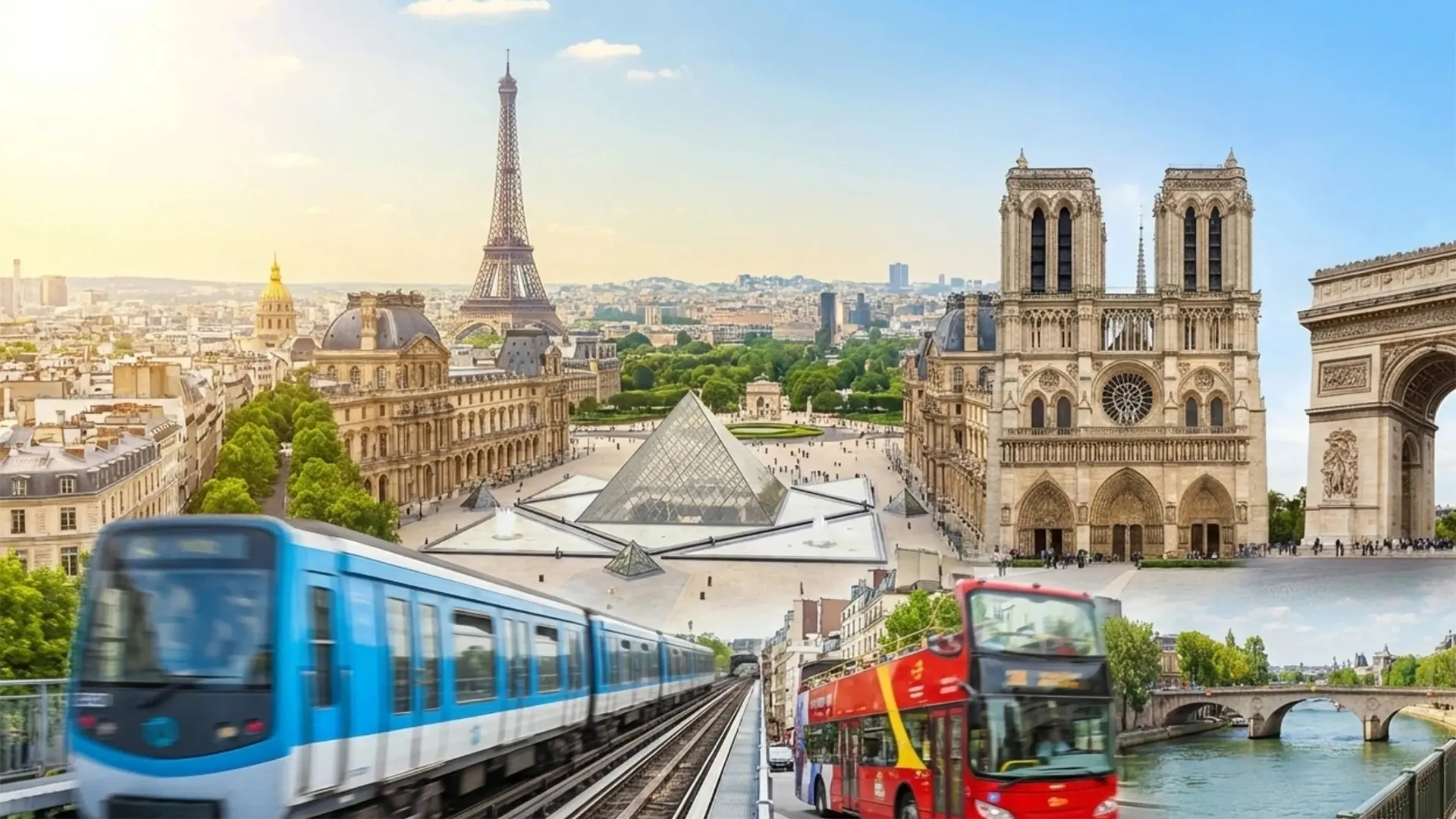






Paris is a city where every traveler finds their own version of the best places to visit. For some, the top Paris attractions mean romance; quiet walks along the Seine, cozy cafés, and sunsets made for lasting memories. For others, they are the perfect photo spots: quiet corners and angles that look dreamlike even without a filter. Some travelers look for more affordable attractions, enjoying museums, streets, and free sights without spending a fortune. And then there is the Paris that only locals really know; neighborhoods where everyday life goes on, far from the tourist crowds.
In reality, these four faces are all the same Paris; a city that has something to offer for every taste, every budget, and every kind of trip. No matter why you are going, Paris always finds a way to surprise you.
Below, explore the main places to visit in Paris and see how you can shape the version of the city that suits you best; a trip that, with good planning and a little help from the FlySepehran blog, can feel special from the moment your flight takes off.
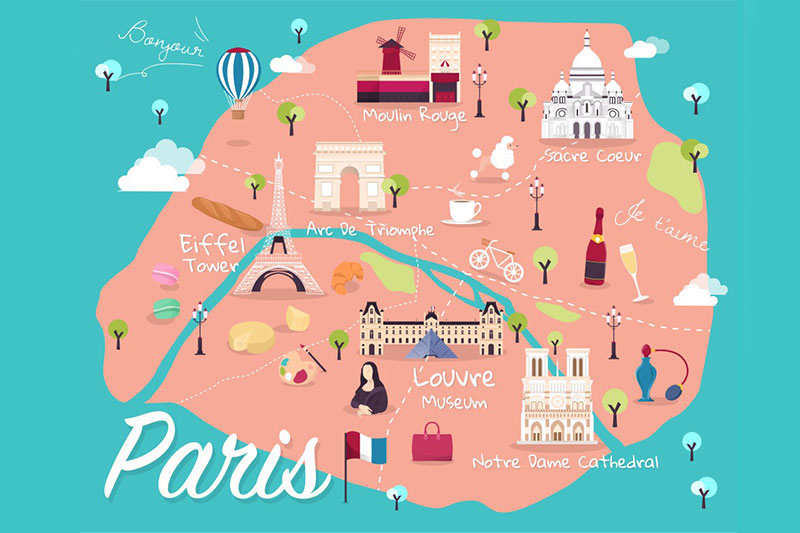
Paris is more than a historic capital. It combines art, architecture, food culture, and everyday European life in a compact, walkable city. Many of the world’s best-known museums are here, alongside iconic streets, squares, and parks. That variety is a big part of its appeal: in one day you can spend the morning in a major museum, walk through a historic garden in the afternoon, and end the evening on a famous avenue or along the Seine.
Transport is another practical advantage. The metro, buses, and RER make it relatively easy to move between the main places to visit in Paris without a car. Add cafés, restaurants, and shops at almost every turn, and it is clear why Paris is often a first choice for travelers visiting Europe.
Read More:
Discover the world’s most visited cities and see why Paris remains one of the most popular travel destinations.
🌐Official site: toureiffel.paris
📍Address: Av. Gustave Eiffel, 75007 Paris
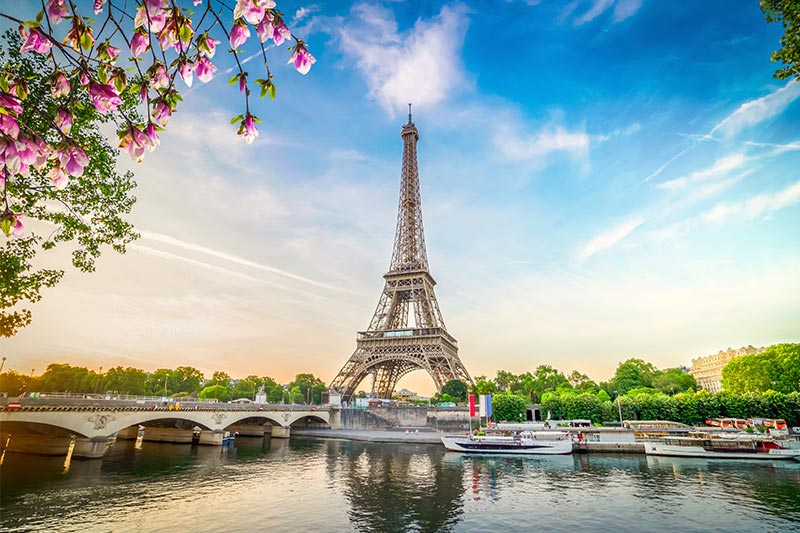
Built for the 1889 World’s Fair, the Eiffel Tower remains the city’s most recognizable symbol and one of the most visited monuments in the world. Including its antenna, it stands about 330 meters tall; still the highest structure within central Paris. From the top you get a full 360-degree view of the city.
*Tip: Book tickets on the official website only. Third-party sellers frequently overcharge or sell invalid tickets.
| Level | Height | What to expect |
| 1st floor | ~57 m | Exhibitions about the tower’s history, shops, and places to eat and rest. More of a museum/atmosphere stop than a pure viewpoint. |
| 2nd floor | ~115–116 m | The most popular viewing level for many visitors. Wide views of major landmarks, cafés, shops, and a macaron counter. Good balance of height and space. |
| Summit (top) | ~276 m | Highest accessible point. Reconstructed Gustave Eiffel office, champagne bar, and the classic full panorama. Access is by lift only from the 2nd floor. |
*You can reach the 2nd floor by stairs or lift; the summit is lift-only. Stairs tickets are cheaper but involve hundreds of steps (and from late September 2026, advance booking is required for stairs access).

Note for travelers: The area around the base is open and free to walk; you only need a ticket to go up inside the tower.
The Avenue des Champs-Élysées is often called the world’s most beautiful avenue; and for many first-time visitors, a walk along it is essential. It runs roughly 1.9 km in a straight line from Place de la Concorde in the east to the Arc de Triomphe at Place Charles de Gaulle in the west. Along the way you will find a mix of gardens, luxury flagships, cafés, cinemas, and car showrooms.
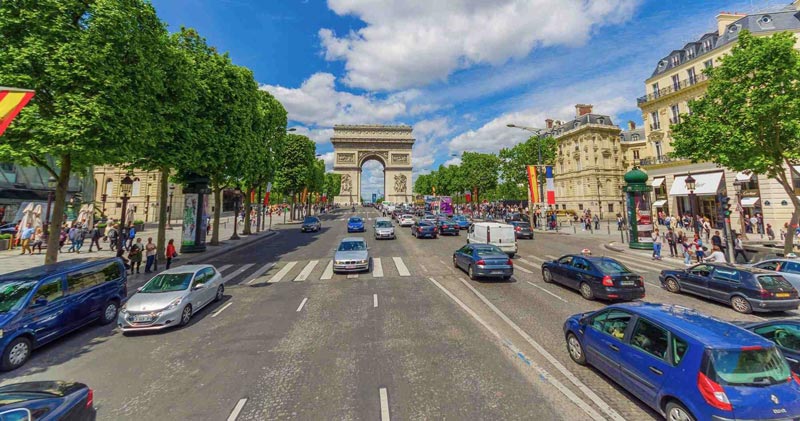
You do not need to shop to enjoy the avenue. Window-shopping and people-watching are part of the experience. A leisurely one-way walk takes about 30–45 minutes; allow longer if you stop for photos, coffee, or stores.
For the classic straight-on view of the Arc:
*Practical note: The avenue is free to walk. Individual shops, cafés, and the Arc de Triomphe itself have their own fees. One Sunday a month the city sometimes closes parts of the avenue to traffic (Paris Respire); check current dates if you want a quieter walk.
📍Address: Place Charles de Gaulle, 75008 Paris
🧍↕Height: about 50 m
Commissioned by Napoleon in 1806 after his military victories and completed in 1836, the Arc de Triomphe is one of Paris’s most important monuments. It stands at the center of Place Charles de Gaulle, where twelve avenues meet, and forms a key point on the city’s historic east–west axis (from the Louvre through the Champs-Élysées toward La Défense).
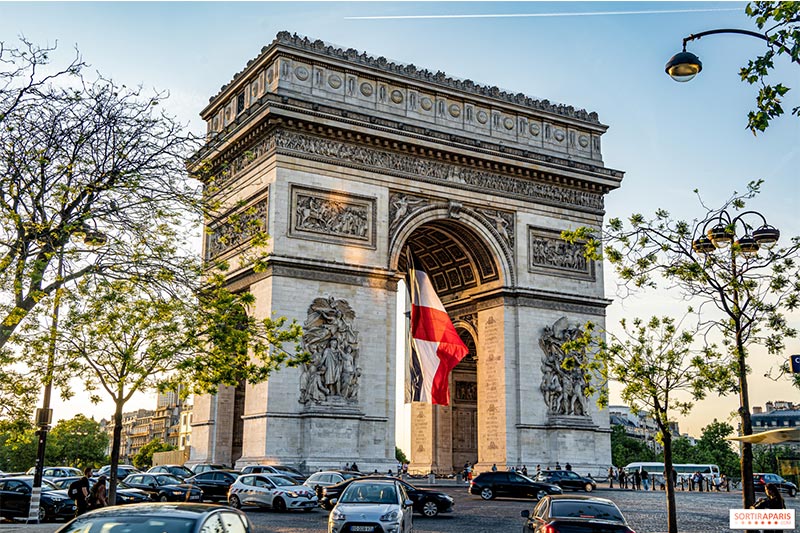
The design, by Jean-François Chalgrin, is neoclassical and deliberately echoes Roman triumphal arches. The walls are carved with the names of battles and generals; sculpted reliefs depict scenes from French military history. Beneath the arch lies the Tomb of the Unknown Soldier from World War I, with an eternal flame that is rekindled every evening.
Climbing the 284 steps to the terrace rewards you with one of the best 360-degree views in Paris, stretching down the Champs-Élysées in one direction and out toward the modern skyline of La Défense in the other. If you’d rather not take the stairs, elevators are available (the first has a 75 cm-wide door), so visitors with reduced mobility can enjoy the same panoramic view, and seating is provided on every level, accessible to all. Tickets are required for the terrace, and booking ahead is recommended in peak season.
📍Address: Square Jehan Rictus, 14 Place des Abbesses, 75018 Paris
➡️Entry: Free (during square opening hours)
A small, free stop in Montmartre that many visitors remember more for the idea than for the size of the monument. The Wall of Love sits inside Square Jehan Rictus, just off Place des Abbesses. Created in 2000 by Frédéric Baron with calligrapher Claire Kito, it covers about 40 m² and is made of 612 dark-blue enameled lava tiles. On them, the phrase “I love you” appears 311 times in around 250 languages and dialects.
The red fragments scattered across the tiles are meant to represent pieces of a broken heart that can be put back together; a simple visual symbol of love overcoming division.
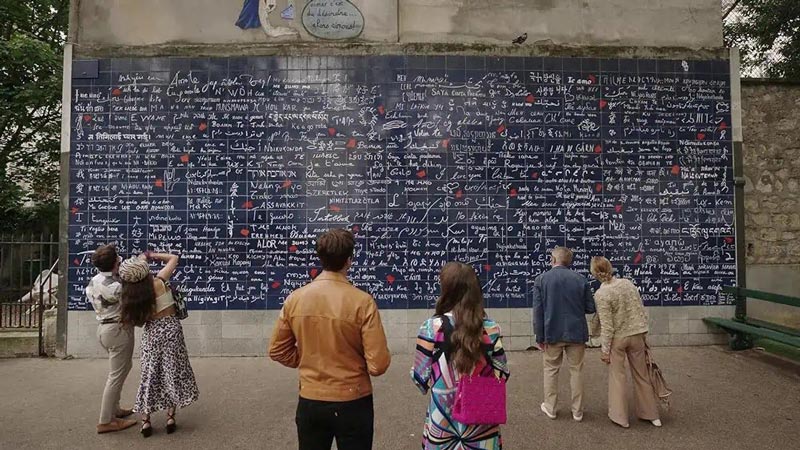
It is best treated as a short, atmospheric stop rather than a major attraction. Combine it easily with Abbesses, the Montmartre streets, and Sacré-Cœur.
📍Address (palace): 55 Rue du Faubourg Saint-Honoré, 75008 Paris
 Nearby interpretation space: La Maison Élysée, 88 Rue du Faubourg Saint-Honoré
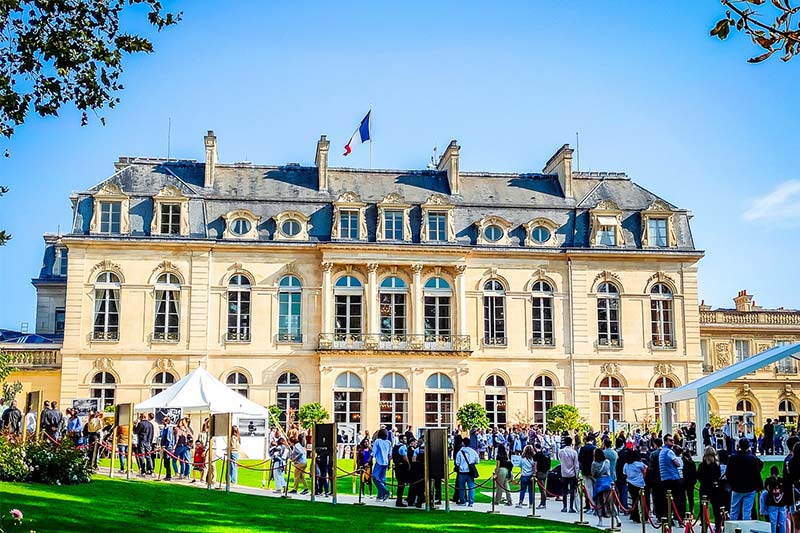
Walking along Rue du Faubourg Saint-Honoré, you pass one of the most heavily guarded buildings in Paris: the Élysée Palace, the official residence of the President of France. For most visitors it remains a closed façade; you see the gates, the security, and the sense of power, but not the interior.
The building itself has a longer story. It was constructed in the early 18th century as a private mansion and later became associated with Madame de Pompadour, the influential favorite of Louis XV. Over the following decades it changed hands several times. The name “Élysée” was adopted in 1797, referring to the nearby gardens and promenades. It has served as the presidential residence since the late 19th century and today stands at the center of French political life.
The palace itself is not open for regular public visits. The main exception is the annual European Heritage Days (Journées du Patrimoine) in mid-September, when a limited number of free tickets are released online and queues form early. Outside those days, the only practical way for most travelers to engage with the site is:
Inside the palace (when access is granted) visitors typically see formal reception rooms, historic libraries, state dining spaces, and the formal French gardens. For everyday travelers, treating the Élysée as an exterior landmark on a Faubourg Saint-Honoré walk is the realistic approach.
🌐Official site: notredamedeparis.fr
📍Address: 6 Parvis Notre-Dame – Place Jean-Paul II, 75004 Paris
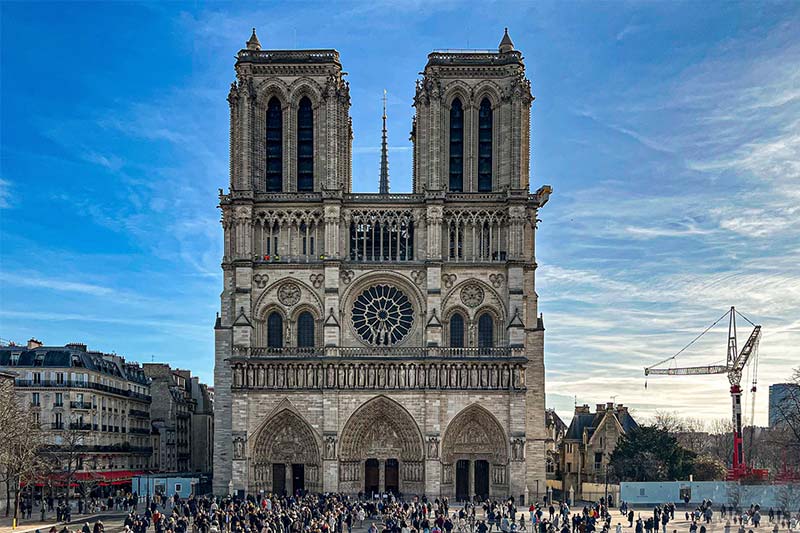
Notre-Dame is one of the great Gothic cathedrals of Europe and a central symbol of Paris. Even if you only see the exterior and the square in front of it, the building remains one of the essential stops on any first visit.
Construction began in 1163 and continued for nearly two centuries. The result is a classic Gothic structure: soaring vertical lines, flying buttresses, rose windows, and finely carved stone. The famous spire and much of the roof were destroyed in the April 2019 fire. After five years of restoration, the cathedral reopened to the public in December 2024. The bell towers reopened later, in September 2025.
| Experience | Price | Notes |
| Cathedral interior (nave) | Free | Free timed reservation on the official website is strongly recommended, especially April–October, to avoid long queues. Walk-ins are possible but can mean waits of 30 minutes to several hours. |
| Bell towers | €16 (adult) | Online booking only via the Centre des Monuments Nationaux. About 420+ steps, no lift. Views of the city and the famous chimeras/gargoyles. |
| Treasury | €12 | Paid on site inside the cathedral. Includes major relics. |
| Archaeological Crypt (under the square) | Separate ticket | Separate entrance. |
Monday–Friday about 7:50 am – 7:00 pm (Thursday often until 10:00 pm); Saturday–Sunday about 8:15 am – 7:30 pm. Last entry is usually 30 minutes before closing. Hours can change for services or special events — always check the official site.
Important: Entry to the cathedral itself is free. Do not buy “Notre-Dame tickets” from third-party sellers; many are scams. Reservations are made only on the official website.
Important: Dress modestly (shoulders and knees covered) if you plan to go inside. Large bags are restricted.
📍Address: 10 Boulevard du Palais, 75001 Paris
🚈Nearest metro: Cité (Line 4)
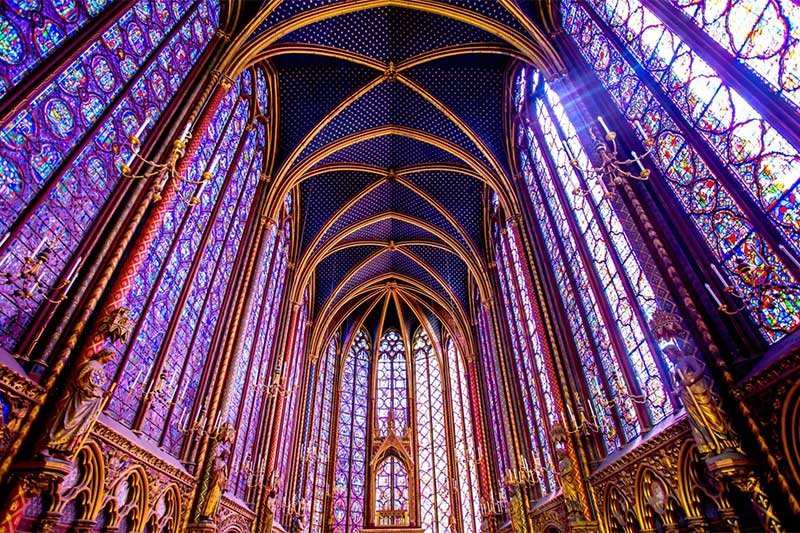
A short walk from Notre-Dame on Île de la Cité, Sainte-Chapelle is one of the most beautiful medieval interiors in Paris. Built in the mid-13th century by King Louis IX to house sacred relics (including what was believed to be the Crown of Thorns), it is famous above all for its stained glass.
The chapel has two levels. The lower chapel is relatively modest. The upper chapel is the main reason to visit: tall, luminous walls of colored glass that fill the space with light, especially on a sunny day. Many travelers rank it among the most memorable interiors in the city.
Last entry is usually 30 minutes before closing. Closed 1 January, 1 May and 25 December.
*From January 2026, standard individual prices are higher for non-EEA visitors (around €22) than for EEA nationals/residents (around €16). A combined ticket with the nearby Conciergerie is often available and better value if you plan to see both. The Paris Museum Pass covers entry, but you still need a timed reservation.
📍Address: Place d’Armes, 78000 Versailles
About 20 km west of central Paris, the Palace of Versailles is the most important day trip for many first-time visitors. What began as a hunting lodge under Louis XIII became, under Louis XIV, the vast royal residence and the political center of France until the Revolution. The Hall of Mirrors, the royal apartments, the formal gardens, and the Trianon estates remain the core of the visit.
Treat it as a full day. The palace interiors alone take 1.5–2.5 hours; adding the gardens and the Estate of Trianon easily fills 5–7 hours, plus travel time from Paris.
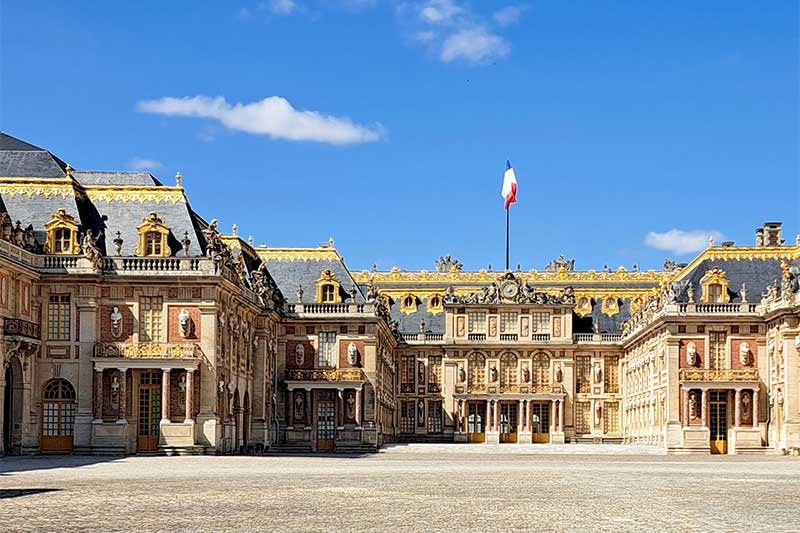
The most useful option for most visitors is the Passport ticket, which covers the Palace (with a timed entry slot), the Estate of Trianon, and the gardens. In high season (roughly April–October) the standard adult price is around €35; in low season it is lower. EEA nationals/residents pay a reduced rate. The Paris Museum Pass covers the palace, but you still need a free timed Passport reservation. Book on the official site well ahead in peak months.
Take RER C to Versailles Château Rive Gauche (about 35–45 minutes from central stops such as Saint-Michel–Notre-Dame, Musée d’Orsay or Invalides). It is a short walk from the station to the palace. Check the train display carefully; not every RER C train goes to Versailles Château Rive Gauche.
🌐Official site: operadeparis.fr
📍Address: Place de l’Opéra, 75009 Paris
The Palais Garnier is one of the most lavish 19th-century buildings in Paris and still an active opera and ballet house. Designed by Charles Garnier and opened in 1875, it is famous for its Grand Staircase, the richly decorated foyers, the auditorium with its Chagall ceiling, and the long association with The Phantom of the Opera.
You do not need a performance ticket to see the building. Daytime self-guided visits let you explore the public spaces at your own pace.
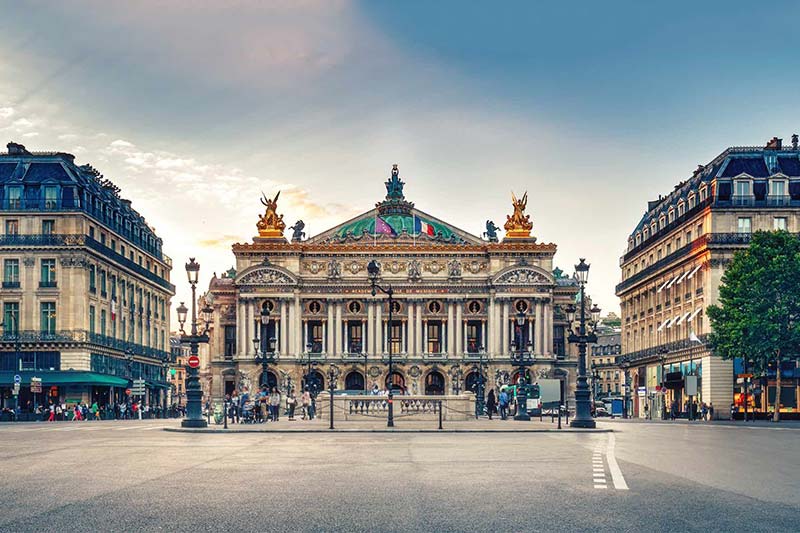
A typical self-guided visit takes 1–1.5 hours. Guided tours (about 90 minutes) add historical context and are worth considering if you want more detail.
Even if you only have time for the staircase and foyers, the interior is one of the most photogenic and atmospheric public spaces in Paris.
🌐Official site: louvre.fr
📍Address: Rue de Rivoli, 75001 Paris (Pyramid entrance in Cour Napoléon)
The Louvre is the world’s most visited museum and one of the essential places to visit in Paris. Housed in a former royal palace, it holds an enormous collection that ranges from ancient civilizations to the mid-19th century. Most first-time visitors come for three works above all: the Mona Lisa, the Venus de Milo, and the Winged Victory of Samothrace; but the museum is far larger than those three rooms.
A realistic first visit is 2–4 hours. Trying to “see everything” in one day is not practical; it is better to choose a few wings or themes and move at a human pace.
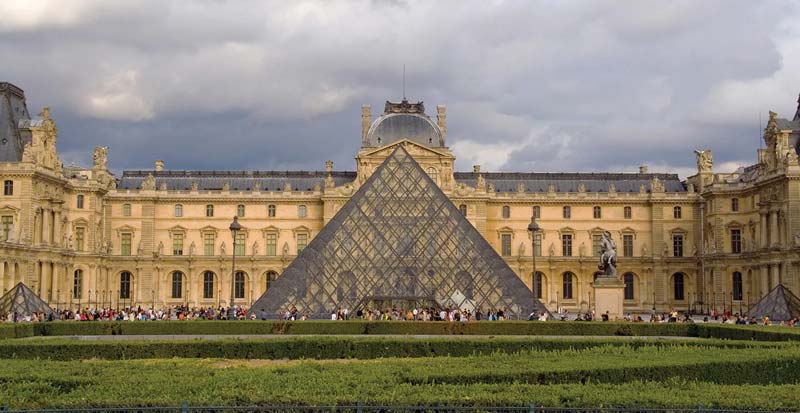
Important: Book only on the official site (ticket.louvre.fr). The Paris Museum Pass covers entry but you must still reserve a free timed slot.
Read More:
Explore the best art museums for travelers and discover more iconic cultural destinations around the world.
🌐Official site: musee-orsay.fr
📍Address: Esplanade Valéry Giscard d’Estaing / 1 Rue de la Légion d’Honneur, 75007 Paris
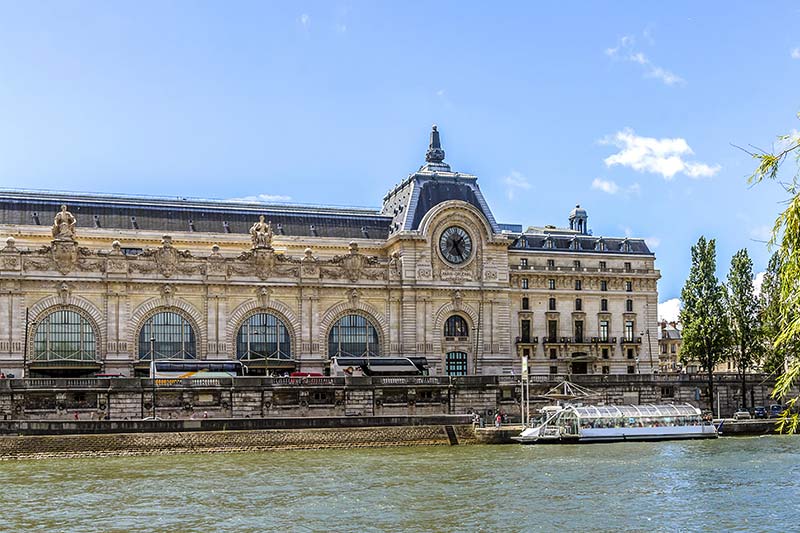
Facing the Louvre across the Seine, the Musée d’Orsay occupies a former Beaux-Arts railway station and holds the world’s strongest collection of Impressionist and Post-Impressionist art. For many visitors it is the single most rewarding museum in Paris after (or instead of) a full Louvre day.
You will find major works by Monet, Renoir, Degas, Cézanne, Van Gogh, Gauguin, Toulouse-Lautrec and others, displayed in a light-filled industrial space that is itself part of the experience. A focused visit of 2–3 hours is usually enough for the highlights; allow longer if you want temporary exhibitions as well.
🌐Official site: musee-rodin.fr
📍Address: 77 Rue de Varenne, 75007 Paris
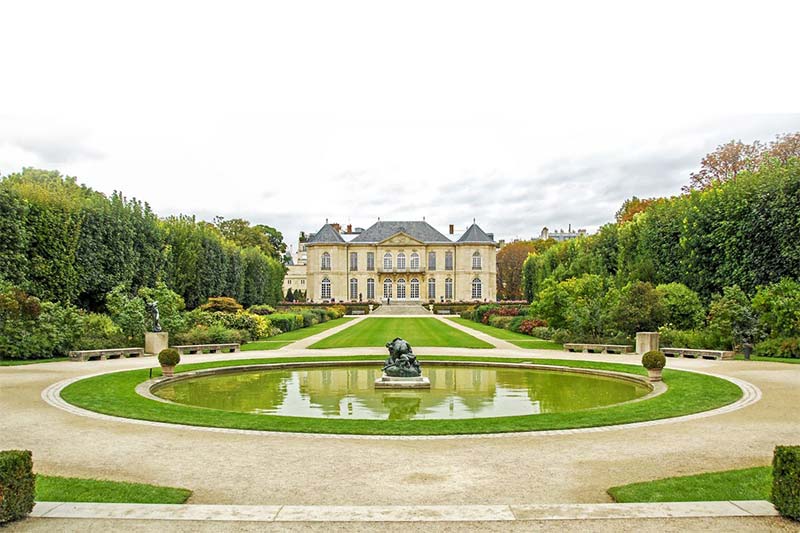
The Musée Rodin is one of the most pleasant museum visits in Paris: a manageable collection, a beautiful 18th-century mansion (the Hôtel Biron), and a sculpture garden that is often as memorable as the indoor rooms. It is dedicated to Auguste Rodin and includes major works such as The Thinker, The Kiss, and The Gates of Hell, displayed both inside and outdoors.
A typical visit lasts 1.5–2.5 hours. Many people spend as much time in the garden as in the house.
The Jardin du Luxembourg is one of the most loved parks in Paris; formal French gardens, tree-lined avenues, the large octagonal pond, and the Luxembourg Palace (home of the French Senate) as a backdrop. It is free, central (6th arrondissement), and easy to combine with the Latin Quarter or a walk toward Saint-Germain-des-Prés.
Locals and visitors use it for reading, picnics, people-watching, and simply sitting in the classic green metal chairs. In warmer months you will also see children sailing model boats on the central basin, a carousel, and occasional pony rides. The Médicis Fountain is one of the most photographed corners.
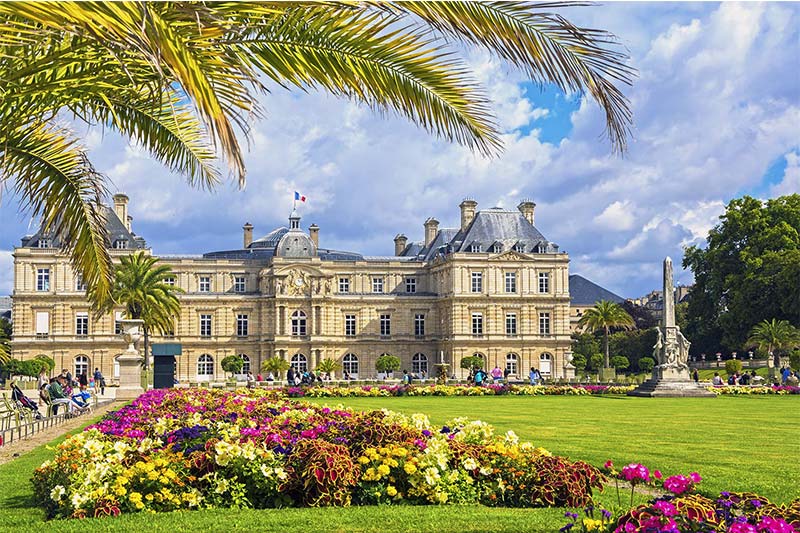
A stop here is one of the easiest ways to experience everyday Paris without a ticket or a queue.
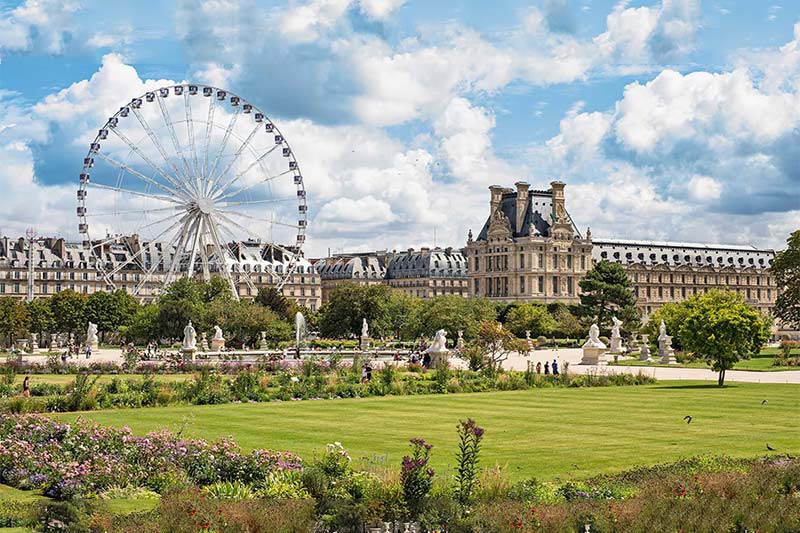
The Jardin des Tuileries sits between the Louvre and Place de la Concorde, forming part of the long historic axis that continues toward the Champs-Élysées and the Arc de Triomphe. It is a formal French garden with wide gravel paths, formal basins, statues, and rows of trees; one of the easiest and most useful green spaces for a first-time visitor.
Entry is free, and the garden works well as a link between major sights: the Louvre at one end, Place de la Concorde and the start of the Champs-Élysées at the other, with the Musée de l’Orangerie and the Jeu de Paume on the edges.
o Winter (approx. Nov–Mar): about 7:30 am – 7:30 pm
o Spring/Autumn (Apr–May, Sep–Oct): about 7:00 am – 9:00 pm
o Summer (Jun–Aug): longer evenings, sometimes until 10:00–11:00 pm
Important: Visitors are asked to leave about 30 minutes before closing. Always check the Louvre website for the exact current schedule.
A simple walk from the Louvre Pyramid through the Tuileries to Place de la Concorde is one of the classic free experiences in central Paris.
Place de la Bastille is one of the most historically charged squares in Paris. The fortress-prison that once stood here was stormed on 14 July 1789, an event that became the symbolic start of the French Revolution. Almost nothing of the original Bastille remains above ground; the square today is a large, open traffic circle and meeting point rather than a preserved ruin.
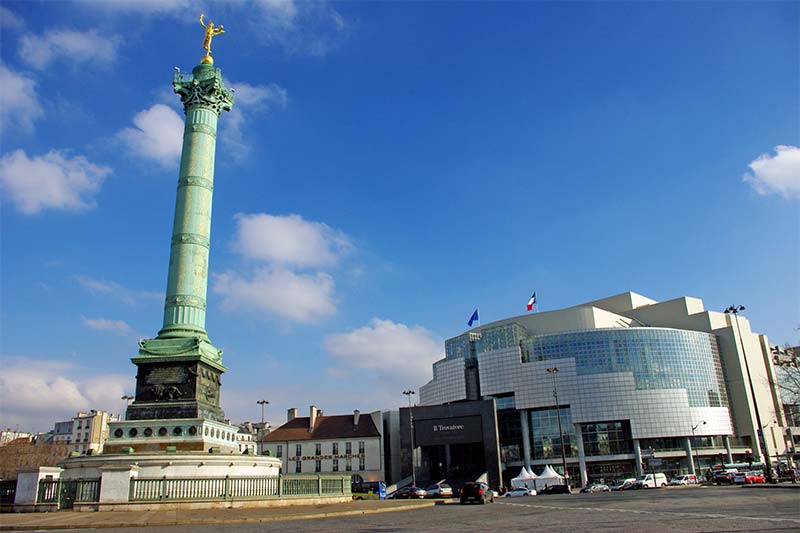
The tall bronze column in the center commemorates the victims of the July Revolution of 1830 (not 1789). It is topped by the gilded Génie de la Liberté (Spirit of Liberty). The remains of some of those killed in 1830 and 1848 are buried in the base. The column is mainly viewed from the outside; interior access is limited and usually by guided visit only.
The modern opera house on the east side of the square opened in 1989 for the bicentenary of the Revolution. It is the main venue of the Paris Opera for large-scale productions. Guided tours of the building are sometimes available; performance tickets are separate.
A short walk takes you into the lively streets of the 11th arrondissement, toward the Port de l’Arsenal marina, or west into the Marais. The square itself is more of a landmark and transport hub than a place to linger for hours.
The square is free and open at all times. It is a major metro interchange (Bastille station: Lines 1, 5 and 8). Expect traffic and crowds, especially in the evening and on Bastille Day (14 July).
For most visitors, Place de la Bastille works best as a symbolic stop, a photo of the July Column, and a starting point for exploring the surrounding neighborhoods rather than a long, self-contained attraction.
Disneyland Paris is the major family-oriented day (or multi-day) trip outside the city. Located in Marne-la-Vallée, about 40 minutes east of central Paris by train, the resort currently centres on two parks: Disneyland Park (the classic castle park) and Disney Adventure World (the second park, formerly Walt Disney Studios Park, redeveloped with newer lands including a major Frozen area).
It is a full-day commitment. Most visitors who want both parks plan at least two days; one park in a single long day is realistic if you prioritise and arrive early.

Tickets: Must be bought in advance online. Dated tickets or advance date registration are required on busy days; tickets are generally not sold at the park gates. Prices vary strongly by date (lower on quieter weekdays, higher on weekends and holidays). Multi-day tickets and park-hopper options are available. Check the official Disneyland Paris website for current prices and availability.
Hours: Typically, open from about 9:30 am, with closing times between roughly 9:00 pm and 11:00 pm depending on the season and day. Hotel guests and certain pass holders often get Extra Magic Time (earlier entry). Always confirm on the official calendar for your date.
App: Download the official Disneyland Paris app before you go; useful for wait times, mobile orders, virtual queues, and tickets.
The simplest way is the RER A train to Marne-la-Vallée–Chessy. The station sits right at the resort entrance.
Tip: Arrive before opening if you want to maximize ride time and shorter queues. Comfortable shoes and a flexible plan help; popular attractions can have long waits on peak days.
Disneyland Paris is not a central Paris attraction; treat it as a separate excursion rather than something you squeeze between the Louvre and the Eiffel Tower on the same day.
🌐Official site: shakespeareandcompany.com
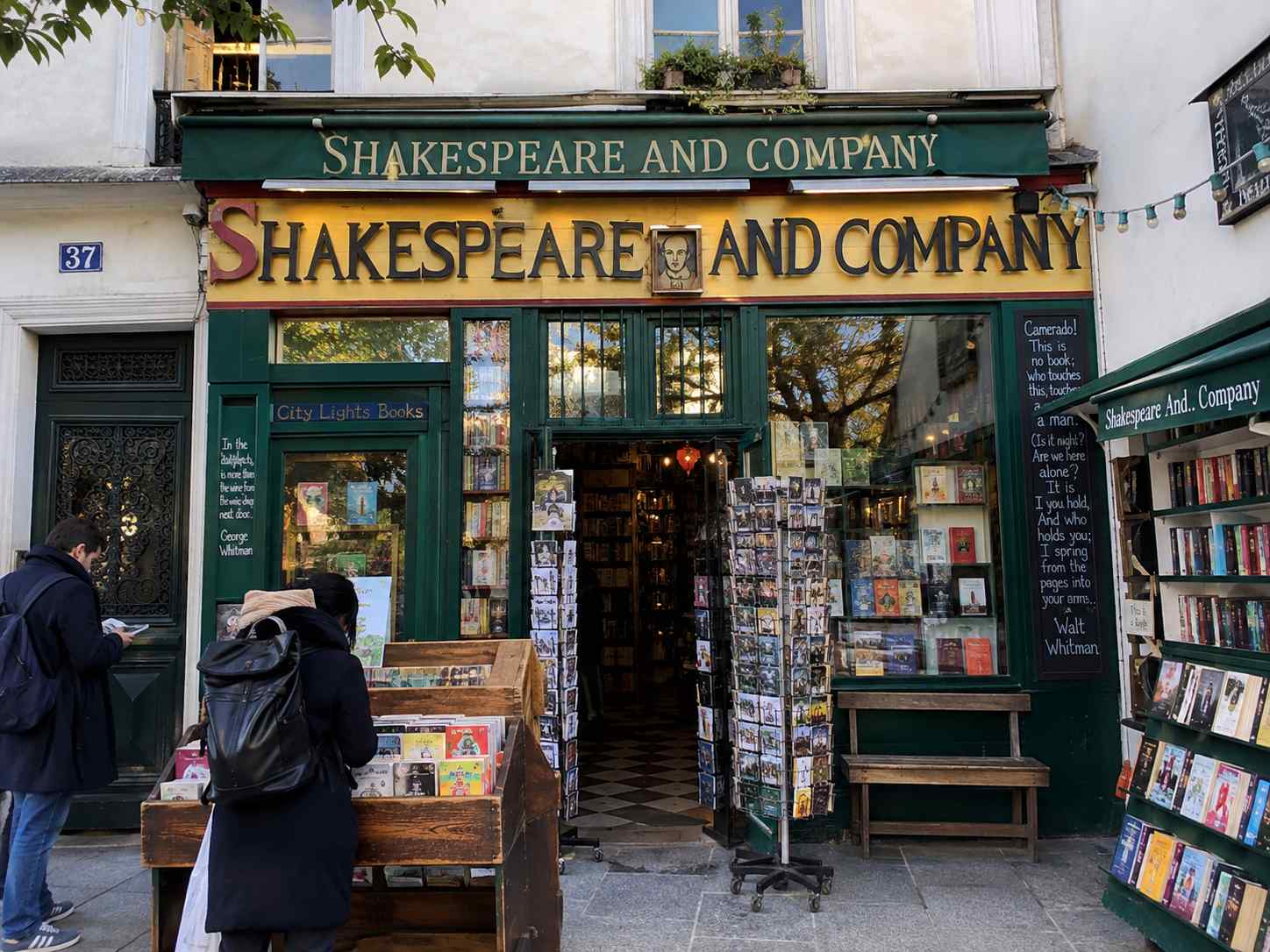
📍Address: 37 Rue de la Bûcherie, 75005 Paris (Left Bank, opposite Notre-Dame)
Just across the Seine from Notre-Dame, Shakespeare and Company is the best-known English-language bookshop in Paris. The current shop opened in 1951 (continuing the spirit of Sylvia Beach’s earlier bookshop that supported writers such as Joyce and Hemingway) and has long been a meeting point for readers, writers and travellers.
It is small, atmospheric and often busy. Expect narrow stairs, stacked shelves, reading nooks, and a mix of new and second-hand books. Photography inside is generally restricted; the shop prefers visitors to experience it rather than treat it as a photo stop. There is sometimes a short queue to enter so that the limited space does not become overcrowded.
Hours (typical):
*Hours can vary for events or exceptional closures; check the official site before you go.
It pairs naturally with a visit to Notre-Dame, Sainte-Chapelle, or a walk through the Latin Quarter.
A few practical habits make a big difference when you are seeing the main places to visit in Paris.
Several of the best experiences cost nothing: walking the Champs-Élysées and Tuileries, sitting in the Luxembourg Gardens, viewing the Eiffel Tower sparkle from Trocadéro or Champ de Mars, and browsing the exterior and square of Notre-Dame. Mix paid icons with these free pauses so the day does not become only queues and tickets.
Opening hours, prices and security rules change. Always double-check the official site of each attraction on the morning of your visit, especially for seasonal hours, temporary closures, or special events.
With a short list of priorities, advance tickets for the busiest places, and a mix of famous landmarks and quieter parks, you can shape a version of Paris that fits your pace and interests.
Paris rewards both first-time visitors who want the classic landmarks and travelers who prefer a slower mix of museums, parks and neighborhood walks. Choose a handful of priorities, book the busiest tickets in advance, and leave room for unplanned moments; a chair in the Luxembourg Gardens, an evening view of the Eiffel Tower, or a quiet street in the Latin Quarter often stays with you as long as the famous monuments.
Note: Opening hours, ticket prices and access rules can change. Always check the official website of each museum or attraction before you visit and when planning your trip.