


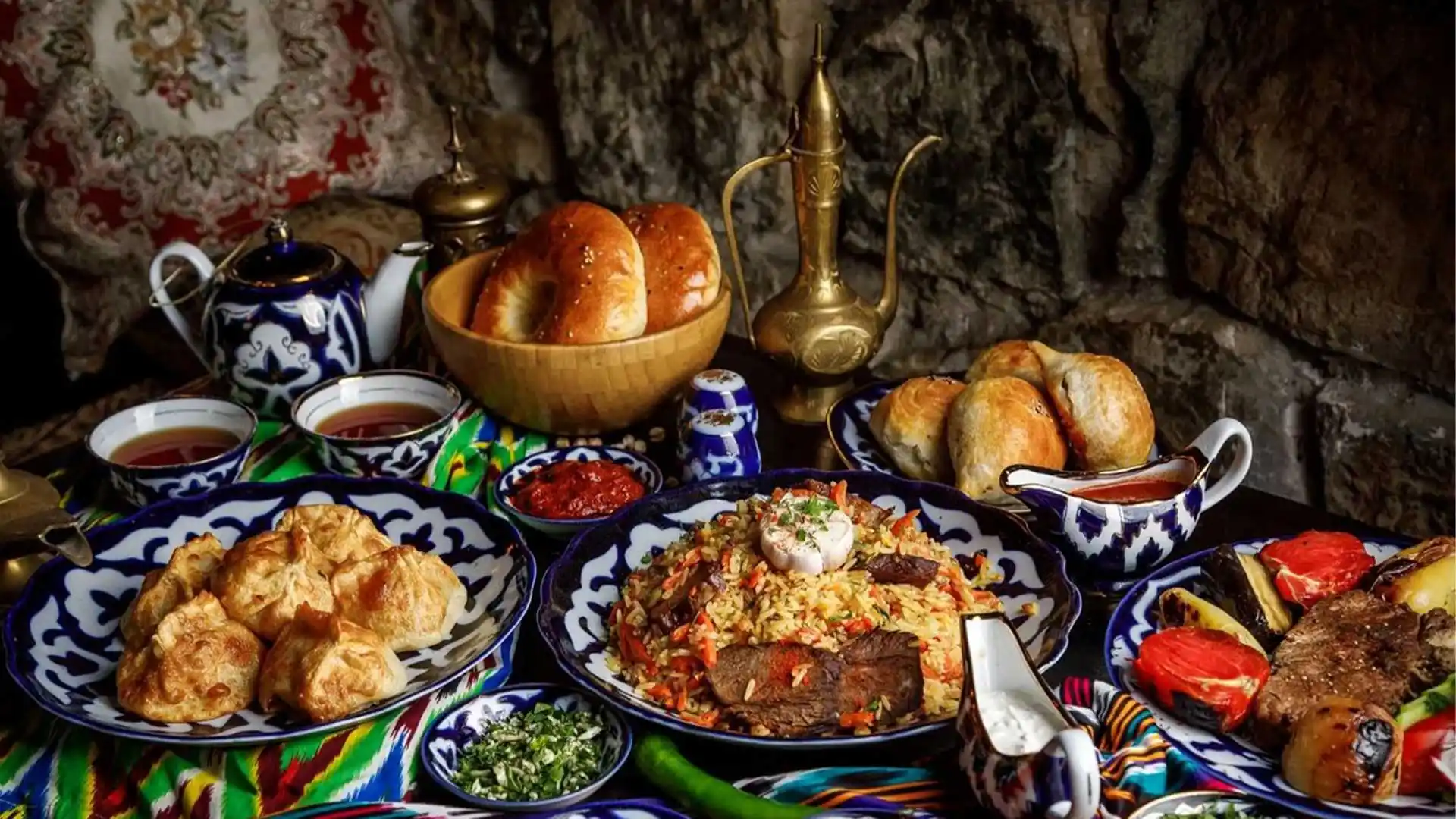
 Reading suggestion: Tajikistan Foods


Tajikistan, a country nestled in the heart of Central Asia, is an increasingly appealing destination for travelers seeking breathtaking landscapes, ancient history, and authentic cultural experiences. Tajikistan’s attractions, with their remarkable combination of pristine, breathtaking nature, ancient historical sites, and rich culture, make the country an appealing travel destination.
Whether you are interested in mountaineering, nature tourism, or adventure, Tajikistan offers a unique experience, with its towering peaks and breathtaking mountain landscapes.
Like many tourist attractions in Iran and around the world, each of which amazes visitors with its natural landscapes and cultural heritage, Tajikistan also offers a combination of traditional villages, the rich culture of local people, and pristine, scenic routes for travel enthusiasts. The Nowruz holiday, celebrated around the spring equinox, can also be an interesting time to discover Tajik culture and local celebrations.
From the legendary Pamir Highway and turquoise mountain lakes to ancient fortresses and museums, this guide introduces the best places to visit in Tajikistan and highlights the experiences that can help you plan your journey.
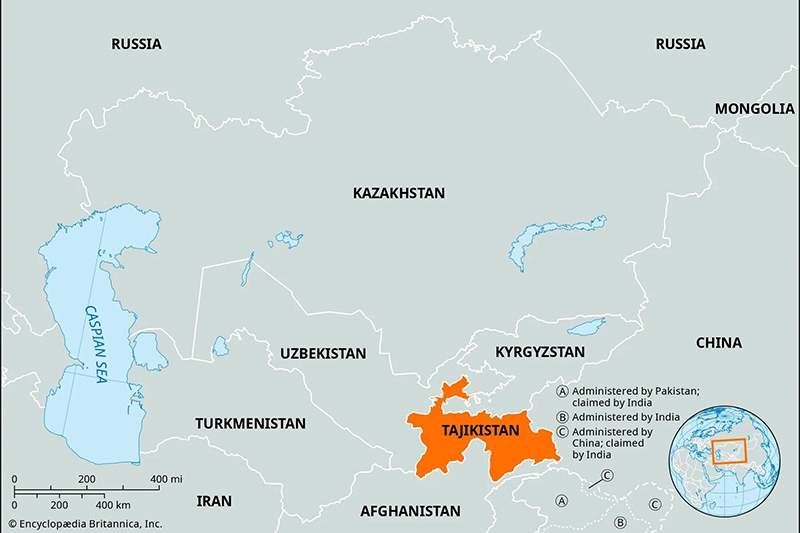
Tajikistan is a landlocked country in Central Asia, bordered by Afghanistan, China, Kyrgyzstan, and Uzbekistan. Its mountainous geography plays a major role in shaping its landscapes, climate, settlements, and travel routes. The Pamir Mountains cover much of the country’s eastern region, while the Fann Mountains and the Zeravshan Valley offer some of its best-known natural and historical attractions.
If you only have time for a handful of places, start here. These are the sights that come up repeatedly in major travel guides and heritage listings, and each one is covered in more detail further down this page. Entries marked “GBAO permit needed” lie inside the Gorno-Badakhshan region, where conditions can change quickly, so read the official travel advice for your country before you commit to a route.
Pamir Highway (M41): a road of roughly 1,250 km between Dushanbe and Osh that tops out at Ak-Baital Pass (4,655 m). GBAO permit needed.
Tajikistan offers an impressive variety of attractions, including unspoiled mountain landscapes, striking lakes, hot springs, ancient statues, and historic fortresses. It is a country where natural beauty and centuries of history come together to create a distinctive travel experience.
If you are looking for a destination that has retained much of its traditional character, Tajikistan is worth exploring. From the legendary Pamir Highway, one of the highest-altitude routes in the world, to lakes displaying turquoise and emerald hues, the country offers remarkable scenery at every turn. Its historical sites also reflect the influence of ancient civilizations, the Silk Road, and the cultural heritage of the Tajik people.
Visiting ancient fortresses, historic mausoleums, and museums filled with valuable artifacts provides a deeper understanding of the country’s identity. Meanwhile, exploring local bazaars, tasting traditional bread, and meeting hospitable residents can transform your trip from a simple sightseeing visit into a meaningful cultural and human experience.
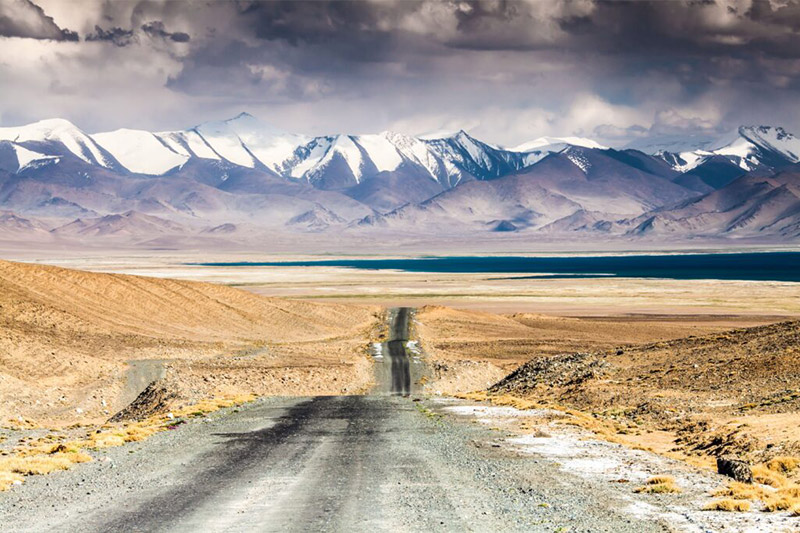
The Pamir Highway, also known as the M41, is undoubtedly one of the most extraordinary attractions in Tajikistan. The Dushanbe–Osh journey is roughly 1,250 kilometers long, depending on the route taken, and connects Dushanbe in Tajikistan with Osh in Kyrgyzstan, crossing some of the most dramatic landscapes of the Pamir Mountains. The region is home to spectacular peaks, many of which rise above 7,000 meters.
The Pamir Highway is much more than a mountain road. It offers a combination of remarkable natural scenery, political history, local culture, and adventure. Parts of the road were built in the late 19th century, during the rivalry between the Russian and British empires known as the Great Game, but most of it was built by the Soviet Union in the 1930s. Today it remains the main supply route to the Gorno-Badakhshan region, and it is one of Tajikistan’s most recognizable travel experiences.
The route passes through or connects important destinations such as Kulob, the Panj River valley, Khorog, the capital of the Gorno-Badakhshan Autonomous Region, and the high-altitude town of Murghab before continuing toward Osh. Popular optional detours and nearby highlights include the Wakhan Valley, Yamchun Fortress, hot springs such as Garm-Chashma, and traditional mountain villages. Each stop offers an opportunity to discover the culture of the Pamiri people and learn more about their distinctive way of life.
Traveling along the Pamir Highway is a genuine adventure. The route crosses Ak-Baital Pass at approximately 4,655 meters above sea level, the highest point on the highway, and includes rough roads, long driving stretches, and areas with limited facilities. These conditions require careful preparation, but they are also part of what makes this journey so memorable.
| Permit | A special GBAO permit is required for travel to the Gorno-Badakhshan Autonomous Region.
It is usually requested together with the Tajikistan e-visa. The fee is about US$20; check the official e-visa portal for the latest requirements and fees. The permit is checked at checkpoints along the route, so carry several printed copies. If you continue into Kyrgyzstan through the Kyzyl-Art/Bordoba crossing, a separate Kyrgyz permit may also be required. Confirm this with official Kyrgyz sources. |
| Transport | A suitable 4WD vehicle and an experienced local driver are strongly recommended for remote mountain sections. |
| Altitude | Ak-Baital Pass, the highest point on the highway, reaches about 4,655 m. Allow time to acclimatize and understand altitude-sickness symptoms. |
| Road conditions | The road is paved for most of its length but unpaved in some sections. Except for the Kyrgyz stretches and the section near Dushanbe, it is heavily affected by erosion, earthquakes, landslides, and avalanches. Mountain roads can also be affected by snow, rockfalls, and temporary closures. Check conditions shortly before travel. |
| Connectivity and support | Mobile coverage and emergency response can be limited in remote areas. Share your itinerary and carry essential supplies. |
Important: The Pamir route includes areas in GBAO and sections close to the Afghanistan border. Official travel advisories currently identify security risks in parts of GBAO and border areas. Check your own government’s latest advice and local restrictions before finalizing an itinerary. Do not assume a permit guarantees that every route is open. [Read More About the Pamir Highway.]
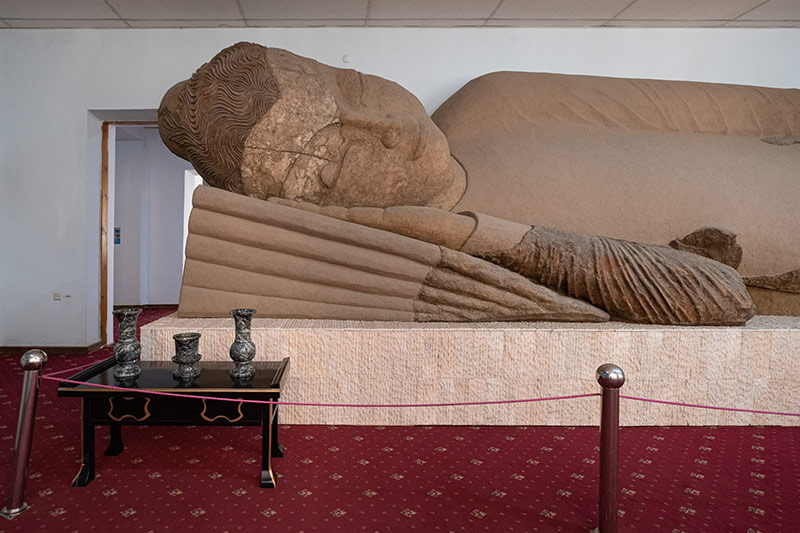
The reclining Buddha is one of the most significant archaeological objects displayed in Dushanbe.
One of Tajikistan’s most remarkable historical attractions is the reclining Buddha known as Buddha in Nirvana (the “Sleeping Buddha”), displayed at the National Museum of Antiquities in Dushanbe.
According to archaeological records, the statue was discovered at the ancient Buddhist monastery of Ajina-Tepe, near the village of Qyzyl-Soy in the Vakhsh district of Khatlon region. The site lies about 12 km north of the city of Bokhtar (formerly Qurghonteppa), roughly 85 km south of Dushanbe and 53 km from the Afghan border. The monastery was active in the 7th and 8th centuries CE, while the statue itself dates to roughly the 6th–8th centuries CE, about 1,500 years ago.
The monumental clay sculpture depicts the Buddha reclining on his right side. This posture represents his passing into final nirvana (parinirvana), a state associated with spiritual liberation. The statue is nearly 13 meters long (some sources give 12–13 meters, about 42 feet) and about 2.7 meters high. It is the largest clay reclining Buddha in the world and, since the destruction of the Bamiyan Buddhas, the largest Buddha statue in Central Asia.
The statue was uncovered during Soviet archaeological excavations in the 1960s (the main discovery in 1966) led by Boris Litvinsky. Because of severe damage, it was transported to Dushanbe in fragments: Wikipedia gives the number as 43 pieces, while some sources, such as Lonely Planet, report 92. These remained in museum storage for more than 30 years, as the funds and specialist facilities needed for restoration were unavailable.
Following Tajikistan’s independence, a restoration project began with specialists from the Hermitage Museum in Saint Petersburg, led by Vera Fomin, and with international financial support. The restoration took place in 2000–2001, and the statue has been on public display in the museum since 2001.
Before you go: Opening hours and admission information published by third-party listings may be outdated. Contact the museum to confirm the current schedule and ticket arrangements.
READ MORE ABOUT: The Largest Statues in the World

Khorog Botanical Garden is one of the distinctive natural attractions of Tajikistan. Established in 1940, the garden was created to study how different plant species survive and adapt to challenging mountain conditions.
Located at an altitude of approximately 2,240 meters above sea level in the mountainous Badakhshan region, the garden offers impressive views of the surrounding valleys and Pamir peaks.
Its original purpose was to investigate the ability of different plants to grow and survive in a cold, dry, high-altitude environment. Today, the garden contains a variety of native and non-native trees, shrubs, and other plant species adapted to the region’s distinctive climate. Some of these plants also have scientific and conservation value.
Walking along the garden’s peaceful paths provides a relaxing experience for visitors interested in nature and photography. The combination of fresh mountain air, wide-open views, and botanical diversity makes it a pleasant place to explore.
For travelers following the Pamir Highway, a visit to Khorog Botanical Garden can be a worthwhile stop in Khorog. It offers an opportunity to enjoy nature and learn about plant adaptation while taking a break from a demanding mountain journey.
| Permit | Arrange the required GBAO permit before traveling into the region. |
| What to bring | Comfortable walking shoes, sun protection, water, and clothing suitable for changing mountain weather. |
| Opening hours and fees | Opening hours and fees are not published; confirm locally before visiting. |
Regional travel check: Check current GBAO security advice and road access before traveling to Khorog. The situation and restrictions can change at short notice.

Panjshanbe Bazaar is one of the best-known attractions in northern Tajikistan and a vibrant part of everyday life in Khujand. The covered market brings together local commerce, traditional products, and the cultural atmosphere of the region.
The name Panjshanbe means Thursday in Persian and Tajik. The market’s name is traditionally associated with the day when important commercial activities once took place there. Its history is linked to Khujand’s role as a trading center along the Silk Road.
| Fresh local produce | Seasonal fruits and vegetables, dried fruits, natural honey, and dairy products. |
| Eastern spices | Colorful and aromatic spices that fill the market with distinctive scents. |
| Traditional food | Tajik bread, sweets, and regional delicacies. |
| Handicrafts and souvenirs | Traditional textiles, pottery, jewelry, and locally made musical instruments. |
The lively atmosphere, colorful stalls, and fragrance of spices make the market an excellent place to experience local culture and observe everyday life in Khujand.
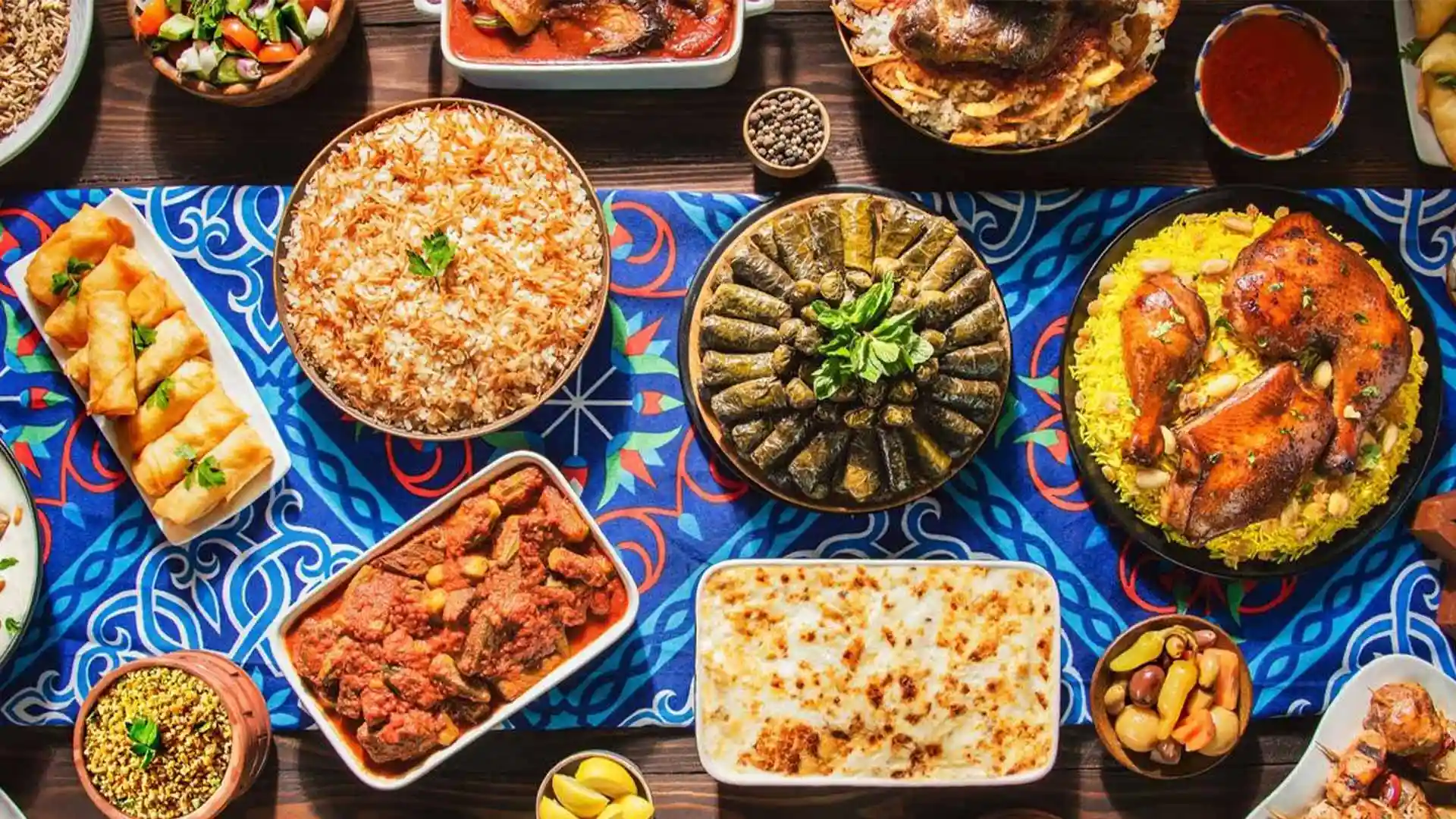
Visitors interested in the country’s cuisine can also explore our guide to traditional Tajik foods.
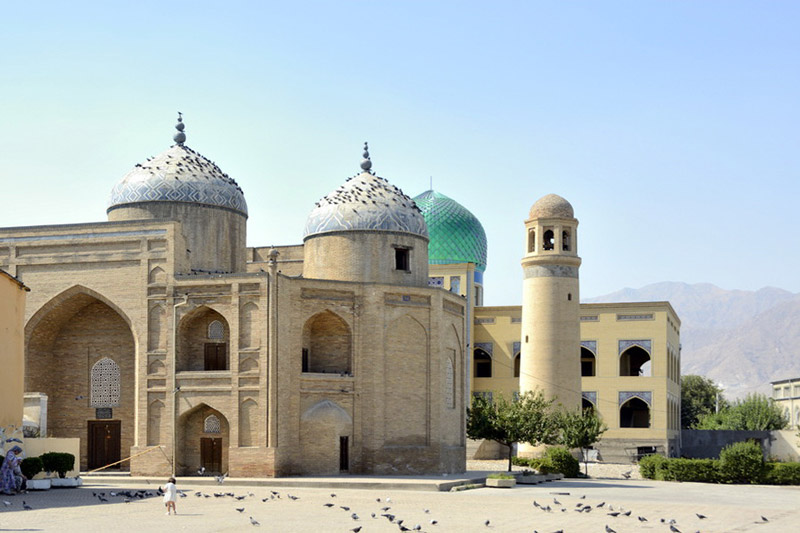
Located directly opposite Panjshanbe Bazaar, the Sheikh Muslihiddin Mausoleum is an important historical and cultural landmark in Khujand. The building is traditionally dated to the sixteenth century and is associated with the city’s religious and cultural heritage.
Its Central Asian architectural style, distinctive dome, and peaceful atmosphere make it a worthwhile addition to a visit to the bazaar. Exploring Panjshanbe Bazaar and the mausoleum together provides an opportunity to experience different aspects of Khujand, from traditional commerce and local food to religious architecture and regional history.
| Market address | Sharq Street 3A, Khujand. |
| Opening hours | There is no fixed official timetable; stalls open at different times, so visit during the day and check locally. |
| Etiquette | Ask before photographing vendors or customers, and agree on prices before buying when prices are not displayed |
| Nearby attraction | The Sheikh Muslihiddin Mausoleum is opposite the bazaar; check its local access arrangements separately |
Dushanbe, the capital of Tajikistan, combines contemporary urban development with national monuments, cultural landmarks, museums, and green public spaces. The following attractions are among the places worth including in a visit to the city.
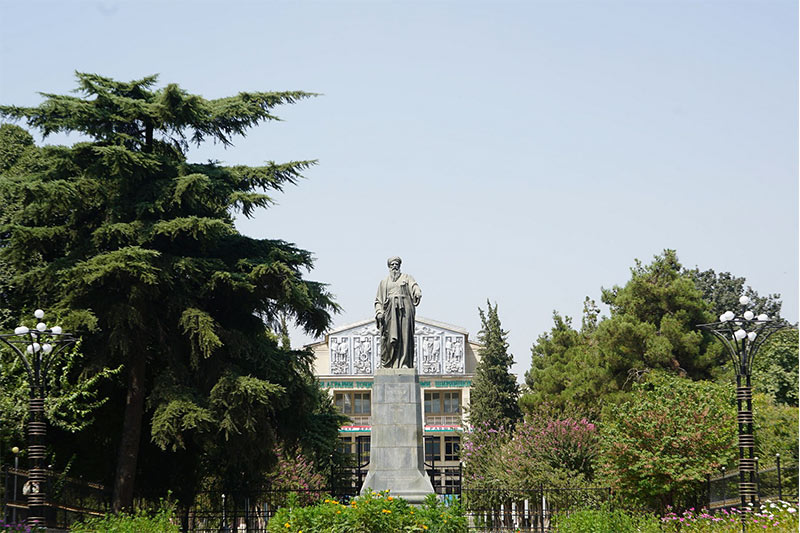
Rudaki Park is one of the most attractive public spaces in Dushanbe. It is located near several important government and cultural buildings and offers a pleasant setting for walking and sightseeing.
The park features green spaces, large fountains, a statue of the celebrated Persian-language poet Rudaki, and views of the Palace of Nations. These features have made it a popular place for residents and visitors to relax, take photographs, and enjoy the city. National celebrations and public events are also held in this area, adding to its cultural importance.
| Location | Central Dushanbe. |
| Admission | As an outdoor public park, no separate ticket information is generally listed; temporary event or security restrictions may apply. |
| Best time to visit | Daylight for the gardens and monuments; early evening for a stroll when conditions are comfortable. |
| Nearby sights | The park can be combined with other central Dushanbe landmarks. |
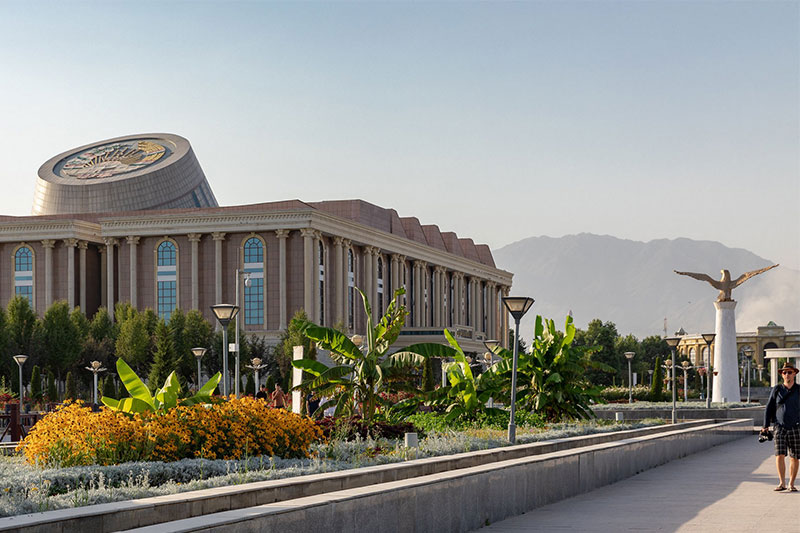
The National Museum of Tajikistan is one of the country’s most important cultural institutions. Its collections introduce visitors to different periods of Tajik history, archaeology, art, and cultural development.
The museum houses a rich collection of historical objects, including artifacts from the Sogdian period, paintings, sculptures, and other cultural treasures. A visit provides an opportunity to explore the country’s historical heritage and gain a broader understanding of Tajik national identity.
The National Museum of Tajikistan should be distinguished from the separate National Museum of Antiquities, where the Buddha in Nirvana is displayed.
Tip: Allow enough time for the museum’s exhibition halls; its collections cover nature, ancient and medieval history, modern history, and fine and applied arts.
The enormous national flag displayed in central Dushanbe is one of the capital’s most recognizable landmarks. The flagpole stands approximately 165 meters tall and was once recognized as the tallest flagpole in the world. Although it no longer holds that record, it remains one of the world’s tallest flagpoles and an important symbol of Tajikistan’s independence and national identity.
The surrounding area is particularly attractive at night, when the lighting creates an impressive setting for photography and evening walks.
| Location | Central Dushanbe, in the area around the national flag monument. |
| Admission | No reliable current ticket information was identified for the outdoor viewing area. |
| Visit tip | Check access restrictions during official ceremonies and public events; follow security instructions. |
Kohi Navruz Palace is one of the most impressive buildings in Dushanbe. Its design combines traditional Tajik architectural elements with modern construction and decorative craftsmanship.
The palace’s interior features handmade wooden decorations, intricate mirror work, detailed paintings, and grand halls. Together, these elements showcase different aspects of Tajik artistic traditions and cultural identity.
The complex is also used for official ceremonies, formal gatherings, and important events, making it one of the city’s notable architectural landmarks.
| Location | Dushanbe. |
| Access | The palace is also an event venue; public access to interiors may depend on tours, events, and local arrangements. |
| Before visiting | Contact the venue or check local listings to confirm whether guided visits are available on your chosen date. |
| Photography | Follow venue rules, particularly in ceremonial or event spaces. |
Tajikistan has a history stretching back thousands of years. Its location along historic Silk Road trade routes helped shape a rich cultural landscape filled with ancient settlements, archaeological sites, fortresses, and monuments. From the legacy of the Samanid dynasty to mountain fortifications and early urban settlements, the country’s historical attractions offer insight into the development of Central Asian civilizations.
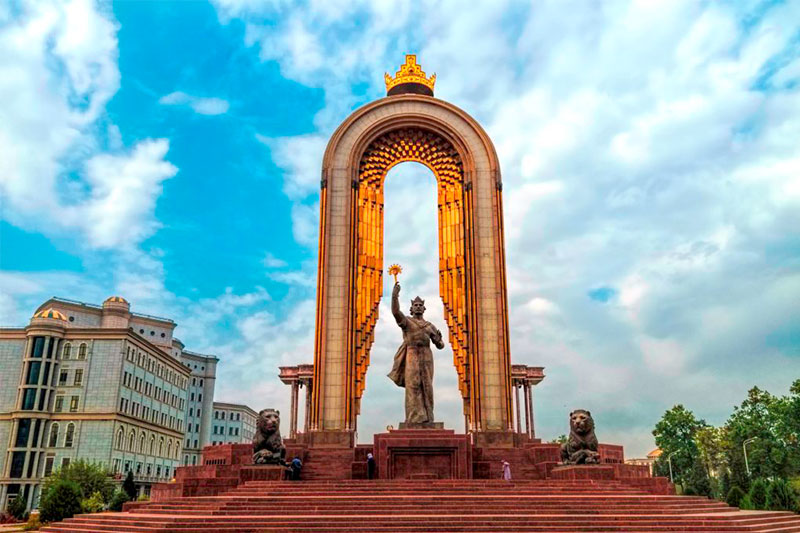
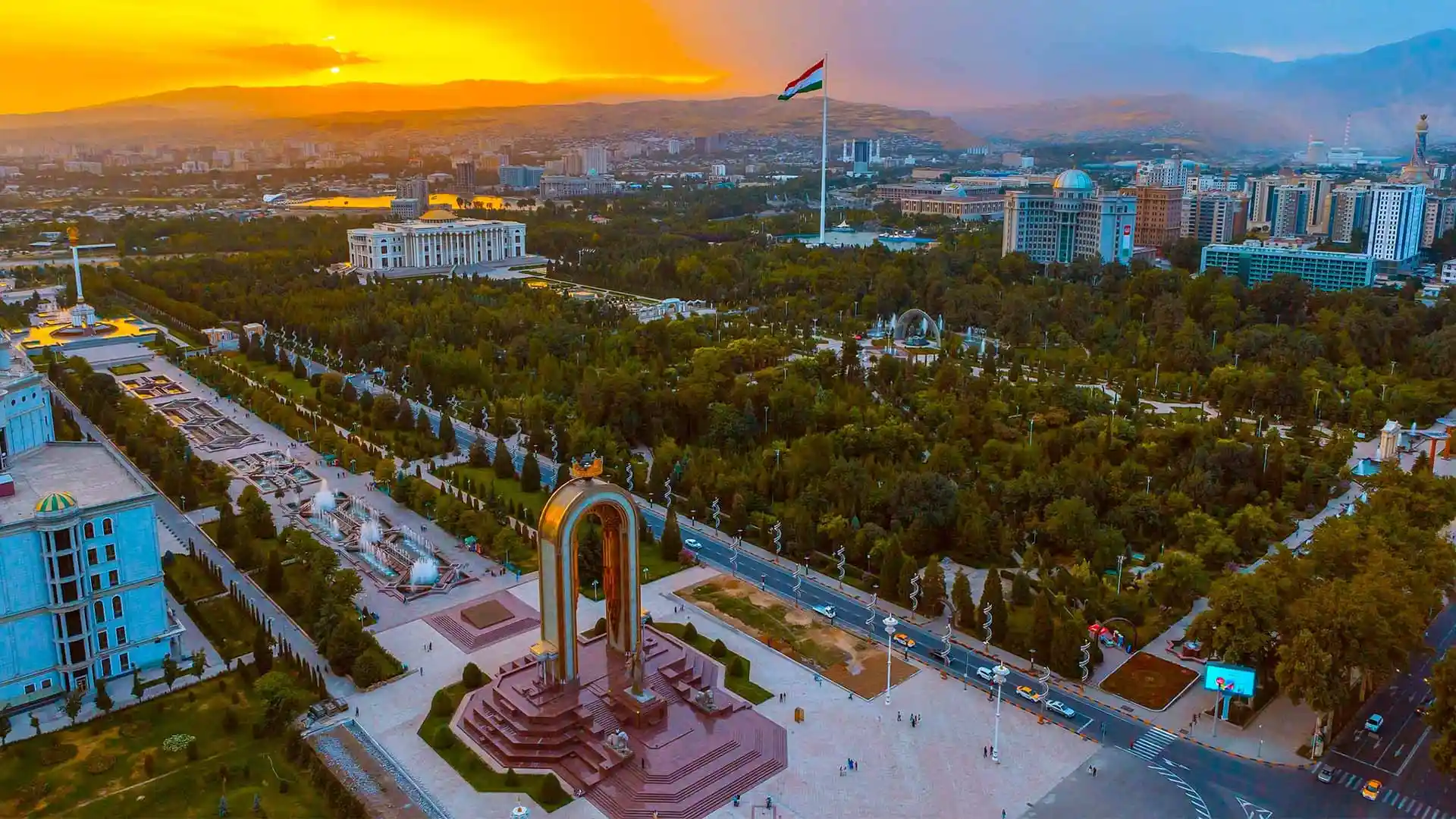
The impressive Statue of Ismoil Somoni stands in the center of Dushanbe, in Friendship Square, and is one of the most recognizable national monuments in Tajikistan.
The monument was constructed in 1999 to commemorate the thousandth anniversary of the Samanid state. Its overall height is approximately 43 meters, making it a prominent feature of the capital’s skyline. The golden crown above the monumental arch and the structure’s Art Deco-inspired design give the monument a distinctive appearance.
The 13-meter statue depicts Ismoil Somoni holding a royal staff in his right hand. The seven stars associated with the staff refer to traditional and historical symbols of Tajik identity. Two stone lions positioned on either side of the arch add to the monument’s impressive appearance.
Before the installation of this monument, the site was occupied by a statue of Vladimir Lenin. Following Tajikistan’s independence, the Ismoil Somoni monument became part of the country’s effort to highlight its historical heritage and national identity. Today, it is an important symbol of Tajik history, culture, and national pride.
| Location | Friendship Square, central Dushanbe. |
| Access | An outdoor city landmark; check for temporary restrictions during ceremonies or official events. |
| Photography | The arch and statue are prominent photo subjects; allow time to view the monument from the surrounding square. |
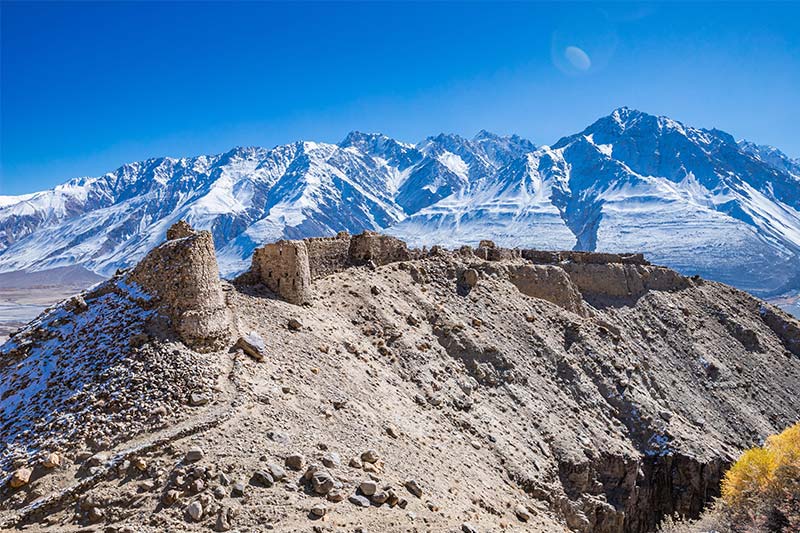
Yamchun Fortress is one of the most impressive historical fortifications in Tajikistan. It stands on a hill overlooking the Wakhan Valley and the Panj River, offering extensive views of the surrounding Pamir Mountains.
The fortress dates back to pre-Islamic times and is often associated with the Kushan period. It is considered an important defensive structure along the historic Silk Road.
Its thick mud-brick walls and semicircular towers reflect the military importance of the site in earlier centuries. Its strategic position allowed defenders to monitor movement through the Wakhan Valley and protect the eastern boundaries of their territory. Although parts of the fortress have been damaged over time, its surviving structures still convey its historical importance.
A visit to Yamchun offers a combination of history, architecture, and spectacular mountain scenery. Its proximity to the Bibi Fatima hot springs and traditional Wakhan villages also makes the surrounding area an appealing destination for travelers exploring the Pamirs.
| Facilities | Do not assume that ticket offices, toilets, food, fuel, or emergency services are available at the site. |
| Road | Expect remote mountain-road conditions; use a capable local driver and confirm the route is open. |
| Safety | The Wakhan Valley is close to the Afghanistan border. Review current official travel advice before planning this visit. |
Important regional warning: Current government travel advisories identify serious security concerns in parts of GBAO and along the Afghanistan border. Reassess the trip close to departure and follow the latest instructions from local authorities.
Hisor Fortress is one of Tajikistan’s most important historical fortifications. Its history is associated with the medieval period and the Samanid era. The fortress features defensive walls, observation towers, and traditional gateways that reflect the architectural characteristics of historic Central Asian strongholds.
Beyond its military importance, Hisor also served as a political and economic center in earlier periods. The historic complex included structures such as a caravanserai, a mosque, and buildings associated with former rulers.
Today, visitors can explore the fortress grounds, see its historic architecture, and visit its small museum to learn more about the region’s history and culture. Located approximately 30 minutes from Dushanbe by road, Hisor Fortress is a convenient destination for visitors interested in history and architecture outside the capital.
| Location | Hisor, approximately 30 minutes by road from Dushanbe under normal traffic conditions. |
| Best time to visit | Spring and summer are the best seasons to visit; check weather and local conditions. |
| What to wear | Comfortable walking shoes and clothing suitable for uneven outdoor surfaces. |
| Getting there | A private vehicle or local tour can simplify the trip from Dushanbe |
| Tickets and opening hours | A current official tariff and timetable were not verified. Confirm locally before visiting. |
Sarazm, whose name means “where the land begins”, is an archaeological site that bears testimony to human settlement in Central Asia from the 4th millennium BCE to the end of the 3rd millennium BCE. According to UNESCO, it illustrates the early rise of proto-urbanization in the region and is one of the oldest settlement centres in Central Asia.
The site lies between a mountainous region suited to cattle rearing by nomadic pastoralists and a large valley conducive to agriculture and irrigation. It grew out of the complementarity between pastoralism and early agrarianism. In the Bronze Age, the exploitation of mineral resources and the development of handicrafts gave it a new role: Sarazm became a long-standing centre for working metals, particularly tin and copper, and for producing tools, ceramics, and jewellery.
Sarazm also took part in long-distance commercial and cultural exchanges, with connections stretching from the steppes of Central Asia and Turkmenistan to the Iranian plateau, Mesopotamia, the Indus valley, and as far as the Indian Ocean.
The site has the legal status of a “Historical and Archaeological Reserve”. It is managed by the Penjikent Archaeological Base under the supervision of the Institute of History, Archaeology and Ethnography of the Academy of Sciences.
UNESCO World Heritage status: Sarazm was inscribed on the World Heritage List in 2010 as a stand-alone property.
| Planning | Consider visiting Sarazm and Ancient Penjikent as part of the same itinerary around Panjakent. |
| Transport | Arrange local transport between the archaeological sites; do not assume a frequent tourist shuttle. |
| Site conditions | These are archaeological sites, not indoor museums. Wear suitable shoes and protect yourself from sun and heat. |
| Tickets and hours | Current official visitor hours and ticket prices were not verified. Check with local tourism offices or site staff. |
The ancient city of Penjikent dates from the 5th to the 8th century CE and was one of the flourishing centres of Sogdian civilization in the early Middle Ages. It is entirely separate from Sarazm, which belongs to the Bronze Age. Its most distinctive feature is its monumental wall paintings, masterpieces of Sogdian art depicting epic, religious, and everyday scenes.
UNESCO World Heritage status: Ancient Penjikent is currently on UNESCO’s Tentative List. It appears both as an individual entry and as a component of the serial nomination “Silk Roads Sites in Tajikistan”.
Ancient Khuttal was a medieval kingdom that existed from the 7th to the 16th centuries in the piedmont of the Pamir Mountains, between the Panj and Vakhsh rivers. According to UNESCO, it existed as an independent or semi-independent state and was well integrated into Silk Roads trade. The serial property has eleven component parts (summarised by UNESCO as ten sites and one monument). They include religious sites, capital cities, settlements, and infrastructure, as well as early medieval canals and water-supply systems.
Two of the component parts are:
Ajinatepa Buddhist Monastery: an ancient Buddhist monastery. UNESCO notes that past interventions are present at the site.
Kalai Hulbuk and Shahristoni Hulbuk: at Kalai Hulbuk, the outer walls, main portal, minaret, and palace towers were reconstructed. Shahristoni Hulbuk is the neighbouring ancient town (shahristan).
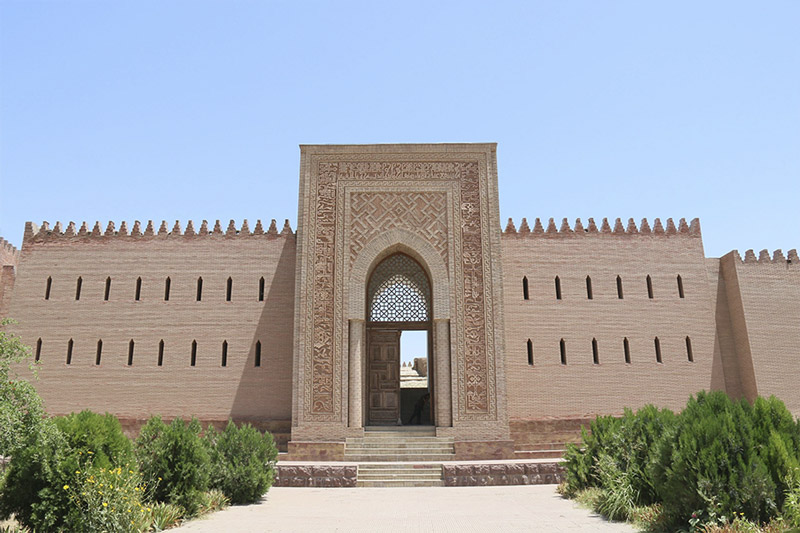
Hulbuk Fortress, also known as the Palace of the Rulers of Khuttal, is one of the important archaeological sites in southern Tajikistan. The complex is located near Kulob, in the village of Qurban-Shaheed, approximately 30 kilometers southwest of the city. It once served as a political center of the historical Khuttal region during the medieval period.
Hulbuk was included on Tajikistan’s Tentative List for UNESCO World Heritage recognition in 1999. It is an important archaeological symbol of the country’s historic civilization.
The site’s most prosperous period is associated with the ninth to eleventh centuries CE, particularly the Samanid era, when it was an important regional center. Its strategic position along trade routes, fertile surrounding land, and nearby deposits of salt, gold, and copper contributed to its economic development.
Archaeological excavations have revealed the remains of two palaces: a lower palace dating to the ninth and tenth centuries and an upper palace associated with the eleventh and twelfth centuries. Researchers have also uncovered the city’s internal and external walls and parts of its central citadel.
Discoveries of water-supply and drainage systems, household tools, jewelry, decorative objects, and examples of Kufic inscriptions indicate that Hulbuk was a developed urban center with sophisticated architecture and infrastructure Today, the restored section of the citadel offers visitors an impression of the fortress’s historic appearance. Opposite the complex, Hulbuk Museum displays archaeological objects recovered from the site and helps visitors understand the history of this former regional capital.
| Location | Near Kulob, in Qurban-Shaheed village, southern Tajikistan. |
| Nearby museum | Hulbuk Museum stands opposite the archaeological complex. |
| Transport | Arrange transport from Kulob and confirm local road and site access. |
| Opening hours and tickets | Current official hours and ticket prices were not verified; check locally before making a dedicated trip. |
Tajikistan’s high mountain ranges and unspoiled landscapes are home to spectacular lakes that attract nature lovers, hikers, and adventurous travelers. These lakes offer a variety of experiences, from peaceful mountain scenery and cold, clear water to local legends and remote landscapes. Their distinctive colors and dramatic surroundings make them some of the most memorable natural attractions in the country.
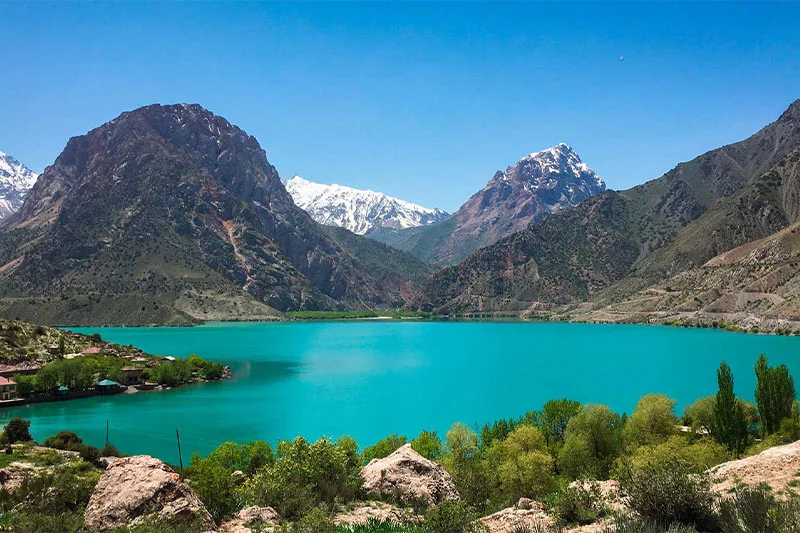
Iskanderkul is one of the most famous and beautiful lakes in Tajikistan. Located in the Fann Mountains, it is known for its turquoise-green water, surrounding peaks, and remarkable natural setting.
A famous waterfall is also located near the lake, making the area an appealing destination for nature tourism and photography. The lake’s name is traditionally associated with Alexander the Great, who is believed in local historical accounts to have passed through the region during his military campaigns. This connection adds a layer of historical and legendary interest to the lake.
| Distance | Around 130 km from Dushanbe; actual journey time depends on road and weather conditions. |
| Transport | A pre-arranged driver or tour is a practical option. Confirm return transport before leaving. |
| Facilities | Do not assume every service is available year-round; confirm accommodation, food, and facilities locally. |
| What to bring | Walking shoes, water, sun protection, and a warm layer for changing mountain weather. |
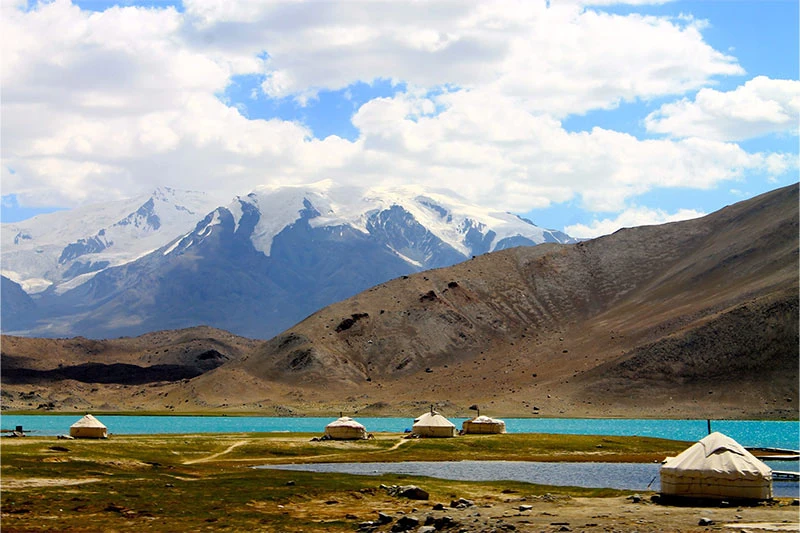
Karakul is one of the largest lakes in Tajikistan and is located in the high Pamir Mountains, close to the Pamir Highway. Situated at an altitude of more than 3,900 meters above sea level, it is among the highest lakes in Central Asia.
Its saline water, remote location, and dramatic mountain surroundings create a landscape very different from the greener valleys and lakes elsewhere in the country. For travelers exploring the eastern Pamirs, Karakul is one of the region’s most distinctive natural landmarks.
| Altitude | More than 3,900 m above sea level; altitude exposure is a serious planning factor. |
| Permit | Karakul lies in the Pamir / GBAO travel area. Confirm and obtain the relevant GBAO permit. |
| Transport | Include Karakul in a planned Pamir itinerary with a suitable vehicle and driver. |
| Preparation | Allow time to acclimatize, carry warm clothing and essential supplies, and check road and weather conditions. |
Altitude note: Do not plan a rapid ascent to high-altitude locations without considering acclimatization. Seek medical advice before travel if you have concerns about high-altitude exposure.
The Seven Lakes, also known as Haftkul or the Marguzor Lakes, are located in western Tajikistan, approximately 40 kilometers from the city of Panjakent. The lakes stretch along the Shing River Valley over a distance of approximately 14 kilometers. Each lake has its own distinctive characteristics, including variations in water color and volume.
Exploring all seven lakes can take a full day, making the area an excellent choice for travelers interested in mountain scenery, nature photography, and peaceful outdoor experiences.
| Starting point | Panjakent is a practical base for arranging local transport to the Shing Valley. |
| Transport | A private vehicle / suitable 4WD is the most flexible option for visiting several or all seven lakes.
Confirm the vehicle can reach the upper lakes. |
| Time | Allow a substantial part of the day; extra time is needed for stops, walking, and road delays. |
| Altitude | The lakes rise from roughly 1,640 m to around 2,400 m above sea level, according to the Tajik Embassy’s destination guide. |
Trip-planning tip: Agree with the driver in advance which lakes you intend to visit, the waiting time at each stop, and the return arrangement. Carry cash and drinking water.
Garm-Chashma is a well-known hot spring resort located along the Pamir Highway in the Gorno-Badakhshan Autonomous Region. The spring is approximately 40 kilometers from Khorog and sits at an altitude of around 2,325 meters above sea level. The water temperature is approximately 59°C.
Mineral deposits have formed distinctive rock structures and natural pools around the spring, creating an unusual landscape that combines natural scenery with the area’s long-standing bathing and balneological traditions. Garm-Chashma can be an interesting stop for travelers exploring Khorog and the surrounding Pamir region.
| Location | Approximately 40 km from Khorog, in GBAO. |
| Permit | A GBAO permit is required for foreign visitors to enter the region. |
| Water temperature | The water temperature is around 59°C; follow on-site
instructions and do not assume every pool has the same temperature. |
| Opening arrangements | Current public opening hours, entry fees, and bathing arrangements were not independently verified. Confirm locally. |
Sights tell you where to go; this section is about what to actually do there. Pick the style that suits your trip, then use the detailed listings above to plan each stop.
For Mountain Days and Road Trips
Planning a trip to Tajikistan requires some preparation, especially if you intend to visit remote valleys, high-altitude lakes, or the Pamir Highway. The following tips can help you organize a more comfortable journey.
Late spring through early autumn is generally a suitable period for exploring many parts of Tajikistan. May to September is the best window, particularly for mountain destinations and the Pamir Highway. However, conditions vary between regions, and mountain roads can be affected by seasonal weather. Check local conditions before setting out.
Tajikistan can be more affordable than many other international travel destinations. However, facilities in remote areas may be limited, and accommodation, transportation, and other services can sometimes be more expensive than expected. Plan your budget according to the regions you intend to visit and the type of transport and accommodation you need.
Visa requirements depend on your nationality. Check the current rules using the official Tajikistan e-Visa portal before booking travel.
Travelers planning to visit the Gorno-Badakhshan Autonomous Region (GBAO), including parts of the Pamir region, also need to check the separate permit requirements before departure. The Ministry of Foreign Affairs lists a GBAO permit fee separately from the e-Visa fee; fees and procedures can change.
Important: These are Fees listed on the official MFA page as of November 2026. Eligibility, visa validity, permitted stay, and additional requirements depend on nationality and current rules. Always verify directly on the official portal before applying.
Internet access is generally more available in larger cities such as Dushanbe. However, connectivity can become unreliable in remote valleys and mountainous areas. When traveling through the Pamirs or other isolated regions, be prepared for weak mobile signals or periods without internet access.
Mountain travel in Tajikistan requires additional care. Official travel advisories warn of landslides, avalanches, poor road surfaces, limited emergency medical support, and restricted mobile coverage in remote areas. Conditions can change quickly, particularly in spring, winter, and at high-altitude passes.
Travel guidance checked on 2 November 2026. See the UK Foreign Travel Advice, the whc.unesco.org, the U.S. Department of State advisory, and the German Federal Foreign Office travel advice for the latest warnings.
Tajikistan is a destination where travelers can experience a remarkable combination of history, culture, and mountain scenery. From the ancient civilizations represented by Sarazm and Ancient Penjikent to the dramatic landscapes of the Pamir Highway and the turquoise waters of Iskanderkul Lake, the country offers a wide variety of memorable attractions.
In the capital, visitors can explore a more modern side of Tajikistan through national monuments, cultural landmarks, Rudaki Park, and the National Museum of Tajikistan. Traveling through the country is much more than an ordinary sightseeing experience. It is an opportunity to explore the heart of Central Asia, travel along spectacular mountain roads, discover the traditions of local communities, and experience landscapes that remain relatively untouched.
For travelers seeking a combination of natural beauty, historical discoveries, and authentic cultural experiences, Tajikistan offers a distinctive destination worth exploring.
Late spring to early autumn is generally a suitable period for visiting many parts of Tajikistan. May to September is the best window, particularly for mountain routes and destinations such as the Pamir Highway and the country’s high-altitude lakes. Conditions vary between regions, and mountain roads can be affected by seasonal weather. Always check local conditions before traveling.
Visa requirements depend on your nationality. Citizens of many countries may be eligible for an electronic visa, while others may have different entry requirements. Check your eligibility and current rules through the official Tajikistan e-Visa website. A separate GBAO permit is also required for travelers visiting the Gorno-Badakhshan Autonomous Region.
Some of the country’s best-known attractions include Iskanderkul Lake, the Seven Lakes, the Pamir Highway, Sarazm, Ancient Penjikent, Rudaki Park, and its historic fortresses. Together, these destinations showcase Tajikistan’s natural scenery, archaeological heritage, and cultural identity.
Some of the main attractions in Dushanbe include the National Museum of Tajikistan, Rudaki Park, Kohi Navruz Palace, the National Flag monument, and the Ismoil Somoni Monument. These landmarks provide a good introduction to the capital’s history, architecture, and national culture.
Tajikistan can be an affordable destination compared with many international travel locations. Accommodation, food, and transport in larger cities can be relatively economical. However, travel through remote areas, including the Pamirs, can involve higher transportation costs and limited accommodation options. Your overall budget depends on your itinerary, travel style, and the regions you plan to explore.
Safety conditions vary by region, and visitors should not assume that all parts of the country have the same risk level. Before traveling, review current official travel advice, particularly for the Gorno-Badakhshan Autonomous Region and areas close to international borders. Remote mountain routes also present challenging road, weather, and emergency-access conditions.
The official language of Tajikistan is Tajik, which is closely related to Persian. Because of their shared linguistic roots, Persian speakers may recognize many familiar words and expressions and may be able to communicate with local residents to varying degrees. Differences in pronunciation, vocabulary, and the Cyrillic writing system can make communication more challenging in some situations.
A trip of at least 7 to 10 days can provide a starting point for exploring several of Tajikistan’s main attractions. This period may allow you to visit Dushanbe, explore historical destinations such as Ancient Penjikent, and include a natural attraction such as Karakul Lake, depending on your route and transport arrangements. Travelers planning a more extensive journey through the Pamirs should allow additional time.
Popular souvenirs from Tajikistan include traditional handicrafts, embroidered textiles, Tajik hats, locally produced dried fruits, and handmade woven products. Markets such as Panjshanbe Bazaar in Khujand are interesting places to explore these items and find locally made gifts that reflect the country’s cultural traditions.
Yes. Overland travel to Tajikistan from neighboring countries may be possible through designated border crossings. However, border availability and entry conditions can change, and some crossings may be temporarily closed or unavailable to foreign travelers. Check the current situation before planning an international overland journey. For many international visitors, flying to Dushanbe is the more straightforward option.