



Mashhad is best known as one of Iran’s major religious and cultural destinations, but beyond its famous landmarks, the city also preserves traces of its residential past. The historical houses in Mashhad offer visitors a closer look at traditional Iranian architecture, merchant households, decorative craftsmanship, and everyday life during the Qajar and early Pahlavi periods.
In this guide from the FlySepehran Blog, we introduce six historic houses that may interest travelers looking to explore a different side of Mashhad. You will find architectural highlights, location details, previously published visiting hours, admission information, and practical transportation advice.
Although Mashhad has fewer surviving historical houses than cities such as Isfahan, Shiraz, or Tehran, it offers a major advantage: accessibility. As one of Iran’s largest cities, Mashhad has a wide range of accommodation options, domestic flight connections to destinations such as Tehran, Isfahan, Kish, Tabriz, Bandar Abbas, and international air connections, including routes serving Iraq, Oman, Dubai and Türkiye, subject to current airline schedules. Rail services and intercity roads provide additional travel options. International visitors arriving at Tehran Imam Khomeini International Airport (IKA) can also transfer to Tehran Mehrabad Airport (THR) for a domestic flight to Mashhad. For flight options and ticket bookings, visit FlySepehran.
🏛️ Status: Listed as open to visitors in the original guide; current access requires confirmation.
📍 Address: Imam Khomeini Street (between Imam Khomeini 31 and 33), Mashhad.
🕘 Visiting hours: Daily, 9:00 AM–5:00 PM.
🎟️ Admission: Previously listed as free or subject to a nominal fee; verify before visiting.
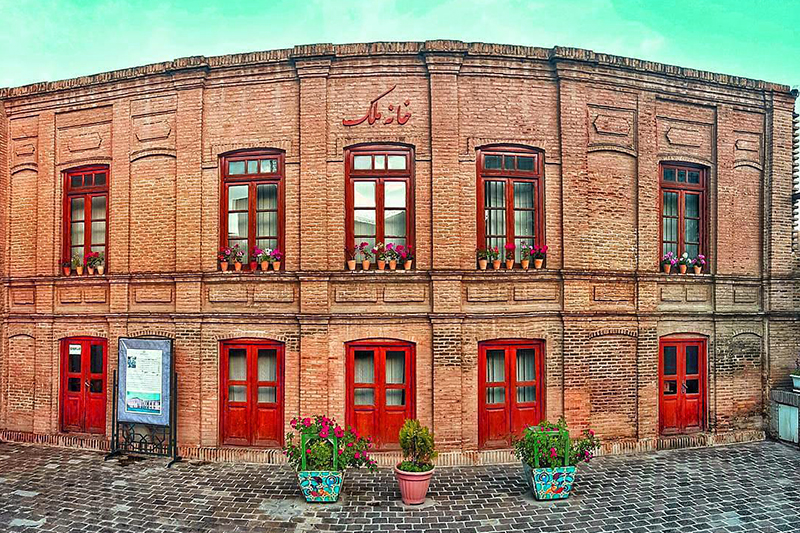
Malek Historical House (Khaneh Malek) is one of the notable surviving residences from Mashhad’s transition between the late Qajar and early Pahlavi periods. Located on Imam Khomeini Street, the property was associated with Haj Hossein Malek, a prominent Iranian businessman, philanthropist, and collector.
The residence reflects the lifestyle of an affluent family during a period when Mashhad was developing as an important commercial and cultural center. Its brickwork, wooden windows, decorative plasterwork, and traditional courtyard arrangement make it particularly interesting for visitors who enjoy architectural details.
The house also reflects an important aspect of Iranian residential design: adapting buildings to seasonal temperatures. High ceilings, interior courtyards, and cooler underground spaces helped create more comfortable living conditions.
Malek House was registered on Iran’s National Heritage List in 1998.
Malek House is a living hub of traditional arts, where artists actively practice their crafts and art workshops are regularly held. Visitors interested in traditional Iranian arts, such as musical instrument making and playing, gemstone carving, embroidery, and more, can arrange in advance to visit the workshops and observe the artists at work.
Malek House is situated in a central Mashhad, making it relatively convenient to include in a city sightseeing itinerary.
🚇 By metro: Imam Khomeini and Saadi stations are useful access points. Depending on the station and exit, allow time for a short walk through the surrounding streets.
🚌 By bus: Routes 22, 62, and 82 were listed as nearby services in the original guide. Check current route maps before departure.
🚕 By taxi: A city taxi or app-based ride is convenient, particularly for travelers unfamiliar with Mashhad’s public transportation system. Use the full address rather than relying on the English name alone.
🏛️ Status: Previously operating as Havali Café; current business status should be confirmed.
📍 Address: No. 22, Se-Shahid (3 …) Alley, Shahid Deylameh 5, Mashhad.
🕙 Visiting hours: Daily, 10:00 AM–10:00 PM.
🎟️ Admission: No separate entrance fee previously listed; café purchases are charged.
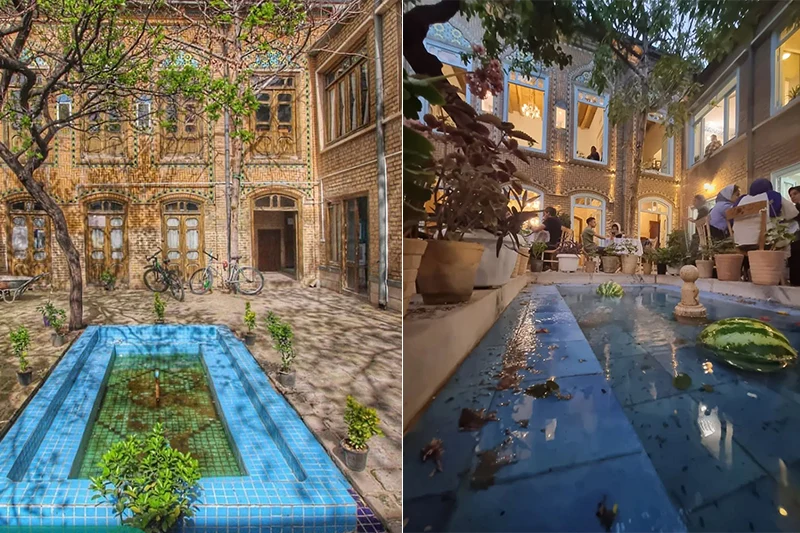
Pishevaran House, associated with Havali Café, offers a different way to experience Mashhad’s architectural heritage. Instead of functioning solely as a historical monument, the property has been adapted for contemporary social and cultural use.
Situated near the Khosravi area, on Shahid Deylameh Street, the house retains elements of traditional Iranian residential architecture. Its wooden ceilings, brick decorations, interior rooms, and courtyard help preserve the atmosphere of an older Mashhad neighborhood.
For travelers, this type of adaptive reuse is especially interesting. It shows how historic buildings can remain part of everyday urban life rather than becoming isolated museum exhibits.
If the café is operating during your visit, it may provide an opportunity to appreciate the building while taking a break from sightseeing.
🚇 By metro: Imam Khomeini Station is a useful starting point. Continue toward Shahid Deylameh Street using a navigation app or local directions.
🚌 By bus: The original guide identifies routes 22, 62, 82, and 210 as serving the surrounding area. Route availability should be checked locally.
🚕 By taxi: Request a ride to Havali Café or provide the Shahid Deylameh 5 address. This may be easier than searching for Pishevaran House by its historical name.
* Darougheh or Darugha or Darughachi has entered the Persian language from the Mughal Empire and refers to a government official who ruled over a territorial region.
🏛️ Status: Previously listed as open to visitors; confirm current access.
📍 Address: Darougheh Alley, Rast-e Howz-e Mesgaran, Navab Safavi Street, Mashhad.
🕗 Visiting hours: 8:00 AM–2:00 PM and 4:00 PM–8:00 PM.
🎟️ Admission: Entrance fee required; current ticket price unconfirmed.
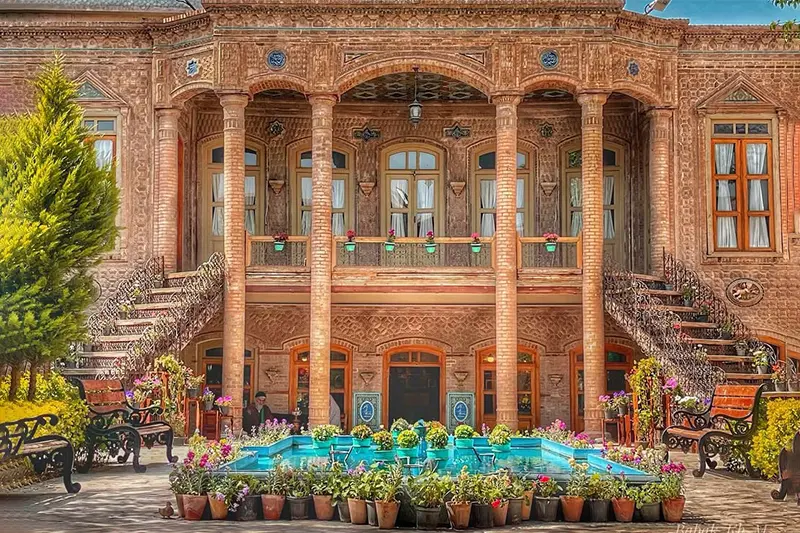
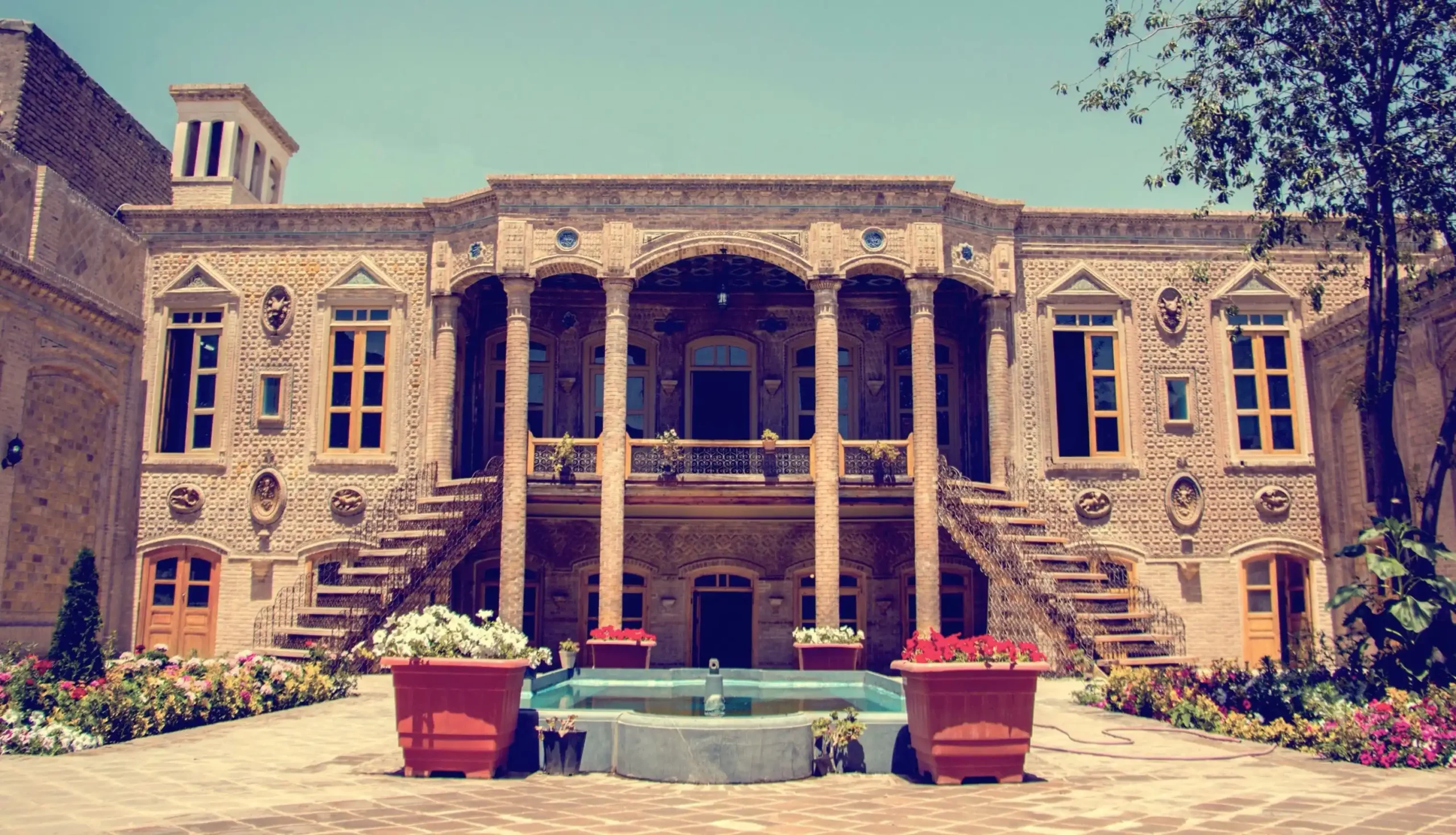
Darougheh House is one of the most architecturally distinctive historic residences in Mashhad. Built in the late Qajar period for Mohammad Yousef Khan Herati, who served as the city’s darougheh, or local security official, the house combines traditional Iranian residential planning with decorative influences associated with European and Russian architecture.
The building dates to approximately 1912, corresponding to 1330 in the Islamic lunar calendar. Its decorative features include colorful tiles, ornamental plasterwork, wooden ceilings, and unusual figurative motifs. The contrast between Iranian courtyard architecture and European-inspired details makes this house particularly rewarding for architecture enthusiasts.
The property also illustrates how traditional homes responded to Mashhad’s seasonal climate. Separate summer and winter living areas helped residents adjust to changing temperatures, while the basement and other interior spaces provided additional comfort.
Darougheh House was added to Iran’s National Heritage List in 2002.
Darougheh House is located within the older urban area near the Imam Reza Holly Shrine, where narrow streets and traditional alleys are part of the sightseeing experience.
🚇 By metro: Shohada Square and 17 Shahrivar stations can serve as connections to the wider neighborhood, although an additional taxi or bus journey may be necessary.
🚌 By bus: Line 84, BRT 831, and BRT 901 were previously identified as possible options. Confirm their current stops and services.
🚕 By taxi: An app-based taxi is a practical option. Depending on local traffic restrictions, you may need to walk the final section through the historic lanes.
For photography enthusiasts, the courtyard, decorative façades, and symmetrical architectural features are among the building’s main attractions.
🏛️ Status: Previously listed as open to visitors; current access should be confirmed.
📍 Address: Navab Safavi 7, Navab Safavi Street, Mashhad.
🕣 Visiting hours: 8:30 AM–7:30 PM.
🎟️ Admission: Entrance fee required; current price unconfirmed.
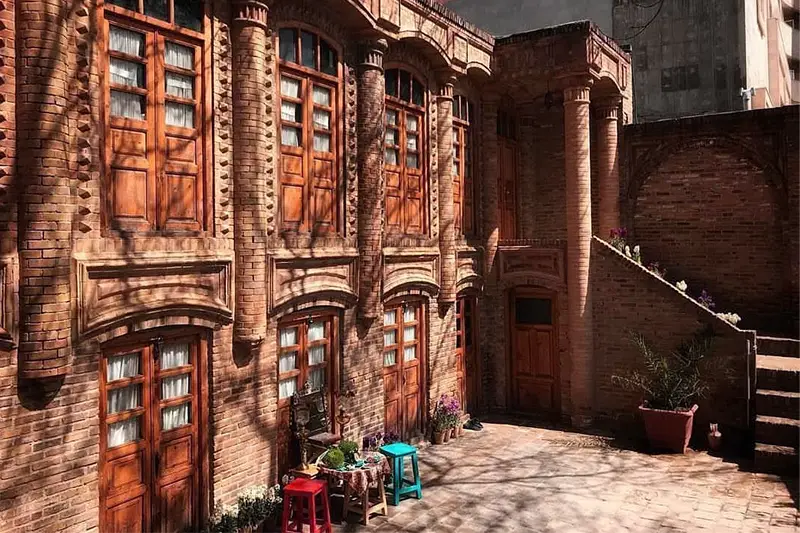
Tavakoli Historical House is another example of Mashhad’s surviving residential architecture from the late Qajar period. Situated near the Imam Reza Shrine, the house offers an opportunity to examine the design of an upper-class Iranian residence from more than a century ago.
The building is associated with Haj Hossein Agha Tavakoli, a merchant and philanthropist whose residence also served as a setting for social and business gatherings.
One of the most appealing aspects of Tavakoli House is its balanced architectural composition. Decorative brickwork, wooden doors, colorful window glass, and plaster ornamentation reflect the craftsmanship of the period.
The central courtyard, with its traditional pool and surrounding rooms, illustrates the importance of privacy, natural light, and outdoor living space in Iranian domestic architecture. The property also includes an iwan (a covered, open-fronted space), larger reception rooms, and a basement.
Tavakoli House was registered on Iran’s National Heritage List in 2005.
🚇 By metro: Shohada Square and 17 Shahrivar stations provide connections to this part of Mashhad. Depending on your starting point, you may need to continue by taxi or bus.
🚌 By bus: Lines 830 and 831 were previously listed as serving the surrounding neighborhood. Check current routes before traveling.
🚕 By taxi: A taxi or app-based ride is generally a straightforward choice. Enter Navab Safavi 7 as your destination and allow for a short walk if the driver cannot enter the smaller streets.
Because Tavakoli House and Darougheh House are both located around Navab Safavi Street, travelers may find it convenient to explore them during the same outing, provided both are accessible.
🏛️ Status: Previously listed as open to visitors; current access is unverified.
📍 Address: Navab Safavi Street, Abbasgholi Alley, Mohammadieh Mosque Alley, No. 85, Mashhad.
🕘 Visiting hours: 9:00 AM–6:30 PM.
🎟️ Admission: Previously listed as free; reconfirm before visiting.
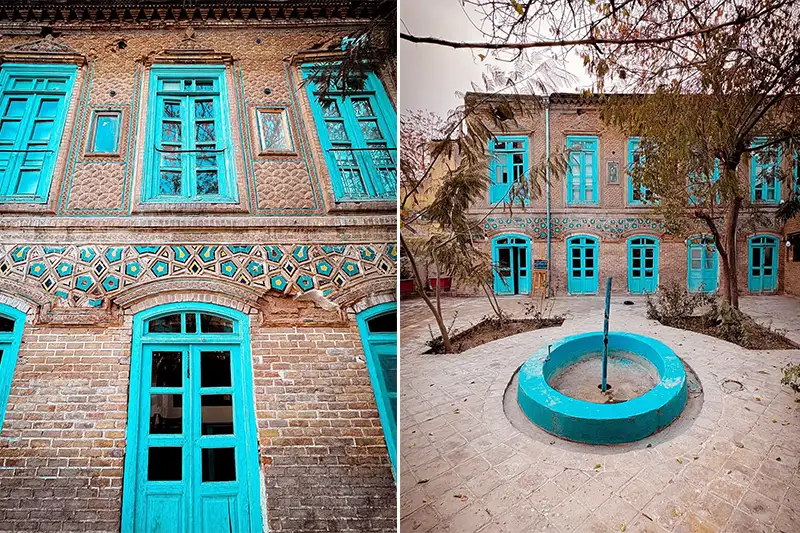
Ghafouri Historical House stands in the older neighborhoods surrounding the Imam Reza Shrine. The property, covering approximately 1,300 square meters according to the original guide, is an example of Qajar-era residential architecture.
Unlike a modern home with a straightforward entrance and open-plan interior, Ghafouri House incorporates traditional spatial divisions that reflect the social customs of its time.
The entrance leads through a hashti; a transitional vestibule commonly found in Iranian architecture. This feature helped separate the privacy of the household from the public street.
The building includes spaces traditionally known as the andaruni (private family quarters), biruni (reception or guest quarters), and shahneshin (a principal sitting or reception area). Its brick façades, wooden ceilings, and ornamental tilework add to its architectural interest.
Separate spaces designed for warmer and colder seasons also demonstrate how Iranian builders adapted homes to the local climate.
The property was registered on Iran’s National Heritage List in 2005.
🚇 By metro: Shohada Square and 17 Shahrivar stations are possible starting points for reaching the neighborhood. A connecting taxi or bus may be needed.
🚌 By bus: Lines 831, 1051, and 2800 were mentioned in the original local guide. Check whether these routes still operate near the property.
🚕 By taxi: For visitors unfamiliar with the neighborhood, an app-based taxi is a practical option. The house is located within a network of smaller alleys, so keep the complete address available.
Visitors interested in traditional urban design may also enjoy observing the surrounding neighborhood, although access to individual historic buildings should never be assumed.
🏛️ Status: Previously described as accessible; current opening status requires confirmation.
📍 Address: Chaharbagh Alley (near the area known locally as Kuwaitis), Shirazi Street, Mashhad.
🕘 Visiting hours: Daily, 9:00 AM–5:00 PM.
🎟️ Admission: Previously listed as free or subject to a nominal preservation fee; current conditions unconfirmed.
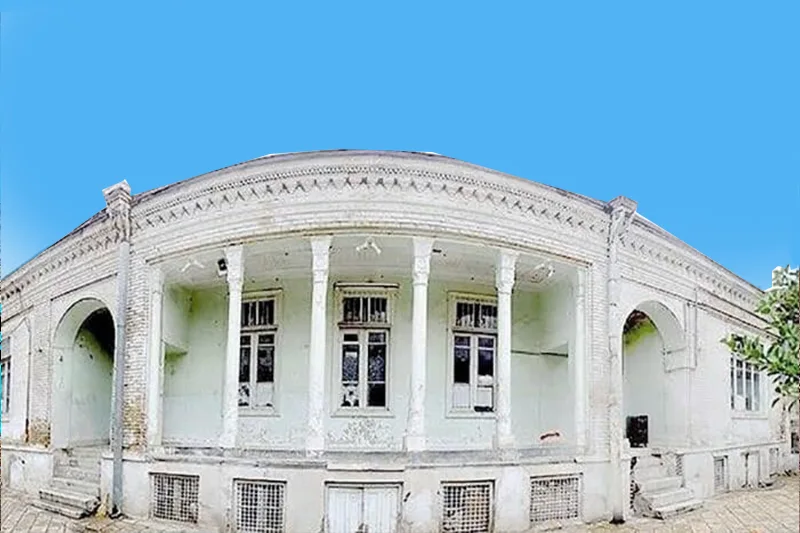
Kouzeh Kanani House is associated with Haj Hossein Kouzeh Kanani, a prominent merchant in Mashhad. The property dates to the early Pahlavi period and reflects the architectural traditions of wealthy Iranian households during the first half of the twentieth century.
Although built during a period of modernization, the house retains many elements of traditional Iranian residential design.
Brick walls, decorated wooden doors, colorful windows, and a spacious courtyard are among its notable features. Inside, wooden ceilings and plaster decorations demonstrate the attention given to craftsmanship and interior detail.
The courtyard, with its pool and planted areas, reflects the traditional role of outdoor space as the center of family life.
The building was registered on Iran’s National Heritage List in 2003.
🚇 By metro: Saadi and Shohada Square stations provide access to the wider central area. Continue by taxi or local public transport depending on your location.
🚌 By bus: Lines 83, 1043, and 2012 were listed in the original guide as possible services.
🚕 By taxi: For international visitors, using a taxi with the full Persian address is likely to be the simplest approach.
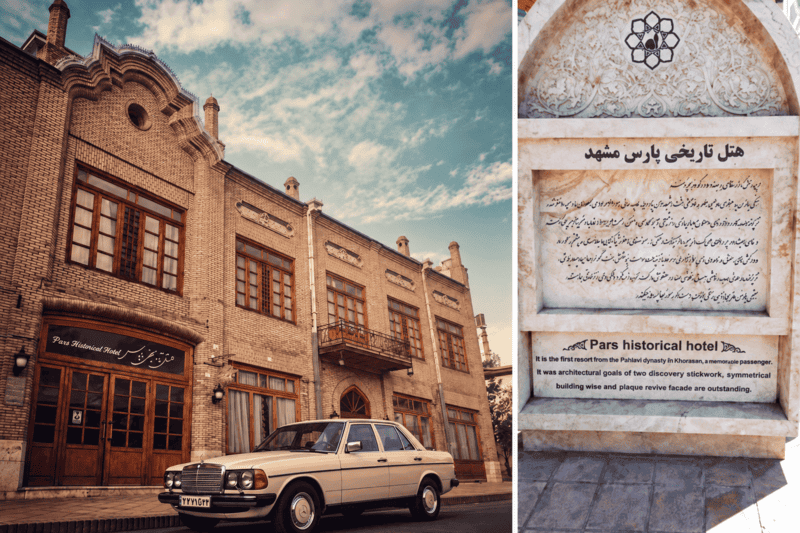
Beyond its well-known historic houses, Mashhad is home to several other remarkable heritage buildings that reflect the city’s architectural and cultural past. One of the most notable is the Historic Pars Hotel, located on Imam Khomeini Street (formerly Arg Street), near Malek House and the National Garden. Known for its Russian-influenced architecture and distinctive brickwork, this historic hotel is an important reminder of Mashhad’s early modern hospitality industry.
Other noteworthy properties include Ahmadian Historical House on Shirazi Street, Ashti Konan Historical House on Sarab Street, and Amiri House, a late-Qajar-era residence. Together, these buildings offer a glimpse into Mashhad’s architectural heritage, although public access to some properties may be limited.
Most of Mashhad’s historic houses are located in the city center or in older neighborhoods around the Imam Reza Holy Shrine, making it easy to explore several attractions in one day.
Begin your journey at Malek House on Imam Khomeini Street. While you’re in the area, take a look at the historic Pars Hotel building, another example of Mashhad’s architectural heritage.
Continue toward the older neighborhoods around Navab Safavi Street. Darougheh House and Tavakoli House are relatively close to each other, making them a convenient combination for your itinerary.
After exploring the historic houses, enjoy a break at a traditional café or take a leisurely walk through the surrounding streets to discover more of Mashhad’s local atmosphere.
Havali Café, located in the historic Pishevaran House, is a wonderful place to experience Mashhad’s local culture. Explore the charm of a traditional Persian house while enjoying authentic local dishes and refreshing Persian drinks. It’s a perfect blend of history, flavor, and culture.
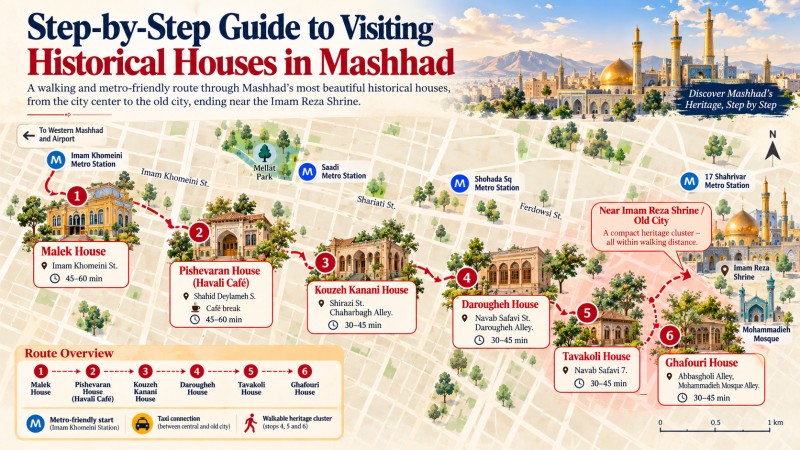
1: Taxis and app-based ride services are convenient options for getting between attractions. For a more budget-friendly journey, consider using Mashhad’s metro or public buses.
2: Keep the Persian names and addresses of the historic houses on your phone. English spellings may vary across navigation apps, so having the Persian names ready can make finding each location easier. Check opening hours and visitor access in advance, as some heritage properties may have restrictions.
Planning your next trip?
Book your flight to Mashhad and discover the wonders of Iran with Fly Sepehran.
“Last updated: October 2026. The visiting hours, admission policies, and operating statuses mentioned in this article are based on previously published information and may have changed. Before arranging your itinerary or visiting any historical house in Mashhad, always obtain the latest information from the property’s management, local tourism authorities, or other reliable local sources. Some buildings may be temporarily closed, undergoing restoration, or subject to restricted access”.