Greece Travel Guide: Best Islands, Athens & Essential Travel Tips
heliya erfani
2026-02-24
فهرست مطالب
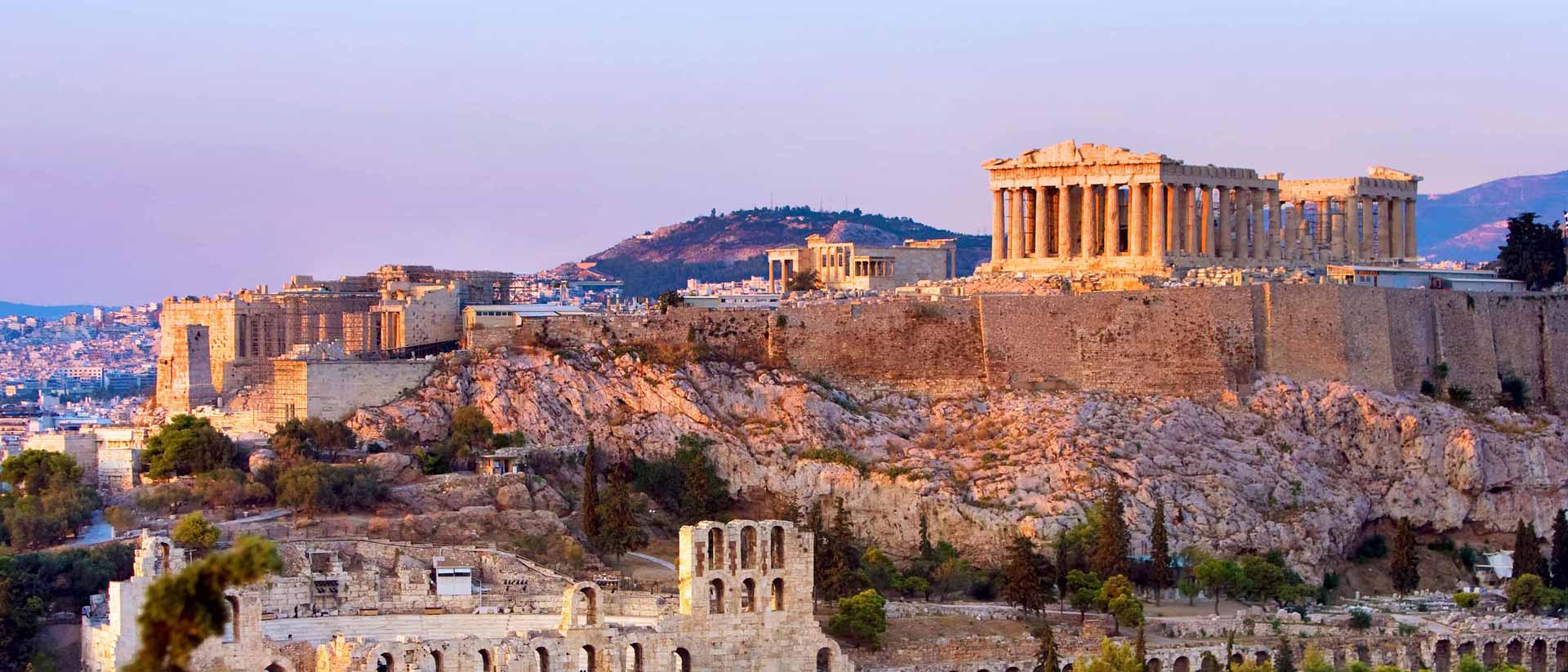
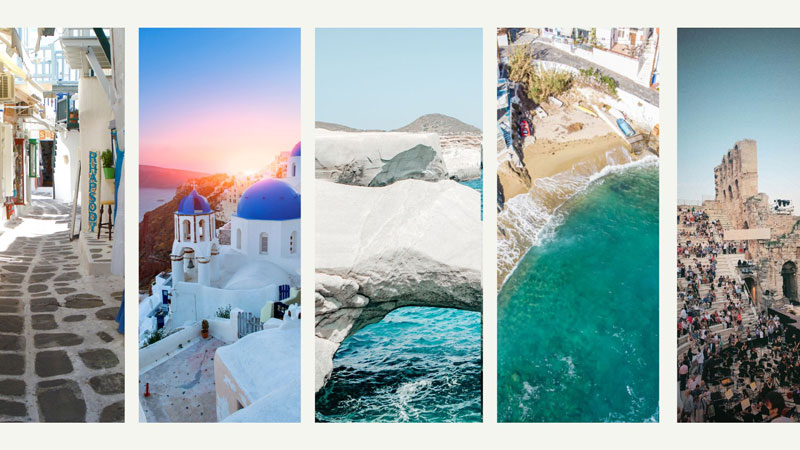
A first trip to Greece can feel like stepping into a book that simultaneously narrates history, nature, and Mediterranean life; a place where every step is taken among ancient temples, turquoise beaches, and cities where traces of a civilization thousands of years old can be seen in every corner. For many travelers, Greece is exactly this tempting combination of mythical history and seascapes; a destination that offers both a cultural experience and an opportunity to relax in a calm coastal setting. Athens, the capital of Greece, is usually the first city from which tourists begin their journey; a historic city that, alongside its ancient attractions, is also known as the cultural and political heart of the country.
However, for someone who has not yet traveled to this country, many questions arise; questions about the main destinations, the best time to travel, costs, and how to plan, the answers to which can shape the beginning of a precise and memorable trip. If you want to know the answers to your questions, it is better to first read the travel guide to Greece on the Sepehran blog to gain a complete understanding of this beautiful country and start your journey with awareness and planning.
You can also browse all travel guides for domestic and international destinations.
Greece, with an area of about 131,000 square kilometers, is located in southeastern Europe in the Balkan region. It borders Albania, North Macedonia, and Bulgaria to the north. It is bounded by the Aegean Sea to the east, the Ionian Sea to the west, and the Mediterranean Sea to the south; a position that has made Greece both a mountainous and a maritime country at the same time, with extensive access to open waters. Geographically, Greece is not limited to the mainland alone, and a significant part of it consists of islands. The country has more than 6,000 islands and islets, of which about 200 are inhabited.
Why Visit Greece?
Greece is one of the few destinations that offers several types of travel experiences at the same time; from thousands of years of history and culture to Mediterranean beaches, scenic islands, and a relaxed, flavorful lifestyle. This diversity makes Greece an attractive and complete option for a first trip to Europe or even for repeat visits. But Greece, because of:
Unrivaled history and civilization
Stunning islands and coastlines
A blend of urban exploration and nature
Mediterranean cuisine and the Greek lifestyle
Diversity of costs and travel styles
is a destination where you will experience history, nature, food, and the sea all together. If you are looking for a trip that offers both cultural attractions and an opportunity to relax on beautiful beaches, Greece is one of the options that can simultaneously meet the different expectations of a traveler.
Climate of Greece
Climate of Greece
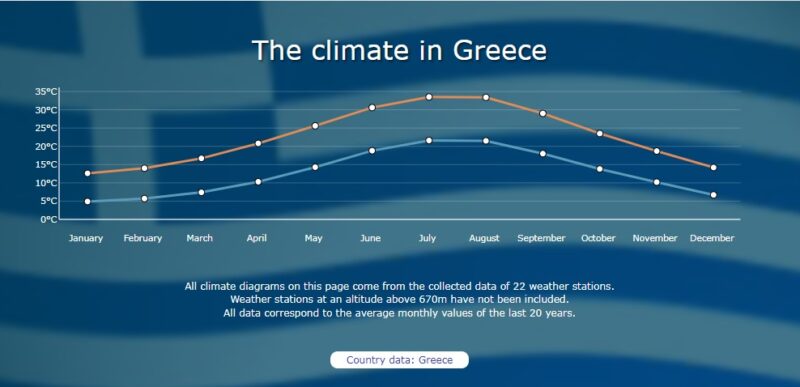
Greece’s climate is a combination of three main patterns: Mediterranean, temperate, and alpine, although overall the country’s dominant climate is considered Mediterranean. In most coastal areas and islands, summers are hot and sunny, while winters are milder with rainfall, a feature that makes Greece a suitable destination for seaside travel.
In Greece, temperatures in coastal regions and islands range between 30 and 35 degrees Celsius, and in cities such as Athens, they sometimes exceed 40 degrees. Scattered summer thunderstorms cool the air to some extent, but the heat remains noticeable. Winters in the southern regions are mild and range between 10 and 15 degrees Celsius, while mountainous areas such as Olympus and Pindus are colder and snowy, and their ski resorts are popular with winter tourists.
Northern Greece, including Thessaloniki, has a more continental climate, with colder winters sometimes dropping below zero and milder summers up to 25 degrees Celsius. The coldest areas are near the northwest and around Kastoria. These climatic differences are due to the country’s geographical position in the Mediterranean Sea and the mountain ranges that extend across Greece, creating variations in temperature and weather conditions in different parts of the country.
Best Time to Visit Greece
The best time to travel to Athens is usually spring and autumn, when the weather is moderate, the streets are more tolerable, and tourist crowds are smaller than during the peak summer season. The months of April and May in spring and September and October in autumn create balanced conditions in terms of temperature and prices, and make visiting historical attractions easier. In summer, Athens’ heat sometimes reaches around 35 degrees, and along with increased demand, hotel and flight costs rise. Winter is quieter and cheaper, but some tourist islands have limited activity, and temperatures are around 12 degrees. Therefore, if the goal is urban sightseeing with suitable weather and reasonable costs, spring and autumn are the best choices for traveling to Athens.
How Much Does It Cost to Travel to Greece?
Traveling to Greece, despite its many historical and natural attractions, requires proper financial planning. For tourists, being aware of accommodation, food, transportation, and entertainment costs can help manage the budget and provide a comfortable and enjoyable experience. Costs vary depending on the travel season, type of services, and the region you choose, but on average, approximate amounts can be considered for trip planning.
Section
Description
Travel Costs
Approximate Percentage
Accommodation in Greece
€30 to €100 per night (budget to mid-range hotel)
Food and Dining in Greece
Meal at a local restaurant: €10 to €15
Entertainment and Attractions
Museum and attraction tickets: €5 to €30
Domestic Transportation in Greece
Metro, bus, and tram: €5 to €10 per day
Car Rental or Taxi
Car rental: €30 to €70 per day / Taxi: €5 to €15 for a short trip
It is recommended that for a 5-day trip to Greece, you carry approximately between 500 and 1,250 euros with you so that you can benefit at a moderate level from accommodation, food, and entertainment.
Top Tourist Attractions in Greece
In the travel guide to Greece, we take a look at the most important tourist attractions of Greece, a country where history, mythology, and nature are intertwined uniquely; from ancient temples and legendary cities to turquoise islands and whitewashed coastal villages.
In every corner of this land, one can see traces of ancient Greek civilization, magnificent architecture, Mediterranean beaches, and mountainous landscapes; this diversity has made Greece a destination with attractions for every taste, whether you are interested in history and museums or looking for seaside entertainment and nature tourism.
Greece Attractions
Attraction Name
City / Region
Type of Attraction
Acropolis and Parthenon
Athens
Historical – Ancient
Meteora Monasteries
Kalambaka
Natural – Religious
Santorini Island
Aegean Sea
Island – Coastal
Mykonos Island
Aegean Sea
Island – Recreational
Delphi
Central Greece
Historical – Mythological
Crete and Knossos Palace
Crete Island
Historical – Island
Rhodes (Old Town)
Rhodes Island
Historical – Medieval
Thessaloniki
Northern Greece
Urban – Cultural
Navagio Beach
Zakynthos
Natural – Coastal
Samaria Gorge
Crete
Nature Tourism
Best Hotels in Greece
Book a Hotel in Athens
During a trip to Greece, accommodation options can be found for every style, preference, and budget; from hostels and budget hotels in Athens and Thessaloniki to coastal boutique hotels and luxury resorts in Santorini and Mykonos. Most tourist cities and islands in Greece have hotels with international standards, and in popular tourist areas such as Athens, Crete, Rhodes, and Santorini, the variety of accommodations is very high, and you can easily choose based on your budget and type of trip (budget, family, or luxury).
Suggestions for several good hotels in Greece (from budget to luxury):
Budget and mid-range
Athens Center Square Hotel – Athens | An affordable hotel in the city center close to historical attractions
Art Hotel Athens – Athens | A budget option with good access to urban transportation
Heliophos Boutique Caves – Santorini | A traditional and compact boutique hotel with more reasonable prices compared to the island’s luxury hotels
4-star and high-quality
Radisson Blu Park Hotel – Athens | A 5-star urban hotel with a pool, restaurant, and excellent access to museums and central Athens
Domes Resorts (multiple cities) | Modern coastal resorts with full facilities and mid-to-high-range prices
Luxury and distinctive
Canaves Oia Suites – Santorini | A cliffside hotel with views of the caldera and Santorini’s famous sunset
Four Seasons Astir Palace – Athens | A luxury coastal resort with a private beach and five-star services
Cavo Tagoo – Mykonos | One of the most Instagrammable and luxurious hotels in Mykonos with private pools
Major Cities and Islands of Greece
Santorini Island
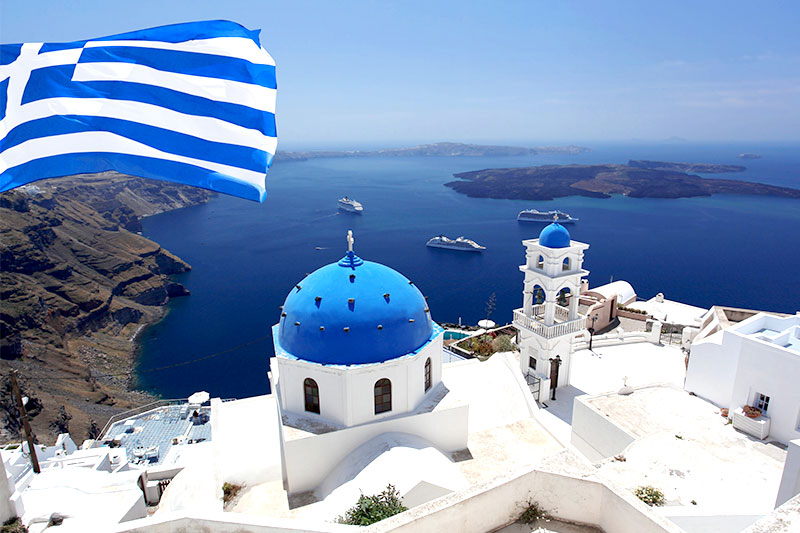
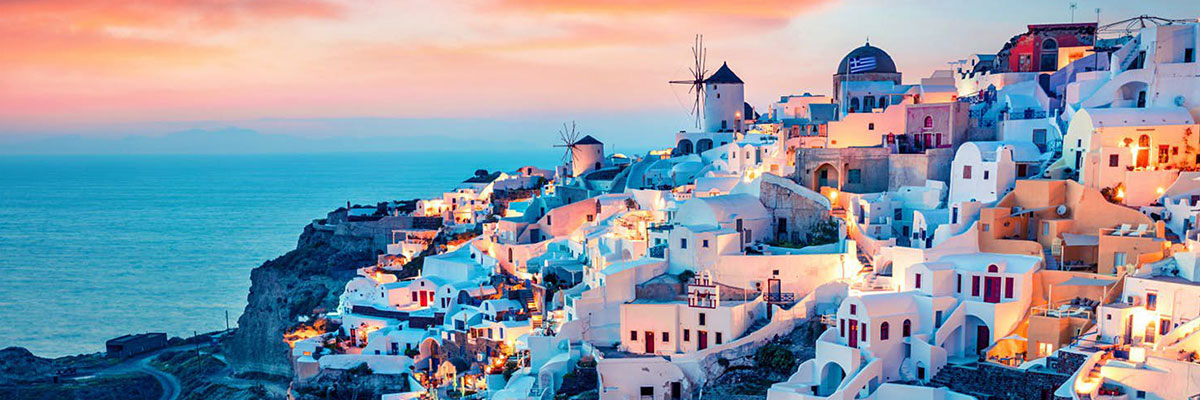
Greece is a collection of historic cities and dreamlike islands, each with a different atmosphere and offering a unique travel experience. Athens, as the capital, is the historical and cultural heart of the country and, with its famous ancient monuments, is a good starting point for a trip; in contrast, Thessaloniki has a younger and more modern atmosphere with an urban and coastal vibe. Among the islands, Santorini is a romantic destination with its white houses and famous sunsets, Mykonos is known for its beaches and nightlife, and Crete, with its large size, offers a combination of nature, history, and coastal cities. Rhodes, Corfu, and Zakynthos, each with beautiful beaches, old towns, and Mediterranean views, are also among the most important tourist destinations in Greece, and the choice between them largely depends on your travel style and budget.
On a trip to Greece, these cities and islands are among the main destinations that are usually included in tourists’ itineraries:
Leaving aside accommodation and tourist attractions in Greece, in this part of the travel guide to Greece we briefly review local Greek foods and Greek cuisine. Greek cuisine is a combination of Mediterranean flavors, fresh ingredients, and traditional recipes hundreds of years old that form an important part of the travel experience to this country. In local Greek dishes, the use of olive oil, fresh vegetables, feta cheese, grilled meat, and seafood is very common, and this simplicity alongside the quality of ingredients creates an authentic and memorable taste. From quick street foods to family-run and seaside restaurants, in every city and island you can try different local dishes and become more familiar with the food culture of the Greek people; an experience that is usually completed by sitting in a taverna (a traditional Greek restaurant) and tasting homemade dishes.
It is recommended that during your trip to Greece you definitely try local dishes of this country such as:
Gyros
Stifado
Spanakopita
Souvlaki
Gemista
Fasolada
The simple yet authentic flavors of these foods will be an important part of your travel experience and will complete your familiarity with Greek food culture.
Best Restaurants in Greece
Greece is not only famous for its historical attractions and beaches; food is an inseparable part of the travel experience to this country, and Greek restaurants (especially traditional tavernas) are places where the real taste of the Mediterranean can be experienced. The use of fresh ingredients, high-quality olive oil, daily seafood, and family recipes has made many restaurants in Greece exceed expectations in quality. Choosing a good restaurant in Greece means a place where, in addition to food, you also experience the local atmosphere, beautiful views, and Greek hospitality; especially in cities such as Athens, Santorini, and Mykonos, where the variety of restaurants is very high.
Restaurant Name
City / Island
Type of Atmosphere
Varoulko Seaside
Athens
Luxury – Seafood
Ta Karamanlidika Tou Fani
Athens
Traditional
Selene
Santorini
Luxury
Metaxi Mas
Santorini
Local – Popular
Kastro’s
Mykonos
Romantic
Avli Tou Thodori
Mykonos
Coastal
Peskesi
Crete
Traditional
Tamam Restaurant
Thessaloniki
Local
Best Souvenirs from Greece
Buying souvenirs in Greece is not just a simple purchase, but a way to take a part of this country’s history and culture home. In the cities and islands of Greece, you can find various handicrafts, local products, and decorative items inspired by myths and ancient architecture; from small statues of ancient Greek gods and models of temples to handmade pottery, ceramic ware, silver jewelry, and traditional decorative items. In addition to their beauty, these souvenirs are reminders of Greece’s thousands-year-old civilization and are usually widely seen in local markets, art shops, and tourist streets of cities such as Athens, Santorini, and Rhodes.
Festivals and Events in Greece
Greece is a country whose calendar throughout the year is full of celebrations, cultural festivals, and traditional events; from religious ceremonies and local rituals to music, art, and food festivals. These events are a good opportunity for tourists, in addition to seeing historical and natural attractions, to become closely familiar with the lifestyle, music, dance, and traditions of the Greek people. Many celebrations are held outdoors, in city squares or on islands, and have a joyful and friendly atmosphere; therefore, if you coordinate your travel time with one of Greece’s major festivals, you will have a different and more cultural experience of this country.
Several famous festivals and events of Greece in different seasons:
Festival / Event Name
Description
Orthodox Easter (Easter)
The most important religious celebration in Greece is marked by religious ceremonies, fireworks, and local traditions.
Athens Flower Festival
Local events, spring markets, and flower displays in cities
Athens and Epidaurus Festival
Theater and music performances in ancient amphitheaters and historical sites
Thessaloniki Jazz Festival
Jazz performances featuring domestic and international artists
Local Island Festivals
Music, dance, and food programs on the islands of Santorini and Mykonos
Wine and Grape Harvest Festival
Local ceremonies related to wine and grape harvesting in rural areas and islands
Thessaloniki Film Festival
One of the most important cinematic events in the region, featuring domestic and international films
Christmas and New Year
Christmas and New Year celebrations and decorations in major cities
Patras Carnival
The largest carnival in Greece, with parades, street celebrations, and live music
Best Shopping Centers in Greece
Golden Hall, Greece
Greece is not only a destination for history and beaches; for many travelers, shopping is also a serious part of the travel experience. From the luxury streets of Athens to modern shopping centers with international brands, this country offers tourists a combination of Greek designer boutiques, European brands, local handicrafts, and affordable outlet centers. If you are planning a trip to Greece, becoming familiar with the main shopping hubs can help you both find authentic souvenirs and visit luxury stores.
The highest concentration of modern shopping centers is in Athens, a city that hosts everything from famous shopping streets such as Ermou to large multifunctional malls. In these centers, in addition to stores, there are also restaurants, cinemas, and entertainment spaces, so you can dedicate a full half-day to shopping and relaxation. If you are interested in luxury brands, some malls host brands such as Gucci, Prada, Armani, and Louis Vuitton; on the other hand, outlet and budget centers also offer good options for economical shopping.
On islands such as Santorini and Mykonos, you will mostly encounter stylish boutiques, handmade jewelry, and summer clothing, but for a complete shopping experience in the style of large shopping malls, Athens is the best choice. Below, you will see several major and popular shopping centers in Greece that are suitable for both luxury and regular shopping.
Shopping centers in Greece are as follows:
Shopping Center Name
City
Features
The Mall Athens
Athens
One of the largest malls in Greece with international brands, a cinema, and restaurants
Golden Hall
Athens
A luxury shopping center with famous designer brands and an elegant atmosphere
Athens Metro Mall
Athens
Easy access by metro, diverse stores, and a large food court
McArthurGlen Designer Outlet Athens
Near Athens
Outlet of well-known brands with permanent discounts
Mediterranean Cosmos
Thessaloniki
A large mall in northern Greece with shops, a cinema, and entertainment
Greece Visa and Embassy Information
Greek Visa Requirements
Visa matters and consular services are handled through the embassy’s consular section, and in many cases, applications for a Greek Schengen visa are submitted through the official visa service provider (VAC/VFS).
Sunday to Thursday, (for visa) Monday and Tuesday 10:00–12:00
Visit Note
In-person visits are possible only by prior appointment
Before visiting in person, you must obtain an appointment in advance and prepare the visa documents according to the official guidelines; without a prior appointment, applications are usually not accepted.
Does Traveling to Greece Require a Visa?
Yes. For Iranian citizens, tourist travel to Greece requires obtaining a short-term Schengen visa (Type C). This visa allows a maximum stay of 90 days within 180 days in the Schengen area. Currently, it includes: tourist visa, study visa, and immigration visa; here, only the conditions and documents for the tourist visa will be reviewed.
Documents and Conditions for a Greek Visa
General conditions for application review
Travel history: Having previous Schengen visas or visas from reputable countries increases the chance of approval.
Invitation letter (if available): From relatives or a reputable company in Greece.
Financial means: Providing sufficient financial ability to cover travel expenses.
Proof of funds and bank statement
Minimum financial means: Approximately 300 to 350 million tomans per person
Bank statement: Printout of the last 6 months of bank account activity with reasonable balance and transactions
The bank statement must be provided in euros or a convertible foreign currency equivalent.
Main required documents
Completed Schengen visa application form
Passport with at least 6 months’ validity
Two biometric photos
Travel insurance with coverage of at least 30,000 euros
Round-trip flight reservation
Hotel voucher or reservation
Employment documents (employment certificate, salary slip, or business license)
Financial documents (proof of funds and bank statement)
Official translation of documents into English with seals of the Judiciary and Ministry of Foreign Affairs
Practical Travel Tips for Greece
To ensure that your trip to Greece goes smoothly, more economically, and without trouble, knowing a few practical points before departure is very useful. These items help you make the best use of your time and budget.
Visa: A Schengen visa is required for Iranians; apply in advance.
Currency: Euro; bank cards are accepted, but carry some cash.
Best time to travel: Spring and early autumn; summer is crowded and more expensive.
Transportation: In Athens, metro and buses are convenient; for islands, domestic flights are faster than ferries.
Costs: Athens is moderate, and islands such as Santorini and Mykonos are more expensive.
Language: Greek; English is common in tourist areas.
Safety: Relatively safe; watch personal belongings in crowded places.
Internet: Tourist SIM cards and public Wi-Fi are available.
Souvenirs: Olive oil, olive products, handicrafts, and local jewelry.
Important note: Be sure to book hotels and flights in advance, especially in summer.
These simple but practical tips make traveling to Greece easier and more professional and prevent your time from being wasted on common travel confusions. If the type of trip is specified (budget, luxury, or honeymoon), the tips can be adjusted more precisely according to that style.
Final Thoughts
Traveling to Greece, especially Athens, is a combination of ancient history, a vibrant urban atmosphere, and relatively moderate costs compared to many European destinations. If you choose the right travel time—spring or autumn—you will encounter pleasant weather, fewer crowds, and more reasonable prices. Awareness of the Schengen visa process, estimating the daily budget, choosing accommodation near the city center, and using the metro and public transportation are the most important factors for having a stress-free trip. If you have experienced traveling to Athens, we would be happy if you share it with other readers and us. From costs and accommodation to good restaurants, transportation routes, attractions, and even tips you did not know before traveling.
FAQ:
How much does a trip to Greece cost?
For a 5-day trip with a moderate budget, approximately 900 to 1,300 euros are needed. This amount includes accommodation, food, transportation, and visits to attractions.
How many days are needed to visit Athens?
3 to 5 days are sufficient to see the main attractions of Athens and have a complete city tour. If you plan to visit the islands, consider more time.








 Reading suggestion: Greece Islands